Wednesday, May 26, 2010
Toyo Gakuen University 応用英語1-3A Writing Lesson 6 - My Special Place

Next, let's study some vocabulary. Please click this link:基礎英語 ステップ2 Do the iKnow lesson.
Now, let's practice typing. Click this link: Qwerty Warriors
Last year some Toyo Gakuen University students wrote about their special places. Click this link to read about their special places: http://writingright.edublogs.org/place/
Finally, go to our Toyo Gakuen Flickr photostream. Upload your pictures. Then look at your class mates photos and comment.


Monday, May 24, 2010
Introduction to Business English 1A Lesson 6
 |
| Image by lumaxart www.lumaxart.com/ |
Hi, today we are going to start Unit 3: Problems. In this unit we will learn how to report a business problem, how to complain, and how to solve a business problem.
Let' s start with a video. Please click this link: http://mrstoutsblog.blogspot.com/2009/05/learn-english-22-complaining.html.
Now let's study some vocabulary. Please click this link: TYG Introduction to Business English A Vocabulary
OK, now please post a comment below. Tell me a problem that you have in this class..
Friday, May 21, 2010
応用英語1-2A Lesson 6
 | |
| Illustration by Yuji Tachikawa. CC V1.0 Some rights reserved |
Hi everyone!
Today we are going to finish discussing Chapter 3.
First, let's review some vocabulary. Click this link: Inverted Eagle Chapter 3 Vocabulary.
Next, click this link:応用英語1-2 Reading Vocabulary.
Now let's read a great summary of Chapter 3 by Martina R., a student in Stuttgart, Germany:
Chapter 3 – The Hospital
The first lie: Judith told Ellie that she lied concerning the combination of the wall safe, she gave the numbers to Kevin. Because of her age, Judith forgot, that she also gave the combination to Miguel. After this, Ellie wanted to hear the whole story. Judith started to tell the story which had begun a month ago with the purchase of a beautiful stamp.
At the end of the conversation between Ellie and Judith Reed, Yokota, a colleague of Ellie, and Kevin entered the room. Ellie saw Kevin and she accused him of lying to her.
The next steps: Elle checked the stories of the involved people and wanted to search the house from the top to bottom.
After that, Ellie drove to the hospital where Evan and Nancy Reed were staying. Nancy was sleeping and Even was telephoning someone with his cell phone. Ellie stopped in front of the door and tried to understand the call between Evan and the other person. The words (which) she heard were “Brian … investors …. excited about the project – to get money together”. Some / a few seconds after the call, Ellie went into the room and introduced herself to the Reeds. Then she told the Reeds a part of her investigation. It was surprising, that Evan accused his son of committing the robbery, because the Reeds wanted that Kevin tried to find a job and they had informed him that they were stopping his monthly allowance. Later, Ellie asked the Reeds to describe the occurrences which happened last night separately?
At the end of the Chapter, Yokota called Ellie and told her that there might be a new motive ….
You can read Martina's entire review of The Inverted Eagle on Karenne Sylvester's great blog Kalinago English.
Finally, please post a comment. Who do you think dunit?
Wednesday, May 19, 2010
Toyo Gakuen University 応用英語 1-3A Writing Lesson 5
.jpg) |
| saturated writing uploaded on 22/01/07 by tnarik |
Hey there!
Today we are going to finish Writing Task 1: My letter of Introduction. Then we are going to start on Task 2: My Special Place.
First, let's study some vocabulary. Please click this link:基礎英語 ステップ2 Do the iKnow lesson.
Now, let's practice typing. Click this link: Qwerty Warriors
Now let's read some paragraphs about special places written by Shibaura Institute of Technology students. Click this link: Shibaura Institute of Technology Writing 1A: Students write about their special places Part 2.
Write a comment. What did you think of the Shibaura Institute of Technology students' writing?

Monday, May 17, 2010
Toyo Gakuen University Introduction to Business English 1A Lesson 5: Unit 2 Case Study
Hi, today we are going to do the case study on p.21 of our textbook. In the case study you will learn how to do problem solving.
First, let's review some vocabulary. Click this link: TYG Introduction to Business English Vocabulary.
Finally, post your writing assignment as a comment below.
Enjoy!
 |
| Four Heads are better than one uploaded on 25/10/06 by Unhindered by Talent |
Finally, post your writing assignment as a comment below.
Enjoy!
Friday, May 14, 2010
応用英語1-2A Reading Lesson 5
 |
| Illustration by Yuji Tachikawa. CC V1.0 Some rights reserved |
Today we're going to do the Chapter 2 Quiz. After that we're going to talk about Chapter 3.
First, let's review some vocabulary, Click this link: 応用英語1-2A Reading. Now click this link: Chapter 2 Review Vocabulary List.
Ok, after the quiz, let's talk about Chapter 3. Enjoy!
Wednesday, May 12, 2010
Toyo Gakuen University 応用英語1-3A: Writing Lesson 4
Hi everyone!
I hope you had a great golden week. Today we are going to continue working on our first writing task: My letter of Introduction. Click the picture below.

In the picture you can see an example of a good e-mail, but there is one mistake. Can you find it?
Ok, before we continue, let's practice some vocabulary. Please click this link: 基礎英語 ステップ2 Do the iKnow lesson.
Now, let's practice typing. Click this link: Qwerty Warriors
If you have time, you can have a chat with Chomsky.
Your second draft is due next Tuesday.
Enjoy!
Monday, May 10, 2010
Toyo Gakuen University Introduction to Business English 1A Lesson 4

Hello! Welcome back! I hope you enjoyed Golden Week.
Today we are going to start Unit 2. First, look at the photo. Do you know this man? With a partner answer these questions:
Today we are going to start Unit 2. First, look at the photo. Do you know this man? With a partner answer these questions:
- What is this man's name?
- What is his job?
- Where is he from?
- Where is his office?
- How's business at his company?
To find the answers to questions 1-4 turn to page 16. To find the answer to question 5 click this link:
Auto sales remain revved up in 2010, with Nissan leading the gains
Now let's learn some vocabulary. Click this link: TYG Introduction to Business English Vocabulary List 1
Now let's do the tasks in Unit 2 of our textbook.
Finally, click comment below. Write a paragraph about yourself. Describe your daily routine. You can see some examples here:
http://mrstoutsblog.blogspot.com/2009/05/toyo-gakuen-university-introduction-to.html
Homework
* Read p.21. Prepare for the case study
* Do Unit 2 on your self-study CD ROM.
Friday, May 07, 2010
応用英語1−2A Reading Lesson 4: Chapter 1 Review
Hi! Welcome back. I hope you enjoyed Golden Week.
Today we are going to review Chapter 1. After that we'll take our first quiz. The we'll start Chapter 2.
Let's look at the mind map below. Click the mind map to make it bigger.
 Click this link: https://www.mindmeister.com/maps/show/48283143
Please read the notes I have added. BIG HINT: the notes are important for the quiz
Now let's review some vocabulary. Please click this link: 応用英語1−2アA Reading Chapter 1 Vocabulary List.
OK, now review your notes with the members of your group.
Now, let's do the quiz. Good luck!
After the quiz, please post a comment. What did you think of the quiz? Why?
Today we are going to review Chapter 1. After that we'll take our first quiz. The we'll start Chapter 2.
Let's look at the mind map below. Click the mind map to make it bigger.

Please read the notes I have added. BIG HINT: the notes are important for the quiz
Now let's review some vocabulary. Please click this link: 応用英語1−2アA Reading Chapter 1 Vocabulary List.
OK, now review your notes with the members of your group.
Now, let's do the quiz. Good luck!
After the quiz, please post a comment. What did you think of the quiz? Why?
Wednesday, April 28, 2010
Toyo Gakuen University 応用英語1-3A: Writing Lesson 3
Hey there!
Today we are going to do the first draft of Task 1: My letter of Introduction. Task 1 is an e-mail. Look at the picture below. Click the picture to make it bigger.

After we do pages 8-12 in our textbooks we will do the first draft of task 1.
First let's study vocabulary. Click this link: 基礎英語 ステップ2
Have a great Golden Week!
Today we are going to do the first draft of Task 1: My letter of Introduction. Task 1 is an e-mail. Look at the picture below. Click the picture to make it bigger.

After we do pages 8-12 in our textbooks we will do the first draft of task 1.
First let's study vocabulary. Click this link: 基礎英語 ステップ2
Have a great Golden Week!
Monday, April 26, 2010
Toyo Gakuen University Introduction to Business English Lesson 3
Hi, todays lesson is about describing people. Today we will learn how to describe ourselves and we will learn how to describe others.
First let's review some vocabulary. Please click the link: Introduction to Business English A Vocabulary.
Next we are going to read "Meet Jeffrey Immelt" on page 9 of your textbook, but before we read about Jeffery Immelt, we are going to think about the topic.
Look at the picture. This is Nobuyuki Idei (出井伸之) He is the former CEO of Sony. What kind of company is Sony? Talk about it with your partner. Use your imagination (想像力). Answer the questions below:
1. Is this man rich?
2. How many days a week does this man work?
3. How many hours a day does this man work?
4. What are his interests and hobbies?
Now read the article about Jeffrey Immelt. After, do the activities on page 9.
Have a great Golden Week!
First let's review some vocabulary. Please click the link: Introduction to Business English A Vocabulary.
Next we are going to read "Meet Jeffrey Immelt" on page 9 of your textbook, but before we read about Jeffery Immelt, we are going to think about the topic.
Look at the picture.
1. Is this man rich?
2. How many days a week does this man work?
3. How many hours a day does this man work?
4. What are his interests and hobbies?
Now read the article about Jeffrey Immelt. After, do the activities on page 9.
Have a great Golden Week!
Friday, April 23, 2010
応用英語1-2A Reading Lesson 3:The Inverted Eagle - Chapter 1 Continued
Hi everyone,
Today we're going to finish Chapter One. Let's look at the mind map (思考マップ) we made on the whiteboard last class. Thanks to Yuichi for taking this picture. Click the picture to make it bigger.

Making a mind map is a great way to take notes. Taking notes helps us understand and remember the story. I made another mind map with more detail. Please look at the picture below. Click the picture to make it bigger.

Now let's review some vocabulary. Click this link:応用英語1-2A Reading Chapter 1 Vocabulary
Do the iKnow lesson, and play the Brainspeed game.
Next, let's check the homework. Did you solve the puzzle?
Our first quiz is next week. Please read Chapter 1 again. Please review your answers to the questions at the end of Chapter 1, and make notes.
Have a great Golden Week!
Today we're going to finish Chapter One. Let's look at the mind map (思考マップ) we made on the whiteboard last class. Thanks to Yuichi for taking this picture. Click the picture to make it bigger.

Making a mind map is a great way to take notes. Taking notes helps us understand and remember the story. I made another mind map with more detail. Please look at the picture below. Click the picture to make it bigger.

Now let's review some vocabulary. Click this link:応用英語1-2A Reading Chapter 1 Vocabulary
Do the iKnow lesson, and play the Brainspeed game.
Next, let's check the homework. Did you solve the puzzle?
Our first quiz is next week. Please read Chapter 1 again. Please review your answers to the questions at the end of Chapter 1, and make notes.
Have a great Golden Week!
Wednesday, April 21, 2010
Toyo Gakuen University 応用英語1-3A Writing Lesson 2
Hey there! Great news. The authors of our textbook have sent us a message. Click the link to see it.
 Today we will:
Sometimes we brainstorm by drawing a picture. Look at the picture below. This is a picture I made. It has words, phrases and sentences about me!

OK, let's start. Let's review some old vocabulary. Click this link: 基礎英語 ステップ2
Now, let's open our textbooks to p.4. Let's start brainstorming.
Finally let's reply to Mr. Curtis Kelly and Ms. Arlen Gargagliano.
Please post your reply below.

- practice typing by playing a cool game called Qwerty Warriors
- review old vocabulary and learn new vocabulary using smart.fm.
- open and save a word document
- brainstorm
Sometimes we brainstorm by drawing a picture. Look at the picture below. This is a picture I made. It has words, phrases and sentences about me!

OK, let's start. Let's review some old vocabulary. Click this link: 基礎英語 ステップ2
Now, let's open our textbooks to p.4. Let's start brainstorming.
Finally let's reply to Mr. Curtis Kelly and Ms. Arlen Gargagliano.
Please post your reply below.
Monday, April 19, 2010
Toyo Gakuen University Introduction to Business English A Lesson 2
Hello everyone! I hope you did your homework because today we are going to learn how to exchange business cards.
 Please look at the picture on the left. The picture is from a useful webpage called work etiquette. What mistake is the man in front making?
Next, let's watch a video about exchanging business cards, then let's do a quiz. Please click this link: Exchanging Business Cards.
OK, now let's review some vocabulary and learn some more. Click this link please: TYG Introduction to Business English A Vocabulary.
Now let's start using our textbook. Please turn to p. 6.
Finally, let's write a comment. Please tell me why you chose this course.

Next, let's watch a video about exchanging business cards, then let's do a quiz. Please click this link: Exchanging Business Cards.
OK, now let's review some vocabulary and learn some more. Click this link please: TYG Introduction to Business English A Vocabulary.
Now let's start using our textbook. Please turn to p. 6.
Finally, let's write a comment. Please tell me why you chose this course.
Friday, April 16, 2010
応用英語I-2A Lesson 2: The Inverted Eagle - Chapter 1

Hi!
Last lesson we learned how to bookmark a website. Let's bookmark another useful website. Click this link: space alc . Next let's review the new words we learned last lesson. Click this link: 応用英語I-2A Reading chapter 1 vocabulary list.
Ok, now, finally we can start reading.
Enjoy!
Wednesday, April 14, 2010
Toyo Gakuen University 応用英語I-3A Writing Lesson 1
Hello everybody! Welcome to the first 応用英語I-3A Writing class. Today we will learn:
 Also, today I will give you the course syllabus and show you the textbook. The textbook we will use is Writing from Within Intro. You can see a picture of the textbook above. Writing from Within Intro was written by Curtis Kelly and Arlen Gargagliano. Curtis Kelly is my friend. You can see a picture of him below.

I have used Writing from Within Intro before. You can see some of my former student's work. Click this link: Students write about their special places.
OK, let's take a look at the textbook now.
Now, please post a comment.
Finally, let's practice typing with a fun game called Qwerty Warriors
Enjoy!.
- How to subscribe to this blog
- How to register for smart.fm
- How to use smart.fm
- How to write a blog post


I have used Writing from Within Intro before. You can see some of my former student's work. Click this link: Students write about their special places.
OK, let's take a look at the textbook now.
Now, please post a comment.
Finally, let's practice typing with a fun game called Qwerty Warriors
Enjoy!.
Monday, April 12, 2010
Toyo Gakuen University Introduction to Business English 1A Lesson 1

Click this link to make your own business cards: http://bizcardcreator.com/

You will learn many new words in this class. We will use the internet to learn and practice new words. Click this link: http://smart.fm/goals/136449/content#set_130641
OK, that's all for today. I hope to see you next week.
Friday, April 09, 2010
応用英語I-2A Lesson 1: Introduction to the course and the textbook - Whodunit?
Well, today is the first day of the new academic year. I hope you enjoyed the break. This is also the first time I've taught this course. I'm really excited about it. We will be using a new text book called Whodunit.

One of the authors of Whodunit is my friend Marcos Benevides. You can see Marcos in the picture below. The other author is Adam Gray.

There are two detective stories in Whodunit. This semester, we will read the first one, called The Inverted Eagle.
Do you like detective stories? Detective Conan is a popular detective story in Japan. Watch the video clip from a Detective Conan cartoon. Listen and read the subtitles (字幕). What do you think is the Japanese translation of the following words: murder, investigate, case?
Now let's learn some useful vocabulary for understanding detective stories. Please click the link: smart.fm
Finally, please post a comment. Introduce yourself.
Front cover of Whodunnit by Adam Gray and Marcos Benevides, published by Abax. Some rights reserved.
One of the authors of Whodunit is my friend Marcos Benevides. You can see Marcos in the picture below. The other author is Adam Gray.
There are two detective stories in Whodunit. This semester, we will read the first one, called The Inverted Eagle.
Do you like detective stories? Detective Conan is a popular detective story in Japan. Watch the video clip from a Detective Conan cartoon. Listen and read the subtitles (字幕). What do you think is the Japanese translation of the following words: murder, investigate, case?
Now let's learn some useful vocabulary for understanding detective stories. Please click the link: smart.fm
Finally, please post a comment. Introduce yourself.
Thursday, April 08, 2010
The English Lounge Podcast 4: An interview with Amrik

Amrik is a third-year student at Aston University. Amrik is spending his third year in Japan as an intern at Toyo Gakuen University. Amrik is the second Aston University student to do an internship at Toyo Gakuen University. Amrik spoke to Claire Taylor and Clare Murray. They are English Teachers in the English Education Develpment Centre at Toyo Gakuen University.
Listen to the conversation. When you have time, please go to the English Lounge and chat with Amrik. He's a really interesting young man.
Please subscribe to the English Lounge Podcast in iTunes.
A Note for teachers:
At the 2009 ETJ Tokyo Expo held at Toyo Gakuen University's Hongo campus in Tokyo, Andy Boon gave a presentation about our internship programme and he explained how educatators in Japan can set up their own programmes. Below is a video of his presentation. Andy has shared his powerpoint slides for this presentation too.
Please let me know what you think. Please post a comment.
Sunday, January 31, 2010
Shibaura Institute of Technology Writing 1B: Students write about life at Shibaura
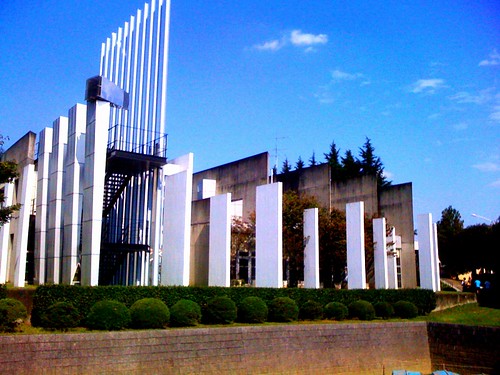
Today I'm beginning a series of posts displaying the work of the students in the Writing 1B course at Shibaura Institute of Technology. The paragraphs below are examples of the first writing task, "My Life at Shibaura". Following the students' work I've written a note for teachers about the students and the course.
Enjoy!
Daichi H.
My life is simple and commonplace, but some days are massive. My day starts with a loud alarm clock. Almost always, my wake up-time is late for the first class, so always I hurry to SIT. SIT's class content is more professional than high school’s class content. Classes are fun for me, because I have an interest in the computer, the Internet and space technology. Once I go to home, it’s music time. I am absorbed in DTM (Desk Top Music). So, I compose music in my spare time, but I'm still inexperienced. I hope that I can compose music that impresses another person as soon as I possibly can. That’s all my daily life.
Atsumu O.
Since I entered this school, my life has changed dramatically. First, I began to live alone, so there were many first experiences for me. Now I enjoy and make an effort to cook. I cook as often as I can, so I rarely eat out. I really want to become able to cook well. Second, on my days off, I often spend time on my hobby, Japanese archery, and reading books. I don’t belong to any club, but I sometimes go to the gym, and enjoy Japanese archery. After I came here, I bought new equipment to do it near here. Also, I often buy books. I read them. Recently I like Kotaro Isaka. He is a great writer, I think. Last, in school, I have many friends, although I haven’t had many friends before. They are so funny, and we always warm up when we are together. Especially when I am there, we really come to life, they say, so I want to keep this atmosphere as a mood maker.
Hiroki Y.
At first my student life was very boring. Why? Because I had no friends at Shibaura. I felt really sad and I cried. I wanted to make friends soon, but I couldn’t speak to anybody. I was a little shy. May came. It was important for me to come to a turning point. It came during group work. I talked much in group work. I had much fun. Since this time, I've felt really very excited. Now I have many friends at Shibaura. I'm always active in group work. Group work classes are enjoyable and exciting classes. That was a wish come true for me.
Fumihisa T.
I’m registered in the Department of Mechanical Engineering. My studies are hard. I have a struggle keeping up with my studies. Especially drafting is so hard because it has delicate works, but drafting is fun because through the class, we can communicate with our classmates a lot. My club activities are also fun. I have such good friends. My student life at Shibaura is so great.
Hiroaki K.
I belong to the handball club and the fishing circle. I like fishing. I go fishing sometimes skipping lectures. When I am not in class I go fishing. I am a student of Applied Chemistry. However, I am not so interested in chemistry. I entered this school because there is a fishing circle. I came to this school to fish.
Kaori S.
I entered Shibaura, and half a year has passed. I belong to the Department of Engineering, Applied Chemistry section, because of I love chemistry. That’s why, I decided that I would go to Shibaura, but I had a big problem. I worried about whether I would have many friends. I thought Shibaura has many boy students and some girls. It was unusual for me. I was at a girls' school for 6 years. Of course, my friends were only girls. I had had no chance to talk to boys since I was 12 years old. Since I entered Shibaura, my friends are not only girls, but also boys. My problem was solved. I feel happy and enjoy my student life every day.
Hiroshi O.
I enjoy student life at Shibaura. I live in Chigasaki City in Kanagawa. I take two hours to come to Shibaura University, so I get up early every morning. I always feel sleepy. I go to Shibaura University by train. I always sleep in the train. I have many friends. I chat with them when I arrive at the school. We talk about baseball games. I like the Giants. I enjoy talking on the day after the Giants win.
Hiroki T.
My student life at Shibaura is hard, because I want to get on to the Japan Accreditation Board for Engineering Education (JABEE) course. It is offered in some departments at Shibaura Institute of Technology. To complete the JABEE course, we need to take more classes than those who want to graduate normally. If we complete the course, we are treated the same as a person who passes the primary Professional Engineer (P.Eng) examination. This means that we get a P.Eng qualification easier. If we get the qualification, we may get more wages. I will try my best to complete the JABEE course.
Yuya S.
I live near this school, so I come to school by bike. I take a teacher-training course, so, I’m in school longer than my friends. At lunchtime, I eat my lunch, which I make every morning, because I like cooking. I enjoy lunchtime in front of the clubroom’s building with my friends. I have studied karate since I was a child, so, I belong to the karate club and enjoy it at Shibaura after school. On Wednesday, Friday and Saturday, I work part-time after the club activity. This work is to teach math to junior high school students. On other days, I often go out with my friends. I enjoy student life very much.
A Note for Teachers
First, I need to tell you that the paragraphs above were edited by me. I edited them for two reasons. First, the students wouldn't permit me to post them with mistakes. Second, I hope that the students will compare the edited versions with their original drafts, notice the differences, and use what they learn from this to become better writers. Nevertheless, you'll notice that in some cases the writing doesn't appear natural to a native English speaker. I thought that the students' voices would be lost if I edited too much. Sometimes the editing choices I made were difficult. For example, I explicitly taught the students that it was wrong to start a sentence with "because". I did this because Japanese learners of English often start a sentence with "because" incorrectly. Sentences like this are common: "I eat chocolate every day. Because it is delicious." However, I thought it would be wrong to rewrite the first three sentences of Hiroki Y's paragraph. To do so would remove his voice, so I left it as it was written. Now I'll tell you about the Writing 1B course.
Writing 1B is an elective course at Shibaura Institute of Technology (SIT) open to first and second year students. The course is 15 weeks long. The syllabus and lesson plans were written by Dave Rear, a professor at SIT. SIT is in the process of obtaining accreditation from JABEE. JABEE was mentioned in Hiroki T's paragraph above. The acceditation process is the reason why the syllabus and lesson plans were written by Dave. JABEE requires the university to ensure that courses are consistent regardless of the instructor. However, Dave allowed me to make some adjustments to the syllabus. The textbook for the course is Ready to Write. The syllabus calls for students to complete 10 writing tasks (9 one-paragraph tasks and 1 two-paragraph task), and a four-paragraph essay. The course begins by introducing students to the form of a paragraph. The first task is assessed according to how well the students' paragraphs conform to the paragraph form, so for example, they receive credit for indenting. From there the tasks become increasingly complex, and the assessment criteria are adjusted accordingly. The writing tasks in this course introduce students to a variety of genres including: narrative, descriptive, expository, and persuasive writing. Grammar is taught in context. In other words I teach the students the grammar required to complete the task. A typical lesson begins with an introduction to the type of paragraph the students will be writing and the target language the students will need to use in order to complete the task at hand. The textbook describes this target language as "signal words". Following the introduction, the students work through exercises in the textbook. Finally, if time permits, they started their writing task. The students finish their writing tasks at home and e-mail them to me. Before the next lesson I print the students' tasks, error code them and write comments. At the beginning of the next class the students look over their first drafts and start their second drafts. I circulate around the classroom and give individual assistance to students as needed. After that we start the next task. The syllabus only calls for the students to write one draft. In essence it's based on a product approach. The students are given models from which they can base their own paragraphs. This was the second time I'd taught this course, so I was able to show the students paragraphs written by their peers in the previous class. For the most part, this approach works with these students, and most of the tasks require the students to write about their own experiences. Therefore, they can't merely copy the model. Nevertheless, I think that process is important, and I think the students benefit from learning how to review and edit their writing, so I require them to write 2 drafts of every task. Also, based on my experience with the class I taught last year, I wanted to spend more time on the final essay. The students wrote the essay one step at a time. First they wrote the introduction. Next they reviewed and edited the introduction, and wrote the two body paragraphs, then they reviewed and edited the introduction and the body and wrote the conclusion. Finally they reviewed the whole essay and wrote a final draft. All in all they wrote 4 drafts.
If you would like a copy of the bilingual English-Japanese error code handout I use, and or the assessment forms for each task, please post a comment below giving me your contact details.
In the I'll post more examples of this class' work. I think you'll enjoy them.
Thursday, January 14, 2010
Toyo Gakuen University Extension Center Class Special Lesson - Avatar
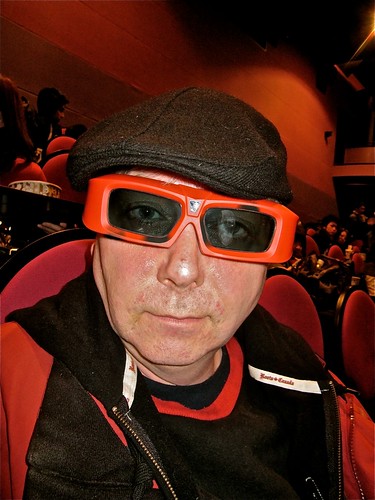
During the winter break I went to a movie called Avatar. Avatar is a 3D movie. I wore special 3D glasses. Today we are going to learn some English by talking about Avatar. First, let's look at the movie trailer. Click this link: http://www.youtube.com/watch?v=aVdO-cx-McA . Now let's listen to a news story about Avatar on News English Lessons.com.
Now, please leave a comment. Have you seen this movie? If not, do you want to see this movie?
Now, please leave a comment. Have you seen this movie? If not, do you want to see this movie?
Friday, December 18, 2009
Toyo Gakuen University FE2-Reading Semester 2 Final Exam Study Guide
Well the end of the year is here. Your final exam is on Friday 8 January. Here's your final exam study guide:
The exam will cover units 9, 10, and 11. In order to pass the exam (試験に合格するために) you must show that you understand and remember the content, vocabulary and grammar that you studied in units 9,10 and 11. You must also show that you can use the reading skills you practiced in class. There will be 6 types of questions:
Questions about the contents of Units 9,10, and 11
The exam will cover units 9, 10, and 11. In order to pass the exam (試験に合格するために) you must show that you understand and remember the content, vocabulary and grammar that you studied in units 9,10 and 11. You must also show that you can use the reading skills you practiced in class. There will be 6 types of questions:
Questions about the contents of Units 9,10, and 11
- Vocabulary: A. Match the vocabulary from the textbook with the Japanese translation. B. Match the words that make collocations.
- Grammar: These are multiple choice type questions. You will have to choose from 4 choices. Will will choose the best word or words to fill in the blank in a sentence. (p. 77 #3, p. 84 #1).
- Content: These are multiple choice type questions. You will be asked questions about the readings ("Into the Wild", pp. 78,79; and "Seeds of Change", pp.86, 87). You will have to choose from 4 choices.
- Personal response. This is a short paragraph type of answer. These questions will be about "Into the Wild" and Seeds of Change". Please study your answers to the "What do you think?" questions on pages 78 and 86. You will have to write 2 or 3 sentences in order to answer the question. Your answer should be at least 50 words.
Questions about two new readings.
- Reading for the main idea. This is a multiple choice type of question. You will have to choose from 4 choices.
- Reading for details. This is a multiple choice type of question. You will have to choose from 4 choices.
The exam will be sixty minutes. Use the following resources to help you study for the exam:
The answer sheets for the Independent Study Tasks in the lecture (x) folder.
Verb patterns
Unit 10 Word search
Unit 11 Verbs + Nouns
Unit 3 Word Search
Sarah's Freshman English Reading Blog: Unit 10, and Unit 11
Good luck!
Wednesday, December 16, 2009
Toyo Gakuen University Homestay English Last lesson: Christmas and The English Lounge Podcast
Well this is our last lesson. So today is special. First we are going to learn about Christmas in Tarragona Spain.
Now let's listen to the Toyo Gakuen University English Lounge Podcast. In this podcast you will hear two Toyo Gakuen University students talk about their homestay experiences.

Click the link:The English Lounge Podcast
Posted using ShareThis
Now let's listen to the Toyo Gakuen University English Lounge Podcast. In this podcast you will hear two Toyo Gakuen University students talk about their homestay experiences.

Click the link:The English Lounge Podcast
Posted using ShareThis
Toyo Gakuen University Christmas Lesson
Well, Christmas is almost here, and the year is almost over, so as a special treat, we are going to have a Christmas lesson. First let's learn about Christmas around the world.
Merry Christmas! See you next year.
Merry Christmas! See you next year.
Friday, December 11, 2009
Toyo Gakuen University FE2 Reading Unit 11: Seeds of Change
Today we are going to read about three plants that have changed the world: tobacco, cotton and sugar cane. Look at the pictures below. Which picture is tobacco? Which picture is cotton? Which picture is sugar cane?


What do you think? Post a comment. Which plant changed the world the most? Which plant was the most beneficial (都合が良い)? Which plant was the most harmful (有害な)? Which plant is most important in your life? Do your wear cotton clothes? Do you smoke? Do you eat a lot of sweets? Post your answers below.


Tobacco, cotton, and sugar cane were grown on slave plantations. Let's watch a video about slave plantations. A student in Singapore made the video. Enjoy!
What do you think? Post a comment. Which plant changed the world the most? Which plant was the most beneficial (都合が良い)? Which plant was the most harmful (有害な)? Which plant is most important in your life? Do your wear cotton clothes? Do you smoke? Do you eat a lot of sweets? Post your answers below.
Wednesday, December 09, 2009
Toyo Gakuen University Homestay English 2009 2nd Semester Lesson 12
Today's lesson is about restaurants and day-trips. First, let's watch some videos about day-trips and special events in Thailand, Ireland, Canada, and the U.K.
Now let's review some vocabulary: TYG 応用英語 English Vocabulary List
Next, let's watch a video about going to a restaurant. English language learners in Mexico made the video. Watch, listen and take notes. What did the people order?
Advice for ordering in a restaurant
Now let's review some vocabulary: TYG 応用英語 English Vocabulary List
Next, let's watch a video about going to a restaurant. English language learners in Mexico made the video. Watch, listen and take notes. What did the people order?
Advice for ordering in a restaurant
- take as long as you need to look over the menu
- don't hesitate to ask the server a question about the menu
- be sure that the server underestands your order
- don't hesitate to refuse a wrong order
- leave a tip in countries that have a tipping custom. The customary amount is different for different countries. Check your guide book.
Friday, December 04, 2009
Toyo Gakuen University Travel English Special Guest Maho Takahashi from Peace boat.
Today we are going to have a special lecture by Maho Takahashi of Peace boat. Maho-san will tell us about Global English. This is the second time that Maho-san has visited Togaku. You can see pictures of last year's visit. Click the link: http://mrstoutsblog.blogspot.com/2008/12/interest-based-english-travel-peace.html

Toyo Gakuen University FE2 Reading Unit 10 Into the Wild Lesson 2
Today we continue enjoying the story of Chris McCandless. First, let's watch a video with Sean Penn, the director of the film Into the Wild and Emile Hirsh, the actor who played Chris McCandless.
Now let's watch a tribute to Chris McCandless. This video shows pictures of the real Chris McCandless.
Now open the lecture folder. Save the document called FE2U10-2IndepStudy to your own folder. Do the tasks.
Finally, post a comment. What do you think of Chris McCandless? Do you think he was brave (勇な)? Do you think he was foolish? How would you feel in his situation (どのようにあなたが彼の状況では感じることが) ?
Now let's watch a tribute to Chris McCandless. This video shows pictures of the real Chris McCandless.
Now open the lecture folder. Save the document called FE2U10-2IndepStudy to your own folder. Do the tasks.
Finally, post a comment. What do you think of Chris McCandless? Do you think he was brave (勇な)? Do you think he was foolish? How would you feel in his situation (どのようにあなたが彼の状況では感じることが) ?
Thursday, December 03, 2009
Toyo Gakuen University Introduction to Business English 1B: Our Company Presentation project
Today we will continue working on our presentation project, and practice presentation skills. First, let's look at a company profile of a Japanese company called Logos.
Now let's watch a very bad presentation. How many mistakes can you find? What are the mistakes?
OK, now let's review the project outline. Click this link: Our Company.
In your presentation you must explain your company's corporate values and mission. Here are some links to some real company's mission statements:
Finally, here are the presentation assessment criteria (評価基準). You can use this as a checklist.
Content (内容) 10 points
Your presentation must contain the following information:
A. Slides (5 points)
Now let's watch a very bad presentation. How many mistakes can you find? What are the mistakes?
OK, now let's review the project outline. Click this link: Our Company.
In your presentation you must explain your company's corporate values and mission. Here are some links to some real company's mission statements:
- Starbucks' Mission Statement . NB (注意せよ) In Starbucks' mission statement "partners" means "employees (従業員)"
- Microsoft's Mission Statement
- McDonald's Mission Statement
- Nike's Mission Statement
Finally, here are the presentation assessment criteria (評価基準). You can use this as a checklist.
Content (内容) 10 points
Your presentation must contain the following information:
- When the company was founded
- Where the company was founded
- Who founded the company
- The number of offices
- The locations of the offices
- The number of employees
- The company's product or service
- Annual revenues
- The company's corporate values (see p. 79 of your textbook)
- The company's mission, services and benefits to its customers (see p. 133 of your textbook)
A. Slides (5 points)
- 4 slides
- 30 point fonts
- An image on every slide.
- The URL of the sites where you got your images.
- No more than 10 words on each slide.
- Speech is 4 minutes long, each speaker speaks for 2 minutes, and the speech is memorised (Yes = 10 points; No = 0 points)
- Speech is clear, easy to hear, and easy to understand (scale (尺度) from 0-5)
Wednesday, December 02, 2009
Toyo Gakuen University Homestay English: Unit 7 - Cooking is easy
Today we are going to learn useful English for cooking. Many homestay families are interested in Japanese food. It's a good idea to teach them how to make a Japanese dish. First, let's watch a funny video about making sushi. What mistakes is Baka Tono making?
Next, here's a video in English about how to make tempura.
Now lets watch a video about making fish and chips.
This video downloaded from VideoJugNext, here's a video in English about how to make tempura.
Now lets watch a video about making fish and chips.
Let's watch again and do the tasks on your handouts. The tasks for this video were written by Paul Carr for his video podcast ESLpodTV. On the ESLpodTV website Paul Carr wrote the following about this video lesson:
There are some useful words and expressions to learn below. More are in the text.
pour - move liquid from one container to another
serve - give food to the people who will eat it
season - give flavor to food by adding salt, pepper etc.
fry - cook food in oil
flip - turn something onto its other side
For Japanese and Spanish translations please go to transcript. ( せりふの訳はこのページです)
Finally, please leave a comment. What Jpanese dish can you make? What are the ingredients? How do you make it? Please post a comment.

Friday, November 27, 2009
Toyo Gakuen University Travel English Unit 12
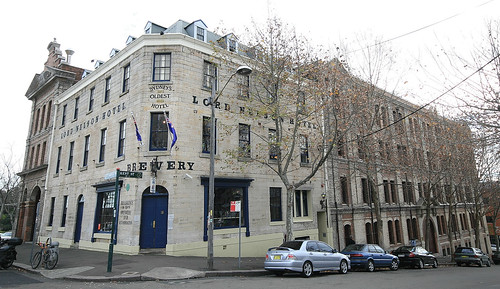
The picture above is The Lord Nelson Brewery. The Lord Nelson Brewery is the oldest pub in Sydney, Australia. I went to the Lord Nelson in 2000. I really enjoyed it. Look at the map below.
View Larger Map
Here's a video about the Lord Nelson Brewery Pub.
Watch more Sydney videos at tripfilms.com
Today we are going to learn useful English that we can use in pubs. We are also going to learn about drinking laws in various countries. Finally we'll learn about small talk.
Click this link: Unit 12 - What would you like to drink?
Toyo Gakuen University FE2 Reading Unit 10: Into the Wild
Today we are going to read a true story about a young man called Chris McCandless. McCandless' story was made into a movie called Into the Wild. Let's watch a movie trailer for Into the Wild.
Now open the lecture folder and save the document called "FE2IndepStudyU10" to your own folder. Do the tasks. When you are finished please post a comment.
Enjoy!
Thursday, November 26, 2009
Toyo Gakuen University Introduction to Business English 1B Unit 9: Companies
Today we are going to finish Unit 9 and begin working on our project.
Watch the video. What do you think are Luis Vuitton's corporate values?
Now let's learn some new vocabulary that we'll need to do our project. Click the link: TYG Introduction to Business English Vocabulary List 2
OK, Here's your Project Outline:
Our Company
In pairs you will present an international company. It can be a real company, or it can be a company that you create. You will do a 4-minute presentation using powerpoint. Your powerpoint must have the following:
- 4 slides
- 30 point fonts
- An image on every slide.
- The URL of the sites where you got your images.
- No more than 10 words on each slide.
- When, where, and by whom the company was founded (see p. 80 of your textbook)
- The number of offices
- The locations of the offices
- The number of employees
- The company's product or service
- Annual revenues
- The company's corporate values (see p. 79 of your textbook)
- The company's mission, services and benefits to its customers (see p. 133 of your textbook)
Your presentation will be on Thursday 10 December
Have fun!!!
Toyo Gakuen University Extension Centre Class: Destination Canada!
Here's a video about the CN Tower in my hometown Toronto. Enjoy!
Wednesday, November 25, 2009
Toyo Gakuen University Homestay English Unit 6: It's 50% off
Today's lesson is about shopping. Watch the video. What is the shopping mall's name? Where is it?
Today's lesson is about shopping. Watch the video. What is the shopping mall's name? Where is it?
Now click this link: Online conversion - clothing
What is your sweater size in the U.S., the U.K. and Continental Europe?
Finally, please leave a comment. Where do you like to shop?
Toyo Gakuen University Students and Teachers help make JALT 2009 a success
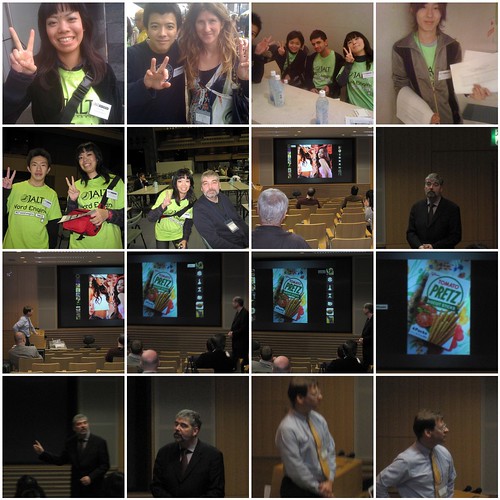
Click the link to see each photo in the album
Last weekend, students and teachers at Toyo Gakuen University participated in the Japan Association of Language Teaching (JALT) National conference in Shizuoka. You can see some pictures above. I was humbled by the great work of my colleagues, and very proud of our students' work. They really worked hard and impressed everyone! It made me very proud to say I'm a Toyo Gakuen University teacher!!
Friday, November 20, 2009
Toyo Gakuen University FE2-Reading: Grammarman and Comics made by Students!
Today was the midterm exam. You must be tired. Let's finish the lesson with something fun!
Here are some videos of a cartoon character called Grammarman. We have visited the Grammarman website before. We read the Frankenstein comic on the Grammarman website. Watch the videos. There are eight grammar mistakes in the first video. Can you find them?
Now let's read some comics made by students from around the world. These students are learning English - just like you! Some are Brian Boyd's students in Thailand. Brian Boyd is an English teacher in Bangkok and the creator of Grammarman.
Click this link: Student Comics Galleries. Read the comics in Gallery 1 and answer the questions on the Study Gallery Quiz. The Student Gallery Quiz is in the lecture folder.

OK! Go for lunch. See you next week!
Here are some videos of a cartoon character called Grammarman. We have visited the Grammarman website before. We read the Frankenstein comic on the Grammarman website. Watch the videos. There are eight grammar mistakes in the first video. Can you find them?
Now let's read some comics made by students from around the world. These students are learning English - just like you! Some are Brian Boyd's students in Thailand. Brian Boyd is an English teacher in Bangkok and the creator of Grammarman.
Click this link: Student Comics Galleries. Read the comics in Gallery 1 and answer the questions on the Study Gallery Quiz. The Student Gallery Quiz is in the lecture folder.

Tuesday, November 17, 2009


Friday, November 13, 2009
Toyo Gakuen University Travel English 2009 Semester 2 - Lesson 7: Going to the Doctor

Today we are going to learn useful English for going to the doctor. Let's watch a funny video. Click the link: A Visit to the Doctor.
Look at the vocabulary below:
aftersun cream 日焼け後のケア用クリーム
after meals 食後
aspirin アスピリン(鎮痛剤の一種)
avoid 避ける
cold (n) 風邪
cream クリーム
eat too much 食べすぎる
every ~ごとに
eye drops 目薬
fresh air 新鮮な空気
hay fever 花粉症
headache 頭痛
itchy かゆい
medicine 薬
painkiller 鎮痛剤
pharmacist 薬剤師
pharmacy 薬局
plenty of たくさんの~
problem 問題
rash 発疹
rough (波が)荒い
rub (v) こする
seasick 船酔い
see a doctor 医者に診せる
serious 重い
sick 吐き気がする
sore 痛い
spicy 香辛料のきいた、からい
stay out of ~を避ける
stomachache 腹痛
sunburn (炎症を起こすような)日焼け
tablet 錠剤
terrible ひどく(気分が)悪い
throat のど
toothache 歯痛
twice a day 1日2回
What’s the matter? どうしましたか?
wrong 具合が悪い
What did you think of today's lesson. Please leave a comment.
Toyo Gakuen University FE2 Reading 2009 Semester 2 Study Guide

The midterm exam is next Friday, the 20th of November.
Here is your study guide:
The exam will cover Units 6-8, and the Frankenstein comic. There will be 6 types of questions:
- Timed reading: scan a reading for 1 minute in order to find specific information. This is a multiple choice type question.
- Reading for the main idea. This is a multiple choice type of question. You will have to choose from 4 choices.
- Reading for details. This is a multiple choice type of question. You will have to choose from 4 choices.
- Making inferences. This is a multiple choice type of question. You will have to choose from 4 choices.
- Matching activities: A. Match the vocabulary from the textbook with the Japanese translation. B. collocations.
- Personal response. This is a short paragraph type of answer. You will have to write 2 or 3 sentences in order to answer the question. Your answer should be at least 50 words.
Use the following resources in order to study for the exam:
- American Headway Level 2 Unit 6 Crossword
- Unit 8 Vocabulary Flashcards on Quizlet
- Unit 8 Vocabulary Flashcards on StudyStack
- Simple English News articles about Brad Pitt and Angelina Jolie, Madonna and Guy Ritchie, David and Victoria Beckham.
- Wikipedia articles about Milton Petrie, and Hetty Green.
Also, review these posts from Mr. Stout's Blog: Unit 7 - Celebrity Interview , Unit 8 - Dilemmas Unit 8 Part 2 and look at these posts from Sarah's Blog: Unit 6, Unit 7, Unit 8, and Frankenstein.
Finally, please review the answer keys to the Independent Study Task sheets for Units 6 - 8.
Good luck!
Thursday, November 12, 2009
Toyo Gakuen University Introduction to Business English 1B: Unit 9 - Companies
Today we start our unit on companies. Included in this unit will be a case study as usual. You will also do a presentation project.
One of the companies that we will read about is called Natura. You can see the Natura logo below. Click this link to read a wikipedia article about Natura in Japanese.

One of the companies that we will read about is called Natura. You can see the Natura logo below. Click this link to read a wikipedia article about Natura in Japanese.

Now let's scan the unit for unknown vocabulary and add it to our list on smart.fm
Finally, please write a comment. What did you think of today's lesson?.
Wednesday, November 11, 2009
Toyo Gakuen University Homestay English Unit 5 and Fall 2009 Mid-term Exam Study Guide
Today we are going to do Unit 5 in our textbook. We will learn about household chores.

Flickr photo be chefranden
Also, we will review. The mid-term exam is next Wednesday, the 18th of November 2009.

Flickr photo by jerine
The midterm exam will have 3 parts:
Part 1: Vocabulary.
Click this link: TGU IE2 Homestay Midterm Exam 2008 List. and do the lessons on smart.fm
Part2: Multiple choice questions about Units 1 - 4 in your textbook. Click here to do a quiz on Unit 1: http://spreadsheets.google.com/viewform?hl=en&formkey=ck1lQzJZcjBoMkl5cjBXUlBQTk8zR3c6MA..
Part3: 2 short paragraph answer type questions. You will be asked to write one or two paragraphs for each question. Your answer should be between 50 words and 100 words.
Here are the questions:
*Describe a homestay trip that you would like to do in the future. Include the following points:
Study hard and good luck!
Flickr photo be chefranden
Also, we will review. The mid-term exam is next Wednesday, the 18th of November 2009.
Flickr photo by jerine
The midterm exam will have 3 parts:
Part 1: Vocabulary.
Click this link: TGU IE2 Homestay Midterm Exam 2008 List. and do the lessons on smart.fm
Part2: Multiple choice questions about Units 1 - 4 in your textbook. Click here to do a quiz on Unit 1: http://spreadsheets.google.com/viewform?hl=en&formkey=ck1lQzJZcjBoMkl5cjBXUlBQTk8zR3c6MA..
Part3: 2 short paragraph answer type questions. You will be asked to write one or two paragraphs for each question. Your answer should be between 50 words and 100 words.
Here are the questions:
*Describe a homestay trip that you would like to do in the future. Include the following points:
- Where you would like to do a homestay.
- Why you want to do a homestay.
- How you would prepare for the homestay.
- The type of homestay family you would like. For example: an older couple with no children, or a young couple with young children.
- What you would like to do during the homestay.
Study hard and good luck!
Remembrance Day 2009
 |
| From Michael's Mash-Ups |
Here's a beautiful video made by a teacher in Canada. Please pray for peace today.
Friday, November 06, 2009
Toyo Gakuen University Travel English 2009 Semester 2 - Lesson 7: Asking for directions
Today we are going to learn how to ask for directions.
Let's watch a video first.
Now let's learn some vocabulary.
Click this link: http://mrstoutsblog.blogspot.com/2008/10/toyo-gakuen-university-interest-based_24.html
The midterm exam is next week. Please do some practice tests.
See you next week!
Let's watch a video first.
Now let's learn some vocabulary.
Click this link: http://mrstoutsblog.blogspot.com/2008/10/toyo-gakuen-university-interest-based_24.html
The midterm exam is next week. Please do some practice tests.
See you next week!
Toyo Gakuen University FE2-Reading Unit 8 Dilemmas Part 2
Today we are going to finish Unit 8. Open the lecture folder. Save the document called "FE2U8-2IndepStudy". Read the instructions. Do the tasks.
The image below is an example of an e-mail to an online advice column called School of Life. Click the image for a larger view (画像をクリックして拡大イメージを見る).

Click the link below. Read the blog post. Do the online vocabulary study exercises.
Mr. Stout's Blog-For students and teachers: Toyo Gakuen University Freshman English 2 - Reading Unit 8: Dilemmas
Finally, please read pp.70,71 in your textbook in order to prepare for next lesson (次の授業の準備のために教科書の70,71ペジを読んで下さい)
See ya next week!
The image below is an example of an e-mail to an online advice column called School of Life. Click the image for a larger view (画像をクリックして拡大イメージを見る).

Click the link below. Read the blog post. Do the online vocabulary study exercises.
Mr. Stout's Blog-For students and teachers: Toyo Gakuen University Freshman English 2 - Reading Unit 8: Dilemmas
Finally, please read pp.70,71 in your textbook in order to prepare for next lesson (次の授業の準備のために教科書の70,71ペジを読んで下さい)
See ya next week!
Thursday, November 05, 2009
Toyo Gakuen University Introduction to Business English 1B: Case Study - Conflict Resolution
Today we are going to look at a case study involving an office conflict.
First let's watch a funny video called "The Great Office War". Watch the video and answer the questions below:
1. Why did the conflict start?
2. Which departments were involved in the conflict?
3. How could the war have been prevented?
Finally, after the case study please post a comment below.
First let's watch a funny video called "The Great Office War". Watch the video and answer the questions below:
1. Why did the conflict start?
2. Which departments were involved in the conflict?
3. How could the war have been prevented?
Finally, after the case study please post a comment below.
Wednesday, November 04, 2009
Toyo Gakuen University Homestay Class 2009 Semester 2 Lesson 7

1. Image0002 by Katsuhito, 2. P2009_0909_204200 by Mr. Suzuki, 3. Hamburger and peperontino by Sohei, 4. Cake By Rena, 5. JANANESE SUSHI by Hideaki, 6. A lunch set from the Togaku Cafeteria
Today will continue studying about food and table manners. Above you can see some pictures of food. Students in this class took the pictures. Choose a picture you like, click the link. Write a comment and ask a question.
Now let's learn about meals and manners in America, Britain and Canada. Click this link:http://mrstoutsblog.blogspot.com/2008/10/toyo-gakuen-university-homestay-english.html
Finally, exciting news! Sasa has replied to your comments about the videos her students made. Click here to read her reply: What makes Slovenia unique?
Subscribe to:
Posts (Atom)
Today we are going to start our second writing task, "My Special Place".
Look at the photo. This is my special place. Why do you think it is special? Now click the link below the photo. Please write a comment.