Showing posts with label 英語総合1A. Show all posts

Tuesday, July 10, 2012

英語総合1A Global Issues Spring 2012 Final Exam Study Guide

The semester is almost over! The final exam  is 17 July 2012 (1st period).
Please study Units 6 - 12. Please study carefully pp. 22, 25, 26, 29, 30, 33, 34, 37, 38, 41, 42, 45, 46, and 49.
The final exam with have short answer type questions, and long answer type questions. You will have to show that you remember the content of the textbook, and that you understand the content of the textbook.
I recommend that you do the Wrap Up activities for units 6 - 12 on pp. 72. I also recommend you study the vocabulary using Quizlet. Please click here: 英語総合1A Vocabulary.
Good Luck!

Tuesday, July 03, 2012

英語総合1A Global Issues 2012 Unit 11 Social Change

Hello everyone,
Today we are going to talk about social change.
First, let's scan the unit and find words we don't know so well. Add these words to our Quizlet flashcard set 英語総合1A Vocabulary.

Now let's look at some photos of recent nuclear protests in Japan. Have you ever joined a protest? What do you think of people who join protests? Please post a comment.

Tuesday, June 26, 2012

英語総合1A Global Issues 2012 Unit 10 Diversity

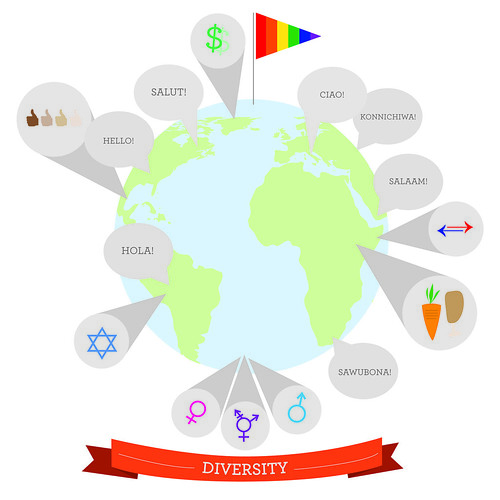
Diversity
Hello everyone,

Today we are going to talk about diversity.
First, let's study some vocabulary. Please click the link 英語総合1A Vocabulary. Scan the unit in your textbook. Add any words you don't know, or  that you don't know well.

Do you think Japan is a diverse country? Post your  answer as a comment comment below.

Have a good week!


Tuesday, June 19, 2012

英語総合1A Global Issues 2012 Unit 9 Gender & Language and Assignment 2

Hello everyone,
Today we are going to talk about gender and language. First let's scan Unit 9 for words we don't understand and add them to our flashcards on Quizlet.

Today we will be learning a little about the American anthropologist Margaret Mead. You can learn more about her from wikipedia in English and Japanese.
Your next assignment is to watch an interview with Miho, a young Japanese woman who lived and studied overseas. The video comes from The Daily English Show episode #320.


Tuesday, June 12, 2012

英語総合1A Global Issues 2012 Unit 8 Communication Styles

Detail from "Hands"

Hello everyone,

Today we are going to talk about communication styles.

First, let's review some vocabulary. Please click the link: 英語総合1A Vocabulary.

I think you'll be surprised to learn that some people have a different communication style than you might expect. How about you, do you have a reserved, expressive, or flexible communication style?

Please post a comment below.

Tuesday, June 05, 2012

英語総合1A Global Issues Unit 7 Politeness

More reminders about minding mannersHello everyone,

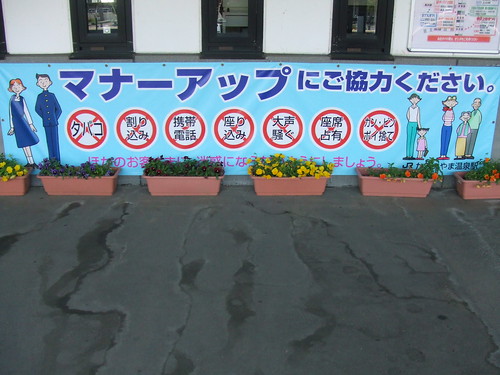
Today we are going to talk about politeness. We can see many posters around Japan that remind us of our manners. Look at the image on the left. What are the seven manners in the picture?
There have been some very interesting manner posters in Japan. Click the link to see some interesting manner posters. Which poster do you think is most effective (最も効果的な) ?
Click the link to go to today's lesson.

Tuesday, May 22, 2012

英語総合1A Global Issues Unit 6: Individualism and Midterm Exam Study Guide


Hello everyone! Today we are going to talk about Individualism. Next week is the Mid-term Exam. Please look at your study guide below.
The test covers units 1-5 pp. 2-21. The test has 3 sections.


Section 1: Vocabulary (10 points). Study the vocabulary in your study guides

· 6 matching questions J-E
· 4 fill-in the blank questions

Section 2: Remembering information from the textbook (12 points).

· 5 short answer questions (write 2 or 3 words)
· 1 chose the true statement question.
Important points to remember:
  • Visible cultural differences
  • Hidden cultural differences
  • Values
  • Keys to overcoming culture shock
  • Things that increase culture shock
  • Words and phrases that express Japanese culture
  • Things needed for an international career.
Section 3: Demonstrating an understanding of the information in the textbook (8 points)

· 2 long answer questions (4 or 5 sentences) In this section you will have to express your feelings about one of the topics in units 1-5. Remember that your reason is most important.

Now let's study some vocabulary on Quizlet. Please click this link: 英語総合1A

Study hard! and Good luck!!

Tuesday, May 15, 2012

英語総合1A Global Issues Unit 5: Body Language and Customs

Yasuko making gesture for "Please"Hello everyone,
Today we are going to talk about body language. Look at the picture on the left. What is the woman saying?

Click the link to go to today's lesson.

You can learn more about body language by reading this article: How to read Body language.

Describe your favourite gesture. Post a comment below.


Tuesday, May 08, 2012

英語総合1A Global Issues 2012 Unit 4: Culture in Language

Hello everyone, I hope you enjoyed Golden Week!

Today we are going to study Unit 4: Culture in Language. Please download and save the study guide below.

Unit 4:Culture in language Study Guide
View more documents from mickstout.

Idioms are one way we have culture in language. Let's watch a great video about idioms made by Sarah of The Daily English Show.


Do you like any English idioms? What are some idioms that you like in your native language. Please tell us by posting a comment. See you next week!

Tuesday, May 01, 2012

英語総合1A Global Issues 2012 Unit 3: Culture Shock

Photo by iStockphoto. Used with permission
Hello everyone! I hope you enjoyed the long week-end. Today we are going to start our next unit - Culture Shock. Let's start with some vocabulary study. Please click here: 英語総合1A Vocabulary flash cards.
What is culture shock? Here are some sentences about culture shock from space alc:

Culture shock affects people in different ways; physical and mental tiredness, depression, homesickness, irritability, becoming critical of the new culture.
カルチャーショックは、人によって異なる悪影響を及ぼします。肉体的・精神的疲労、抑鬱症、ホームシック、イライラ、新しい文化に批判的になるなどです。◆【出典】Hiragana Times, 1998年11月号(株式会社ヤック企画)

Culture shock usually takes places about 3 months after arriving in a foreign country and is a negative reaction towards the new country, as a result of culture fatigue, from trying to adapt and communicate in an unfamiliar environment.
カルチャーショックは通常、外国に到着してから約3カ月が過ぎた頃に起こり、それは、新しい国に対する否定的な反応として現われます。不慣れな環境に順応し、気持ちを伝えようと努力することで、文化的に疲労した結果なのです。◆【出典】Hiragana Times, 1998年11月号(株式会社ヤック企画)◆URLhttp://www.hiraganatimes.com/

Now click the for the Unit 3: Culture Shock Study Guide.

Have you ever experienced culture shock? Please tell us about your experience of culture shock. Leave a comment below.

Tuesday, April 24, 2012

英語総合1A Global Issues 2012 Unit 2: Values

Hello everyone!
Today we are going to start the second unit of our textbook. The topic of Unit 2 is values. Look at the image above. Which of these values are important to you. Choose three. 
Now look at the study guide below. Study the key vocabulary. Let's learn the vocabulary using Quizlet. Please click the link: 英語総合1A VocabularyNow scan Unit 2 in your textbook and add words that you do not know to the flashcard set.
Values
View more documents from mickstout.

Now let's do the tasks in the textbook. Your first assignment is in the document above. It's due next week.
See you!

Tuesday, April 17, 2012

英語総合1A Global Issues 2012 Unit 1: Identity

Hello everyone!
Today we are going to start our first unit - Identity
First, let's learn some vocabulary. Please click the link: 英語総合1A Unit 1 Identity Vocabulary. Now scan Unit 1 in your textbook and add words that you do not know to the flashcard set.

Now look at the image below. What is it?


What information is printed on the image?


Now look at the study guide
Now let's do the other tasks in your textbook.

Finally, let's watch a video. This is a video conversation between Sarah of the Daily English Show and a man called Achille. Achille was born in Quebec. Therefore, his mother tongue was French. He moved to the United States. Achille's experience was very interesting.
Watch the video. What do you think of Achille's experience? How do you think you would feel if your second language became your main language and you were unable to express yourself easily in your mother tongue? Post your answer as a comment below.
Click this link to watch the video: http://youtu.be/ateaGrz-yXQ

Please review this lesson at home and study the vocabulary using Quizlet.
Have a great week. See you next Tuesday!

Tuesday, April 10, 2012

Shibaura Institute of Technology 英語総合IA Global Issues 2012 Lesson 1: Introduction to the course and class rules


Downloaded from Flickr

Welcome to 英語総合IA. Today you will learn about the course and together we will make some class rules. 


First, please look at the course outline below.
Please click the link to see some posts from previous classes


We will learn a lot of new vocabulary in this class. We will study vocabulary using an online tool called Quizlet. Please click the link to learn how to sign up for and use Quizlet


OK, now let's make some class rules together. Click the link to see some rules made by other SIT students: Classrules 2011.


Finally, please post a comment. Please tell me why you chose this course. Click the link to learn how to post a comment - コメント投稿法.

Thanks for joining this class. See you next week!

Tuesday, July 12, 2011

英語総合1A Global Issues Spring 2011 Final Exam Study Guide

 
This Image  is an edited and modified version of image by Lipo's sojourn (http://www.flickr.com/photos/ikkoskinen/309990286/)

The semester is almost over! The final exam  is 18 July 2011 (1st period).
Please study Units 6 - 11. Please study carefully pp. 22, 25, 26, 29, 30, 33, 34, 37, 38, 41, 42, and 45.
The final exam with have short answer type questions, and long answer type questions. You will have to show that you remember the content of the textbook, and that you understand the content of the textbook.
Here are examples of the kind of question you might see on the exam. These questions WILL NOT be on the exam. They are examples only:

What are the 2 lessons that Gandhi’s philosophy teaches us? (2 points)

List 5 similarities between Nelson Mandala and Gandhi. (5 points)


I recommend that you do the Wrap Up activities for units 6 - 11 on pp. 72. I also recommend you study the vocabulary using Quizlet. Please click here: 英語総合1A Vocabulary.
Good Luck!

Tuesday, July 05, 2011

英語総合1A Global Issues Unit 9 Gender & Language and Assignment 2

Hello everyone,
Today we are going to talk about gender and language. First let's scan Unit 9 for words we don't understand and add them to our flashcards on Quizlet.

Today we will be learning a little about the American anthropologist Margaret Mead. You can learn more about her from wikipedia in English and Japanese.
Your next assignment is to watch an interview with Miho, a young Japanese woman who lived and studied overseas. The video comes from The Daily English Show episode #320.


Tuesday, June 28, 2011

英語総合1A Global Issues Unit 8 Communication Styles

Al & Grant
Hello everyone,
Today we are going to talk about communication styles.
First, let's review some vocabulary. Please click the link: 英語総合1A Vocabulary.

I think you'll be surprised to learn that some people have a different communication style than you might expect. How about you, do you have a reserved, expressive, or flexible communication style? Please post a comment below.

Tuesday, June 21, 2011

英語総合1A Global Issues Unit 7 Politeness

Kyushu rail stewardess ready to welcome me to her train
Hello everyone!
Today we are going to start talking about politiness. Everyone thinks that their culture is the most polite. Canadians are very proud of their reputation for politeness. Japanese also take pride in their reputation for politeness. However, politeness is "a culturally-defined phenomenon" Behaviour that is polite in one culture may be eccentric or even rude in another. This makes politeness very difficult in international situations.
OK, now let's review some vocabulary. Please click the link: 英語総合1A Vocabulary.
What is politiness in your culture? Please leave a comment below.

Tuesday, June 14, 2011

英語総合1A Global Issues Unit 6: Individualism and Midterm Exam Study Guide

Hello everyone! Today we are going to talk about Individualism. Next week is the Mid-term Exam. Please look at your study guide below.
The test covers units 1-5 pp. 2-21. The test has 3 sections.

Section 1: Vocabulary (10 points). Study the vocabulary in your study guides
· 6 matching questions J-E
· 4 fill-in the blank questions

Section 2: Remembering information from the textbook (12 points).
· 5 short answer questions (write 2 or 3 words)
· 1 chose the true statement question.
Important points to remember:
  • Visible cultural differences
  • Hidden cultural differences
  • Values
  • Keys to overcoming culture shock
  • Things that increase culture shock
  • Words and phrases that express Japanese culture
  • Things needed for an international career.
Section 3: Demonstrating an understanding of the information in the textbook (8 points)

· 2 long answer questions (4 or 5 sentences) In this section you will have to express your feelings about one of the topics in units 1-5. Remember that your reason is most important.

Now let's study some vocabulary on Quizlet. Please click this link: 英語総合1A

Study hard! and Good luck!!

Tuesday, May 31, 2011

英語総合1A Global Issues Unit 4:Culture in Language


Hello everyone!
Today we are going to talk about culture in language.

First, let's study some vocabulary. Please click this link: 英語総合1A Vocabulary.


Some of the most common expressions we use reflect our culture. For example, "Keep your stick on the ice!" is a Canadian expression that means, "Always be ready!" This expression reflects the importance of hockey in Canadian culture.
What are some common expressions in your language that reflect your country's culture? Please write a comment below, but please don't use language inappropriate to a classroom or business setting.

Tuesday, May 10, 2011

英語総合1A Global Issues Unit 1: Identity

Hello everyone! I hope you had a great Golden Week. Today we start Unit 1 in our textbook. The topic is Identity.  After we do the tasks in the textbook we'll watch a video.

This is a video conversation between Sarah of the Daily English Show and a man called Achille. Achille was born in Quebec. Therefore, his mother tongue was French. He moved to the United States. Achille's experience was very interesting.
Watch the video. What do you think of Achille's experience? How do you think you would feel if your second language became your main language and you were unable to express yourself easily in your mother tongue? Post your answer as a comment below.