Hello everyone, I hope you had a nice weekend.
Today we are going to start our next topic, Love and Marriage in China, but first let's study some vocabulary on Quizlet, please click the link: Cross cultural Awareness and English Vocabulary.
Like Botswanan marriage customs, Chinese marriage customs include a "bride price". Chinese marriage customs also include a dowry. You can read about Chinese pre-wedding customs by clicking the link. Let's watch a video of a Chinese wedding. Now let's study some vocabulary,
For homework, please watch the video below. After that, please download the article, "Thousands marry on love you forever day". Read the article and do the tasks. Enjoy!
Showing posts with label Culture. Show all posts
Showing posts with label Culture. Show all posts
Sunday, May 11, 2014


Monday, April 28, 2014
Cross Cultural Awareness and English I 2014 Week 2: Love and marriage in Botswana

Hello everyone. I hope you enjoyed the week-end. Today we are going to start using our textbook. Our first reading is about a marriage tradition in Botswana. look at the picture on the left. It is a picture of a contemporary Tswana family. The Tswana are a people living in southern Africa. Eighty per cent of the population of Botswana is Tswana.
Let's pause here and do a little vocabulary learning. Please click the link: Cross Cultural Awareness and English 1.
Please look at the map below. Where is Botswana? The title of our first reading is Brides for Sale.

Next class we learn about love and marriage in China.
Tuesday, May 07, 2013
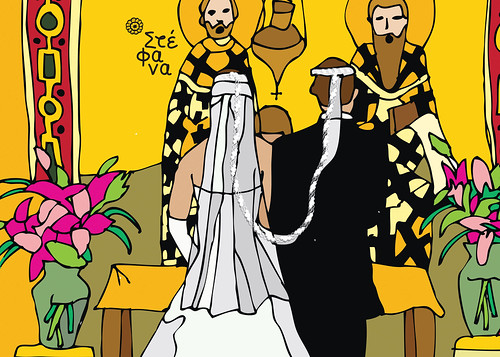
Cross Cultural Awareness and English 2013 Semester 1 Week 3: Love and marriage in Greece
 Hello everyone!
Today we are going to learn about love and marriage in Greece.
Last week we learned about dowries. Dowries are a part of Greek culture too. It's interesting that two very different cultures, China and Greece, can share a cultural tradition, isn't it?
You can learn more about Greek wedding traditions by clicking the link: Ten Greek Wedding Traditions.
Vicky Loras, a Greek Canadian teacher of English told me the following about weddings in Greece:
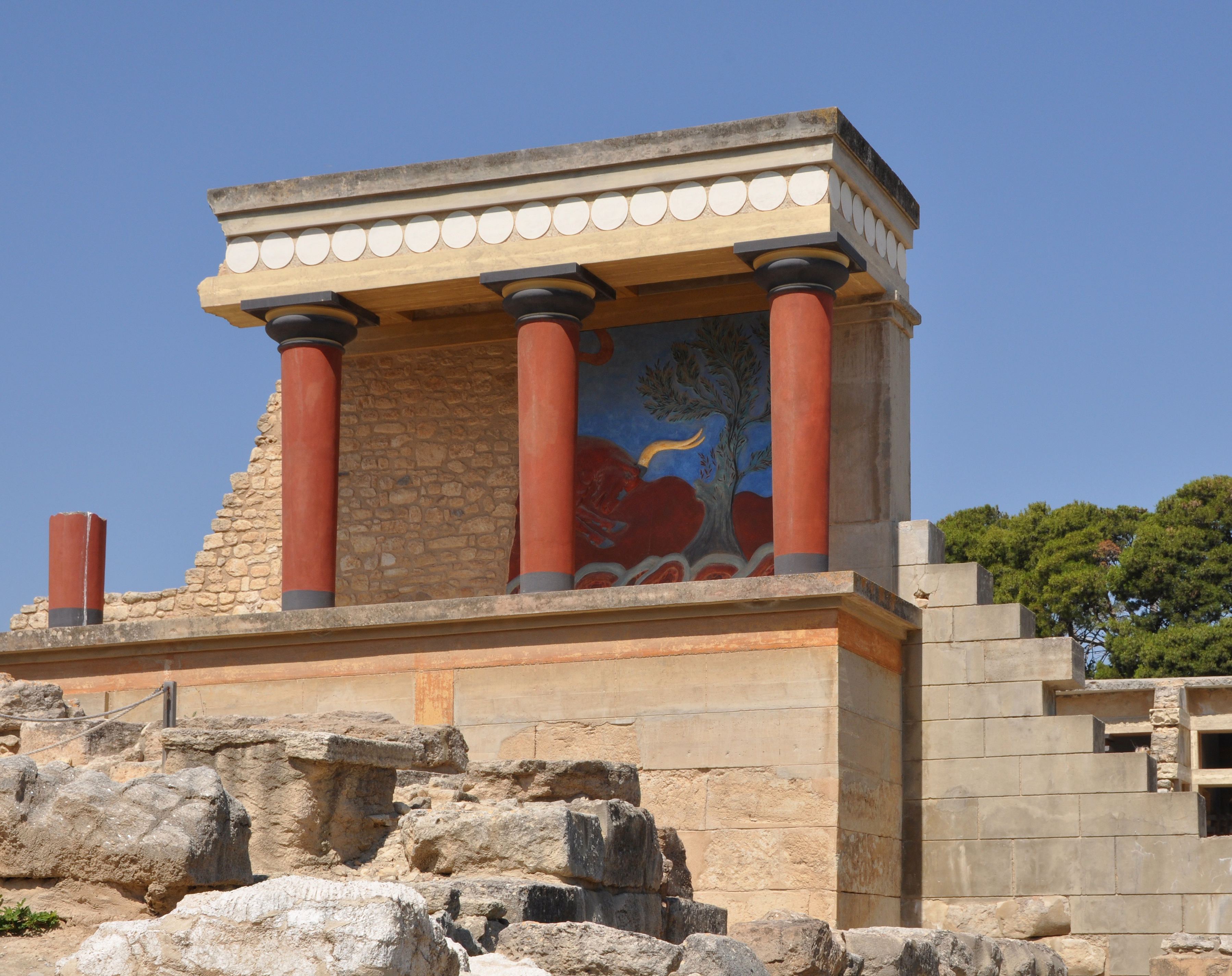
Today's article is about μαντινάδες (Mantinades), which are love poems sung at weddings on the island of Crete. Crete is the largest island in Greece. It was once the centre of the ancient Minoan civilization, which was the oldest civilization in Europe, so Crete has a rich cultural tradition. This rich cultural tradition has given the people of Crete some wonderful wedding customs, including the Mantinades.
You can learn more about Greek wedding traditions by clicking the link: Ten Greek Wedding Traditions.
Vicky Loras, a Greek Canadian teacher of English told me the following about weddings in Greece:
In many parts around Greece they still celebrate weddings in a traditional way. Some traditions still kept are:- The families of the couple pin paper money on the bride and groom (which they can then keep of course!)- Single people (usually women!) write their names on the bride's shoe soles. As she walks and dances throughout the day, some names get erased. Tradition has it, that the people's names that are erased are the next to get married!- In some villages, the bride and groom each go to church on foot, accompanied by their families. A relative walks in front and holds a Greek flag on a pole, which has a cross on top. They attach three apples on each point of the cross, which symbolises fertility.
- Towards the end of the ceremony, the guests throw rice at the couple, which symbolises fertility and food. It can be a pretty slippery situation though, with all that rice on the floor!If you would like to ask Vicky more about Greek culture, you can follow her on Twitter - @vickyloras
Today's article is about μαντινάδες (Mantinades), which are love poems sung at weddings on the island of Crete. Crete is the largest island in Greece. It was once the centre of the ancient Minoan civilization, which was the oldest civilization in Europe, so Crete has a rich cultural tradition. This rich cultural tradition has given the people of Crete some wonderful wedding customs, including the Mantinades.
Before we learn about the Mantinades, let's study some vocabulary. Please click the link: Crosscultural awareness and English Vocabulary.
Now let's listen to a mantinada. The song is called Ο ΥΜΝΟΣ ΤΗΣ ΜΑΝΑΣ - ΓΙΩΡΓΟΣ ΖΕΡΒΑΚΗΣ . Please click the link:
Vicky tells us that the title means, "Hymn to Mother". The singer says that there are many kinds of love in the world but the one kind of love that stands out is love for one's mother. Why do you think that a man might sing a song about his love for his mother at his wedding?
Ok, now please turn to p. 142.
What do you think of Mantinades? Are there any similar types of poetry in Japanese culture, or in the cultures of other peoples? Post a comment below.
See you next week!
Tuesday, January 15, 2013
The University of Tsukuba Cross Cultural Awareness and English Trimester 3 Week 5
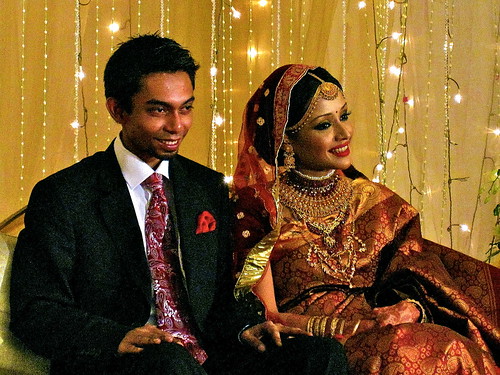
Hello everyone, Today we will continue discussing Love and Marriage. Look at the picture above. This is a picture I took of a Bangladeshi bride and groom at a wedding reception I attended in Dhaka, Bangladesh. In the photo below you can see me with my colleagues. The men, including me, are wearing a traditional Bengali shirt called a "panjabi". This shirt is called a Kurta in India. We were a little embarrassed because all the Bangladeshi men wore European business suits.

Let's listen to two people talking about Love and Marriage in Bangladesh. Some people in Bangladesh have arranged marriages. Let's listen to a conversation about arranged marriages on my friend Todd Beukens' great website English Listening Lesson Library Online (ELLLO). Please listen to the conversation and do the quiz.
Next, let's study some vocabulary. Please click the link: Cross cultural awareness and English vocabulary.
Now, let's learn more about Bengali weddings. Please click the link. Read the article and answer the questions:
1. What is a Ghotok?
2. What are the four parts of the Bengali wedding?
3. What is Gaye holud?
4. What is the Mahr?
5. Who arranges the wedding ceremony?
6. What do many of the wedding ceremony traditions revolve around?
7. Who arranges the reception?
8. What is the "flower bed" ceremony?
Finally, please leave a comment. What do you think of Bengali wedding traditions?
Monday, January 07, 2013
The University of Tsukuba Cross Cultural Awareness and English Trimester 3 Week 4
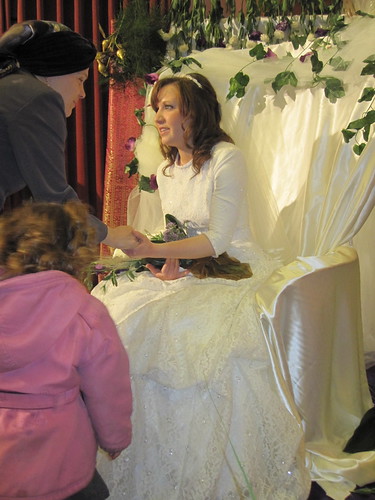 Hello everyone! Welcome back. Today we are going to review what we've learned about love and marriage in Botwana, China and Crete. Then we'll learn about some Jewish wedding traditions.
First, let's review some vocabulary. Please click the link: Cross cultural awareness and English vocabulary. After you have studied for five minutes, scan pages 147 and 148 in your textbook. Add any words you don't know to our vocabulary flashcard set.
Now let's learn about superstitions have Jewish wedding customs special.
What do you think of the superstitions you have read about. Are you superstitious? Can you think of any superstitions associated with Japanese wedding customs? Please post a comment.
Monday, December 17, 2012
The University of Tsukuba Cross Cultural Awareness and English Trimester 3 Week 3

Today we are going to learn about μαντινάδες (Mantinades), which are love poems sung at weddings on the island of Crete. Crete is the largest island in Greece. It was once the centre of the ancient Minoan civilization, which was the oldest civilization in Europe, so Crete has a rich cultural tradition. This rich cultural tradition has given the people of Crete some wonderful wedding customs, including the Mantinades.
Before we learn about the Mantinades, let's study some vocabulary. Please click the link: Cross cultural awareness and English Vocabulary.
Now let's listen to a mantinades. The song is called Please click the link:
Now let's listen to a mantinades. The song is called Please click the link:
The title means, "Hymn to Mother". The singer says that there are many kinds of love in the world but the one kind of love that stands out is love for one's mother. Why do you think that a man might sing a song about his love for his mother at his wedding?
Ok, now please turn to p. 142.
What do you think of Mantinades? Are there any similar types of poetry in Japanese culture, or in the cultures of other peoples? Post a comment below.
See you next week!
Tuesday, May 01, 2012
英語総合1A Global Issues 2012 Unit 3: Culture Shock
 |
| Photo by iStockphoto. Used with permission |
What is culture shock? Here are some sentences about culture shock from space alc:
Culture shock affects people in different ways; physical and mental tiredness, depression, homesickness, irritability, becoming critical of the new culture.
カルチャーショックは、人によって異なる悪影響を及ぼします。肉体的・精神的疲労、抑鬱症、ホームシック、イライラ、新しい文化に批判的になるなどです。◆【出典】Hiragana Times, 1998年11月号(株式会社ヤック企画)
Culture shock usually takes places about 3 months after arriving in a foreign country and is a negative reaction towards the new country, as a result of culture fatigue, from trying to adapt and communicate in an unfamiliar environment.
カルチャーショックは通常、外国に到着してから約3カ月が過ぎた頃に起こり、それは、新しい国に対する否定的な反応として現われます。不慣れな環境に順応し、気持ちを伝えようと努力することで、文化的に疲労した結果なのです。◆【出典】Hiragana Times, 1998年11月号(株式会社ヤック企画)◆URLhttp://www.hiraganatimes.com/
Now click the for the Unit 3: Culture Shock Study Guide.
Have you ever experienced culture shock? Please tell us about your experience of culture shock. Leave a comment below.
Tuesday, December 06, 2011
Shibaura Institute of Technology 英語総合1B Global Issues - Chapter 7: Love and Marriage Part 3
Hello everyone, Today we will continue discussing Love and Marriage. Look at the picture above. This is a picture I took of a Bangladeshi bride and groom at a wedding reception I attended in Dhaka, Bangladesh. In the photo below you can see me with my colleagues. I am wearing a traditional Bengali panjabi. We were a little embarrassed because all the Bangladeshi men wore European business suits.
Now let's listen to two people talking about Love and Marriage in Bangladesh. Some people in Bangladesh have arranged marriages. Let's listen to a conversation about arranged marriages on my friend Todd Beukens great website English Listening Lesson Library Online (ELLLO). Please listen to the conversation and do the quiz.
Now let's study some vocabulary. Please click the Vocabulary Flashcards tab above. Then scroll down and find the link to our SIT 英語総合 Vocabulary Flashcards. Click the link and sign into Quizlet. After that, scan the next reading and add unknown words to our flashcard set.
Before you read, make a list of words that you can usually hear in a love song.
One of my favourite love songs is First Love by Utada Hikaru. What's your favourite love song. Please post your answer as a comment.
See you next week!
Tuesday, June 21, 2011
英語総合1A Global Issues Unit 7 Politeness

Hello everyone!
Today we are going to start talking about politiness. Everyone thinks that their culture is the most polite. Canadians are very proud of their reputation for politeness. Japanese also take pride in their reputation for politeness. However, politeness is "a culturally-defined phenomenon" Behaviour that is polite in one culture may be eccentric or even rude in another. This makes politeness very difficult in international situations.
OK, now let's review some vocabulary. Please click the link: 英語総合1A Vocabulary.
What is politiness in your culture? Please leave a comment below.
Thursday, April 16, 2009
Introduction to Business English A: Exchanging Business cards
Today we are going to practice exchanging business cards. Here's a video about the etiquette of exchanging business cards. Watch the video and do the quiz. Enjoy!
Wednesday, December 03, 2008
Toyo Gakuen University Homestay English: Christmas in Tarragona

Today we are going to learn about Christmas in Tarragona, a city in Northern Spain. We are going to watch slideshows by students in one of our International Sister Classes. They are students at a school called IES Collblanc.
Please do the following:
- Open the lecture folder
- Save the file called "Tarragona" to your personal folder (自分のふぉフォルダー)
- Click the link: TARRAGONA & CHRISTMAS
- Log in to Student Showcase
- Watch the slideshows.
- Do the tasks on your tasksheet.
- Write a comment about the slideshows. Include:
- Your first name (名前)
- Thank you
- Your impression of Tarragona (~の[に対する]印象を述べる)
- Your impression of Christmas in Tarragona
Thursday, November 13, 2008
Haiku by Toyo Gakuen University Extension Centre Students
Writing English Haiku is fun and useful. Writing Haiku helps you learn vocabulary and pronunciation.
Here are some haiku. Students in my extension centre classes at Toyo Gakuen University wrote these haiku. All these haiku are traditional in form: They all have three lines. They have a 5/7/5 syllable pattern and they have kigo (季語). Kigo are words that reflect the season. In these haiku the kigo are persimmon (柿) and crab (カニ). Persimmons and crab are eaten in autumn in Japan.
Enjoy!
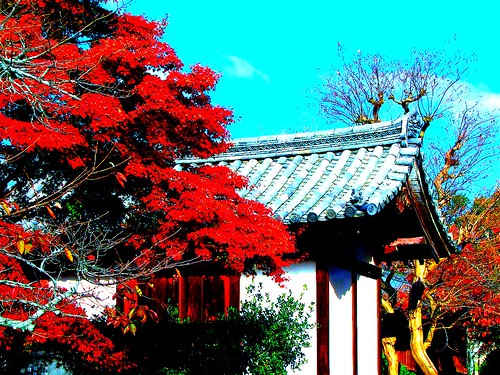
I eat persimmon
Remember Nara Temple
I come back happy
by Masayuki
Persimmon eating
I hear the ring of a bell sound
Houryuji Temple
by Yoshio
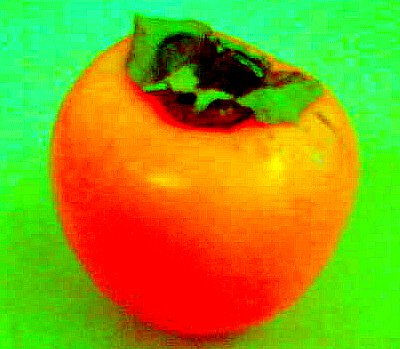
Persimmon
I want to eat crab
Every year in winter but
very expensive
by Masako
What a delicious
cuisine in the world you are
We call you a crab
by Kayoko

Originally uploaded by panduh
Sunday, August 17, 2008
Amanojaku
I love the sound of taiko. Taiko drums are often heard in summer in Japan. We hear them at festivals that we call matsuri.
The first taiko performance I ever saw was in Asakusa, near the famous temple we call Sensoji. I was very impressed by the performance. All the drummers were very small women. They had so much energy.
We can see taiko concerts too in summer too. I attended a great concert given by Amanojaku on the thirteenth of August at the Nerima Cultural Centre. The concert was a celebration of the 100th anniversary of Japanese immigration to Brazil. The concert was fantastic. I was very tired and sleepy but I did my best to keep my eyes open because it's important to SEE taiko as well as hear taiko. A taiko performance is like a dance!
This video is from Amanojaku's DVD called The Soul Beat of Japan. I hope you enjoy this example of traditional japanese culture as much as I did.
Do you like Taiko? Do you play Taiko? Please leave a comment?
Tuesday, March 04, 2008
Congratulations Kanto International High School Students !!

On the first of March, the graduation ceremony (卒業式) was held at Kanto International High School. In Canada a graduation ceremony is called convocation. The graduation ceremony at Kanto International High School was a special day for me because some of the graduates were students that I taught. Look at the picture below. This is a picture of me teaching the Study Abroad Class of 2008 at Kanto International High School's special campus in Katsuura, Chiba. Oh my! I look very fat in this picture! We could dress casually for these lessons. Usually I wore a suit and tie and the students wore school uniforms.


Look at the picture below. It's a picture of me with Kurobane-sensei. Kurobane-sensei is the Director of the University Study Abroad programme at Kanto International high school. The Study Abroad Class of 2008 gave us a present. My present was a beautiful collage.
 The Study Abroad Class of 2008 is the second graduating class in the University Study Abroad programme. Now about fifty students have completed the programme. About fifty percent applied to universities overseas. All were accepted. At present, Kanto International High School graduates are studying in the UK (The University of Wales at Aberystwyth, Sterling University, Southampton Solent University), Australia, and the United States. Next September, Kanto graduates will start studying at universities in the UK (Aberystwyth, Sterling, Bournemouth, Roehampton), Australia, New Zealand, the United States, and Canada (the University of Alberta).
Of course, next month, some Kanto International High School students will start studying at universities in Japan including Sophia, Waseda, Hosei and my alma mater (母校) Temple University Japan. Temple University is an American university. The main campus is in Philadelphia. The picture below is a picture of me at my Temple University Japan graduation ceremony. A graduation ceremony in the United States is called a commencement.
 I hope that some Kanto International High School alumni (卒業生たち) will become my students at Toyo Gakuen University. I taught a Kanto International High School alumnus last year. It was great!
Congratulations to all and best of luck at university!
Wednesday, February 13, 2008
Another Collage Celebrating Black History Month

The collage I've made this year has pictures of Nobel Prize winners.
The man in the top right hand corner is Sir William Arthur Lewis. He won the Nobel Prize in Economics. Below Sir William Arthur Lewis is Dr. Ralph J. Bunche. Dr. Bunche was the first Black person to win a Nobel Prize. He won the Nobel Peace Prize in 1950. In the top left hand corner is Albert John Luthuli. Luthuli won the Nobel Peace Prize too. The woman wearing blue clothes is also a Nobel Peace Prize winner. Her name is Wangari Maathai. Next to Wangari Maathai is Wole Soyinka. Wole Soyinka won the Nobel Prize in Literature. Above Wole Soyinka and to the left of Sir William Arthur Lewis is Derek Walcott. He won the Nobel Prize in Literature too. Finally, below Albert John Luthuli and beside Wangari Maathai is Toni Morrison. Toni Morrison is one of my favourite writers. She won the Nobel Prize in Literature in 1993.
Wednesday, February 06, 2008
Carnival in Trinidad, Brazil and New Orleans

日本翻訳またはより多くの情報のためのリンクをかちりと鳴らしなさい.
Carnivals are in full swing in many countries around the world now. The most famous carnivals are in Brazil, Trinidad, and New Orleans. The carnival in New Orleans is called "Mardi Gras". Mardi Gras means Fat Tuesday. It is usually the last day of a carnival. Fat Tuesday is the day before Ash Wednesday. Ash Wednesday is the first day of Lent. During Lent Catholics fast. The carnival is their opportunity to eat delicious food, sing and dance before they have to make their Lenten sacrifices. Fat Tuesday is called Pancake Tuesday in Canada because we eat pancakes on this day.
I have made a playlist of the great music that you can hear at a carnival.
Please click this link: http://www.finetune.com/playlist/2091981
Here are some videos of the most famous carnivals.
Carnival in Trinidad
Carnival in Brazil
Mardi Gras in New Orleans
Tuesday, January 08, 2008
Seoul

On the way home from Germany I stopped in Seoul. I stayed in Seoul for three nights.

The dark green area on the map is Seoul. Seoul is very close to North Korea.

I visited some palaces in Seoul including Changdeokgung. Changdeokgung is a UNESCO World Heritage Site.

 This is a lovely bird I saw in a park in Seoul. I was surprised that I didn't see a lot of crows and pigeons because there are many crows and pigeons in Tokyo.
 I think the most interesting thing about Seoul is the markets. There many markets in Seoul.
 There are many kinds of food you can eat in the markets. In this picture a woman is making Korean pancakes. I don't know the Korean name for these pancakes. They are almost the same as another Korean pancake called Pajeon. The Japanese name for these Korean pancakes is Chijimi. They are similar to Chinese Cōng Yóu Bǐng and Japanese Okonomiyaki.
 This is the chijimi that I ate. I shared it with my wife. I was too big. We couldn't finish it. It cost 4000 won. Four thousand won is about five hundred yen, or about five dollars.
Cologne Cathedral

On the twenty-sixth of December I made a day-trip to Cologne. I visited Cologne Cathedral. Cologne Cathedral is a UNESCO World Heritage Site. Also, it was the tallest building in the world from 1880 to 1890.
 Cologne Cathedral is built in the Gothic style. Therefore it has very ceilings and pointed arches.
It also has many beautiful works of art. You can see some examples of the art work below.
 The Crucifix of Bishop Gero is in the picture above. It was made in the 10th century CE.


The picture above is a nativity scene that was made specially for Christmas. The picture below is a close-up of the baby Jesus with his mother and a shepherd.

I climbed to the top of the bell tower. It was very a very difficult climb. I made me very tired.

The picture below is the view from the top of the bell tower. You can see the Rhine river.

Monday, January 07, 2008
Christmas Day in Frankfurt
 Almost all the shops and restaurants were closed in Frankfurt on Christmas Day. Fortunately, one restaurant in the Hotel Steigenberger Frankfurter was open. The restaurant was Oscar's.
 I ate Weiner Schnitzel for dinner. It was served with potatoes and cranberry sauce. Weiner Schnitzel is not a part of a traditional German Christmas dinner. However, cranberry sauce is a part of a traditional Canadian Christmas dinner.
Saturday, January 05, 2008
The Christmas Market in Nuremberg
 The Christmas market in Nuremberg is the most famous German Christmas market. It is called Christkindlesmarkt. Christkindlesmarkt means Christ child market. The picture above is the symbol of the Nuremberg Christkindlesmarkt. It looks like an angel but it is not an angel. It is the Christ child. It is the baby Jesus. You can see this symbol of the Nuremberg Christkindlesmarkt everywhere at the Nuremberg Christkindlesmarkt.


 One of the most famous attractions of the Nuremberg Christmas market is the clock of Frauenkirche (Our Lady's Church).
 Every day at noon the clock's chimes ring and the figures move around in an circle.
 Another attraction of the Christmas market in Nuremberg is a ride in a horse-drawn carriage.
 There were many beautiful crafts on sale at the Christmas market. One of the most interesting were the Christmas pyramids. The heat from the candles rises up and makes the propeller spin and the propeller spinning makes the figures below spin too.
 There were also hand-made Christmas tree ornaments and Christmas wreathes for sale.


 The Nuremberg Christmas market was very beautiful at night.
 After the Christmas market closed at two o'clock on Christmas Eve I went to Nuremberg Castle. The view from the castle is great!

 This is Albrecht Durer House. Durer was a famous artist who lived in Nuremberg.
 This is a statue of Durer
 I was really tired after walking all over Nuremberg on Christmas Eve. Fortunately, the hotel I stayed in was very comfortable. The pillow and the quilt were the best! Filled with Canada Goose down. Warm and Cozy!!!
 Early Christmas Day I went back to Frankfurt.

Subscribe to:
Posts (Atom)