Showing posts with label Video. Show all posts

Thursday, August 07, 2014

The University of Tsukuba Web 2.0 Workshop for Japanese Secondary School Teachers 2014

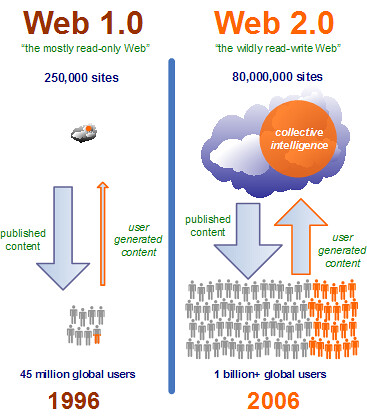
Web 1.0 vs Web 2.0

Hello everyone, Welcome to the University of Tsukuba, and welcome to our workshop. Here's what we will do today.

Part 1: 10:45-12:15


  1. Introductions and team building
  2. Survey - I will ask you to do a survey in order to help me understand your technical expertise, interests and needs. The survey will introduce you to a great tool called Survey Monkey
  3. A brief introduction to Web 2.0
  4. Some examples of some work my students have done

Part 2: 1:30-3:00


  1. Hands on practice using Google drive. 


Part 3: 3:15-4:45


  1. Hands on practice using Quizlet
  2. An overview of some other online applications
  3. Closing Discussion


So then, let's get to know each other. Please click the link to see a presentation I have made using an online application called Voicethread. As you watch the presentation please do the quiz.

The first Web 2.0 tool I used was this blog. I started it when I was teaching at Kanto International High School (関東国際高等学校).  Please click the link to see some projects my students and I did at Kanto International High School.

Now let's look at some projects that I've done with students at various universities. Please click the links to see the projects.

Toyo Gakuen University Projects
Shibaura Institute of Technology Projects
The University of Tsukuba Projects

You can see a Google Document I've made about Google Drive by clicking the link. Here's another prcatice quiz I made.
Next, click the link to go to an Introduction to Quizlet.
Finally, if you are interested in reading more about Web 2.0 you can find some articles in my shared Web 2.0 Workshop 2013-08-01 Folder on Dropbox.


I hope that this workshop has been enjoyable and useful. If you have any questions, please don't hesitate to contact me on stout.michael.ga@u.tsukuba.ac.jp

Wednesday, July 02, 2014

Writing 2 Spring 2014 Weeks 11 & 12: Task 3 - The Comparative Essay

Hello everyone, Today we are going to write the first draught of our comparative essay. First, let's watch a video made by an American student in Nagasaki called Hannah. Take notes as you watch the video, and answer the questions below.


  1. What were the two housing options Hannah had to choose from?
  2. What problem did Hannah have before she went to Nagasaki?
  3. What does Hannah say about the pros and cons (賛否両論) of living in the girls' dorm at Nagasaki University of Foreign Studies?
  4. What are the good points and the bad points about the dorm cafeteria?
  5. What does Hanna say about the office staff?
  6. What facilities does the dorm have?
  7. How does Hannah's dorm room in Japan compare to the dorm room she had in America?
  8. What does she love about living in the dorm?
  9. Why didn't she choose a homestay?
  10. What questions do you have for Hannah? Write one and post it as a comment on her YouTube Channel.


OK, now start writing! Write a four-paragraph comparative essay about two types of housing. Your essay should be at least 300 words long. Please submit your essay to my mailbox on the 4th floor of the Foreign Language Centre by Wednesday 9th July at noon.                
Enjoy!

Tuesday, June 10, 2014

Integrated English 1 for Physical Education Majors B4 Week 6: Paul Kariya Chapter 4


Hello everybody, Today we are going to review Chapter 4 of our Paul Kariya biography and do a test. First, let's study some vocabulary using Quizlet. Please click the link: IE-I PE (B4) Vocabulary.

The video above was made by a Paul Kariya fan. I hope you enjoy it.
See you next week.

Tuesday, May 27, 2014

Presentation 1 Spring 2014 Week 6: The Comparative Presentation

Hello everyone,

Today we are going to do our comparative presentations. Then we'll start working on our final presentations. Today we'll talk about introductions.

Please click the link to download your final presentation worksheet.
Next week we will talk about the body and the conclusion.
Finally, here's a video to help you remember what Death by Powerpoint is, and how to prevent it.

Monday, May 26, 2014

Integrated English 1 for Physical Education Majors B4 Week 4: Paul Kariya Chapter 2

Hello everyone, Today we are going to continue reading about Paul Kariya. In chapter 2 we learn about Kariya's American college hockey career. In the video below, you can see the 1993 U.S. National Championship. Kariya's pass to Jim Montgomery set up the winning goal.


Let's study some vocabulary. I have added some new words from chapters 1 and 2.
OK, there will be a quiz about chapter 2 next class. Also, please read chapter 3.
Enjoy!

Monday, May 19, 2014

Integrated English 1 for Physical Education Majors B4 Week 3: Paul Kariya Chapter 1

Hello everyone,
Today we are going to review Chapter 1 of our Paul Kariya biography and do the first quiz.
First, let's watch a cartoon about the rules of hockey explained by a popular character in Canada, Peter Puck. Please click the link.

Now let's study some vocabulary. Please click the link: IE-I PE (B4) Vocabulary.

Now let's review Chapter 1. Click the link to see a mind map of Chapter 1.

Next, click the link to download your Chapter 1 Review Worksheet.
For homework, please read Chapter 2.
Enjoy!


Cross Cultural Awareness and English I Spring 2014 Week 4: Love and Marriage in Greece

Photo by Louis Konstantinou
Hello everyone!
Today we are going to learn about love and marriage in Greece.
Last week we learned about dowries. Dowries have been a part of Greek culture too. It's interesting that two very different cultures, China and Greece, can share a cultural tradition, isn't it?
You can learn more about Greek wedding traditions by clicking the link: Ten Greek Wedding Traditions.


Today's article is about μαντινάδες (Mantinades), which are love poems sung at weddings on the island of Crete. Crete is the largest island in Greece. It was once the centre of the ancient Minoan civilization, which was the oldest civilization in Europe, so Crete has a rich cultural tradition. This rich cultural tradition has given the people of Crete some wonderful wedding customs, including the Mantinades.

Before we learn about the Mantinades, let's study some vocabulary. Please click the link: Crosscultural awareness and English Vocabulary. 

Now let's listen to a mantinada. The song is called Ο ΥΜΝΟΣ ΤΗΣ ΜΑΝΑΣ - ΓΙΩΡΓΟΣ ΖΕΡΒΑΚΗΣ . Please click the link:


Vicky Loras, a Greek Canadian teacher of English in Switzerland tells us that the title means, "Hymn to Mother". The singer says that there are many kinds of love in the world but the one kind of love that stands out is love for one's mother. Why do you think that a man might sing a song about his love for his mother at his wedding?


Here is a mantinada shared by Christina Markoulaki,  a teacher in Heraklion, which is the capital of Crete:
Σιγά-σιγά μη βιάζεστε κι η πόρτα μας θ’ ανοίξει, γιατί έχει η νύφη αδέλφια και γονείς να τσ’ αποχαιρετίσει. 

Christina says, "...this mantinada warns the guests not to hurry because the bride will take her time to say goodbye to her family." This matinada shows the very strong connection between the couple and the family, which Christina says is,"... an entirely Greek phenomenon!"

Let's listen to this mantinada now. Please click the link: 

Ψαρογιώργης - Aνωγειανές κοντυλιές-Πεντοζάλης


 That's all for this week. See you next week!

Tuesday, May 13, 2014

Presentation 1 Spring 2014 Week 4: The demonstration Presentation


Hello everyone,
Today we are going to do our second presentation. Then we will begin our third presentation, the demonstration presentation. Let's watch a demonstration of how to make ramen.
Now it's your turn. Please prepare a demonstration presentation of your favourite dish.

Sunday, May 11, 2014

Cross Cultural Awareness and English I Spring 2014 Week 3: Love and Marriage in China

Hello everyone, I hope you had a nice weekend.
Today we are going to start our next topic, Love and Marriage in China, but first let's study some vocabulary on Quizlet, please click the link: Cross cultural Awareness and English Vocabulary.

Like Botswanan marriage customs, Chinese marriage customs include a "bride price". Chinese marriage customs also include a dowry. You can read about Chinese pre-wedding customs by clicking the link. Let's watch a video of a Chinese wedding. Now let's study some vocabulary,

For homework, please watch the video below. After that, please download the article, "Thousands marry on love you forever day". Read the article and do the tasks. Enjoy!

Tuesday, April 22, 2014

Presentation 1 Spring 2014: Welcome!

Hello everyone, welcome to Presentation 1.
Today I am going to introduce you to the course. Let's look at the course outline.
Look at the picture on the left. This is the text book we will use. I hope you have bought it. If not, please buy it as soon as possible. We will be using it starting next class. This semester we will learn the basics of how to give 5 types of presentations: an informative presentation, a layout presentation, a demonstration presentation, a comparison demonstration and a persuasive presentation.

First, lets look at a bad presentation. Watch the presentation and take notes. What mistakes are the presenters making? Now let's watch another bad presentation.

Next week we will start our first presentation.
See ya!

Monday, January 06, 2014

Integrated English 2 Autumn 2013 Weeks 13 & 14: Sherlock Holmes in the 22nd Century

Hello everyone, Happy New Year!
Today we are going to watch a modern retelling of The Sign of Four. This version of The Sign of Four is an episode in an animated television series called Sherlock Holmes in the Twenty Second Century. In this series, Sherlock Holmes is brought back to life 300 years after his death. The reborn Sherlock Holmes solves cases with his partner Watson, who is a robot. Before we watch the video, let's study some vocabulary. Please click the link: Sherlock Holmes - The Sign of Four Vocabulary.

OK, now let's watch the video and do the quiz. Please click the link: Sherlock Holmes in the 22nd Century - The Sign of Four.

If you enjoyed that video, perhaps you'll enjoy this one too - Sherlock Holmes in the 22nd Century - The Hounds of the Baskervilles.

Here are the dates for the final test:
Monday 4th period - 27 January
Tuesday 3rd period - 28 January
Wednesday 1st & 2nd periods - 5 February

Finally, here is your study guide for the final test:
There will be 50 multiple choice questions on the test. There will be vocabulary questions, and questions about the setting, characters, plot, and dialogue.
Study hard!

Wednesday, December 25, 2013

CE-II Autumn 2013: Merry Christmas!

Merry Christmas everyone:
Today we are going to learn about Christmas in various cultures. First, let's look at a Christmas video card I made in 2010.


In the past, there were Twelve Days of Christmas. This period was known as Christmastide, or Yuletide. The twelve days of Christmas started on Christmas day and ended on or before the feast of the Epiphany (the 6th of January). In some cultures, gifts were given on each of the twelve days of Christmas. This tradition is rarely practiced now, but a song about it is still sung, "The Twelve Days of Christmas". Now let's watch another video. This is a Canadian version of the popular song. List the twelve gifts in the Canadian version. What kinds of gifts would you give in your own Japanese version?

That's all, have a safe and happy holiday. See you next year!

Tuesday, December 24, 2013

Integrated English 2 Autumn 2013 Happy Christmas!

Hello everyone, It's Christmas Eve. Happy Christmas. Today we are going to finish reading the Sign of Four, and then we'll talk about Sherlock Holmes and Christmas. First, let's study some vocabulary. Please click the link: Sherlock Holmes: The Sign of Four Vocabulary.

OK, let's listen to a Sherlock Holmes story set during Christmas time. This story is called The Adventure of the Blue Carbuncle. Let's listen to the story, then answer some questions about it.


Well then, how do you think the diamond got into the goose's stomach, and who do you think stole Lady Morcar's diamond? We'll find out...next time.

Finally, Sherlock Holmes is what we call an iconic character (偶像視される[に祭り上げられる]役). This means that he is such a well known and well loved character that he is like an idol, and he represents the "ideal detective". Therefore, Sherlock Holmes has appeared as a character in many stories, even science fiction. Sherlock Holmes has even appeared in the popular British science fiction television programme Doctor Who. In last year's Doctor Who Christmas Special, the Doctor disguised himself as Sherlock Holmes. You can see a clip from the programme below.  Enjoy, and have a safe and happy winter holiday!


Monday, December 16, 2013

Integrated English 2 Autumn 2013 Sherlock Holmes - the Sign of Four, Chapters 7 -10

Hello everyone, Today we are going to read chapters 7,8,9,10 of Sherlock Holmes - The Sign of Four. First, let's study some vocabulary. Please click the link: Sherlock Holmes - The Sign of Four Vocabulary Flash Cards. Below is the last part of the animated version of Sherlock Holmes - The Sign of Four. By the way, the voice of Sherlock Holmes was played by Peter O'Toole, who passed away last Saturday. Watch the video and do the quiz. Enjoy!

CE-II Autumn 2013 Week 11: First Flight of the Wright Flyer

First flight of the Wright Flyer
Hello everyone,

Today we are going to read about the Wright Brothers. First, let's study some vocabulary. Please click the link: Cross Cultural Awareness and English 2.

The Wright brothers successfully flew a independently powered airplane in 1903. Flight technology has improved rapidly and soon space tourism will be possible.


Let's watch a TED talk by Burt Rutan and learn about the future of human flight. Click the link to watch the video.

Monday, December 09, 2013

Integrated English 2 Autumn 2013 Sherlock Holmes - the Sign of Four, Chapters 5 & 6

Hello everyone, Today we are going to review chapters 5 & 6. First, let's study some vocabulary. Please click the link: Sherlock Holmes: The Sign of four Vocabulary. Now let's watch part 3 of The Sign of Four.After you've watched the video, please answer the questions. Enjoy!

CE-II Autumn 2013 Week 10: Electric cars

Hello everyone,
Today we are going to talk about cars. Our reading is about electric cars, and the video below is about hydrogen cars. First, let's learn some vocabulary. Please click the link: Cross Cultural Awareness and English 2 Vocabulary.

Monday, December 02, 2013

Integrated English 2 Autumn 2013: Sherlock Holmes - The Sign of Four Chapters 3 & 4 Review

Hello everyone, Today we are going to review chapters 3 and 4. First, let's study some vocabulary. Please click the link: Sherlock Holmes: The Sign of Four Vocabulary Flashcards. Now let's watch Part 2 of the animated version of Sherlock Homes: The Sign of Four. While you watch the video. Please answer the questions.

For homework, please read chapters 5 and 6 and answer the questions on pages 36.37,42 and 43. Enjoy!

Monday, November 11, 2013

CE-II Autumn 2013 Week 6: Going, going, gone

Hello everyone,

Today we are going to talk about endangered and extinct species. Can you name 10 or more extinct species? For example, Tyrannosaurus Rex is an extinct species. Can you name 10 endangered species? For example, the common chimpanzee is an endangered species.

Now let's study some vocabulary. Cross Cultural Awareness and English 2.


Now let's watch another interesting TED Talk. In this talk, Stewart Brand tells us that we now have the technology to bring some extinct species back to life. In other words, the movie Jurassic Park may not be science fiction anymore, but rather "science fact". What do you think? Is "de-extinction" a good idea? Should we bring extinct species back to life? What could be some of the consequences? Post your answer as a comment on this blog.

Monday, October 28, 2013

CE-II Autumn 2013 Week 4: Give a man a fish...


Hello everyone,
For the first 3 weeks of this course we have been talking about water. Now we are going to talk about the things that live in water, and how we interact with those things. Those things are...fish!

I have been fishing a few times in my life. I have gone fishing in Japan, in Tokyo Bay. I managed to catch one fish. Can you guess what kind of fish I caught? It's one of my favourite fish to eat. I eat this fish about once a week. Many people in Japan eat this fish, but in Canada, this fish isn't popular. It is used mainly for pet food. Can you believe it?!

Have you ever gone fishing? If you have, where did you go? What did you catch? Did you eat the fish that you caught?

The title of the first reading in this unit comes from an English proverb, "Give a man a fish and you feed him for a day. Teach a man to fish and you feed him for a lifetime." What do you think this proverb means?

Next, let's learn some vocabulary. Please click the link: Cross Cultural Awareness and English 2.


Now watch the video above and answer the questions below.

  1. What does Jeremy Jackson do?
  2. What does Jackson say is interesting about the photo of the coral reef in Jamaica?
  3. What happened to the coral reef in Jamaica? Why did it happen?
  4. Why are coral reefs unable to recover from natural disasters such as hurricanes?
  5. How do we know that the cod fishery was important?
  6. When did the cod fishery collapse?
  7. How many people lost their jobs when the cod fishery collapsed?
  8. What's the difference between the "trophy fish" sports fisherman catch now and the "trophy fish" that sports fisherman caught in the 1950s? Why is this difference interesting?
  9. What is trawling?
  10. Why is trawling bad for the ocean?
  11. What is biological pollution?
  12. What is red tide?
  13. Why is red tide bad?
  14. What are some effects of climate change?
  15. What happened in 1998 because of El Niño
  16. What does Jackson say we must change?
Have a great week. See you next Monday.