This blog serves several purposes: Communicating with my students outside of the classroom, publishing my students' work, and it serves as a resource for both students and teachers.
Hello everyone,
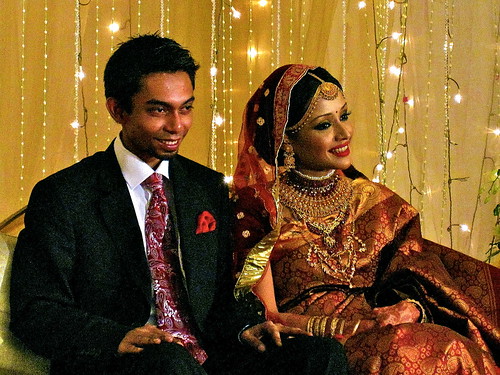
Today we will continue discussing Love and Marriage. Look at the picture above. This is a picture I took of a Bangladeshi bride and groom at a wedding reception I attended in Dhaka, Bangladesh. In the photo below you can see me with my colleagues. The men, including me, are wearing a traditional Bengali shirt called a "panjabi". This shirt is called a Kurta in India. We were a little embarrassed because all the Bangladeshi men wore European business suits.
Let's listen to two people talking about Love and Marriage in Bangladesh. Some people in Bangladesh have arranged marriages. Let's listen to a conversation about arranged marriages on my friend Todd Beukens' great website English Listening Lesson Library Online(ELLLO). Please listen to the conversation and do the quiz. Next, let's study some vocabulary. Please click the link: Cross cultural awareness and English vocabulary. Now, let's learn more about Bengali weddings. Please click the link. Read the article and answer the questions: 1. What is a Ghotok? 2. What are the parts of the Bengali wedding? 3. What is Gaye holud? 4. What is the Mahr? 5. Who arranges the wedding ceremony? 6. Who arranges the reception? 7. What is the "flower bed" ceremony? That's all. See you next week.
Hello everyone,
Today we will continue discussing Love and Marriage. Look at the picture above. This is a picture I took of a Bangladeshi bride and groom at a wedding reception I attended in Dhaka, Bangladesh. In the photo below you can see me with my colleagues. The men, including me, are wearing a traditional Bengali shirt called a "panjabi". This shirt is called a Kurta in India. We were a little embarrassed because all the Bangladeshi men wore European business suits.
Let's listen to two people talking about Love and Marriage in Bangladesh. Some people in Bangladesh have arranged marriages. Let's listen to a conversation about arranged marriages on my friend Todd Beukens' great website English Listening Lesson Library Online(ELLLO). Please listen to the conversation and do the quiz. Next, let's study some vocabulary. Please click the link: Cross cultural awareness and English vocabulary. Now, let's learn more about Bengali weddings. Please click the link. Read the article and answer the questions: 1. What is a Ghotok? 2. What are the parts of the Bengali wedding? 3. What is Gaye holud? 4. What is the Mahr? 5. Who arranges the wedding ceremony? 6. What do many of the wedding ceremony traditions revolve around? 7. Who arranges the reception? 8. What is the "flower bed" ceremony? Finally, please leave a comment. What do you think of Bengali wedding traditions?
Hello everyone,
Today we will continue discussing Love and Marriage. Look at the picture above. This is a picture I took of a Bangladeshi bride and groom at a wedding reception I attended in Dhaka, Bangladesh. In the photo below you can see me with my colleagues. The men, including me, are wearing a traditional Bengali shirt called a "panjabi". This shirt is called a Kurta in India. We were a little embarrassed because all the Bangladeshi men wore European business suits.
Let's listen to two people talking about Love and Marriage in Bangladesh. Some people in Bangladesh have arranged marriages. Let's listen to a conversation about arranged marriages on my friend Todd Beukens' great website English Listening Lesson Library Online(ELLLO). Please listen to the conversation and do the quiz. Next, let's study some vocabulary. Please click the link: Cross cultural awareness and English vocabulary. Now, let's learn more about Bengali weddings. Please click the link. Read the article and answer the questions: 1. What is a Ghotok? 2. What are the four parts of the Bengali wedding? 3. What is Gaye holud? 4. What is the Mahr? 5. Who arranges the wedding ceremony? 6. What do many of the wedding ceremony traditions revolve around? 7. Who arranges the reception? 8. What is the "flower bed" ceremony? Finally, please leave a comment. What do you think of Bengali wedding traditions?
Hello everyone,
Today we will continue discussing Love and Marriage. Look at the picture above. This is a picture I took of a Bangladeshi bride and groom at a wedding reception I attended in Dhaka, Bangladesh. In the photo below you can see me with my colleagues. I am wearing a traditional Bengali panjabi. We were a little embarrassed because all the Bangladeshi men wore European business suits.
Now let's listen to two people talking about Love and Marriage in Bangladesh. Some people in Bangladesh have arranged marriages. Let's listen to a conversation about arranged marriages on my friend Todd Beukens great website English Listening Lesson Library Online(ELLLO). Please listen to the conversation and do the quiz. Now let's study some vocabulary. Please click the Vocabulary Flashcards tab above. Then scroll down and find the link to our SIT 英語総合 Vocabulary Flashcards. Click the link and sign into Quizlet. After that, scan the next reading and add unknown words to our flashcard set.
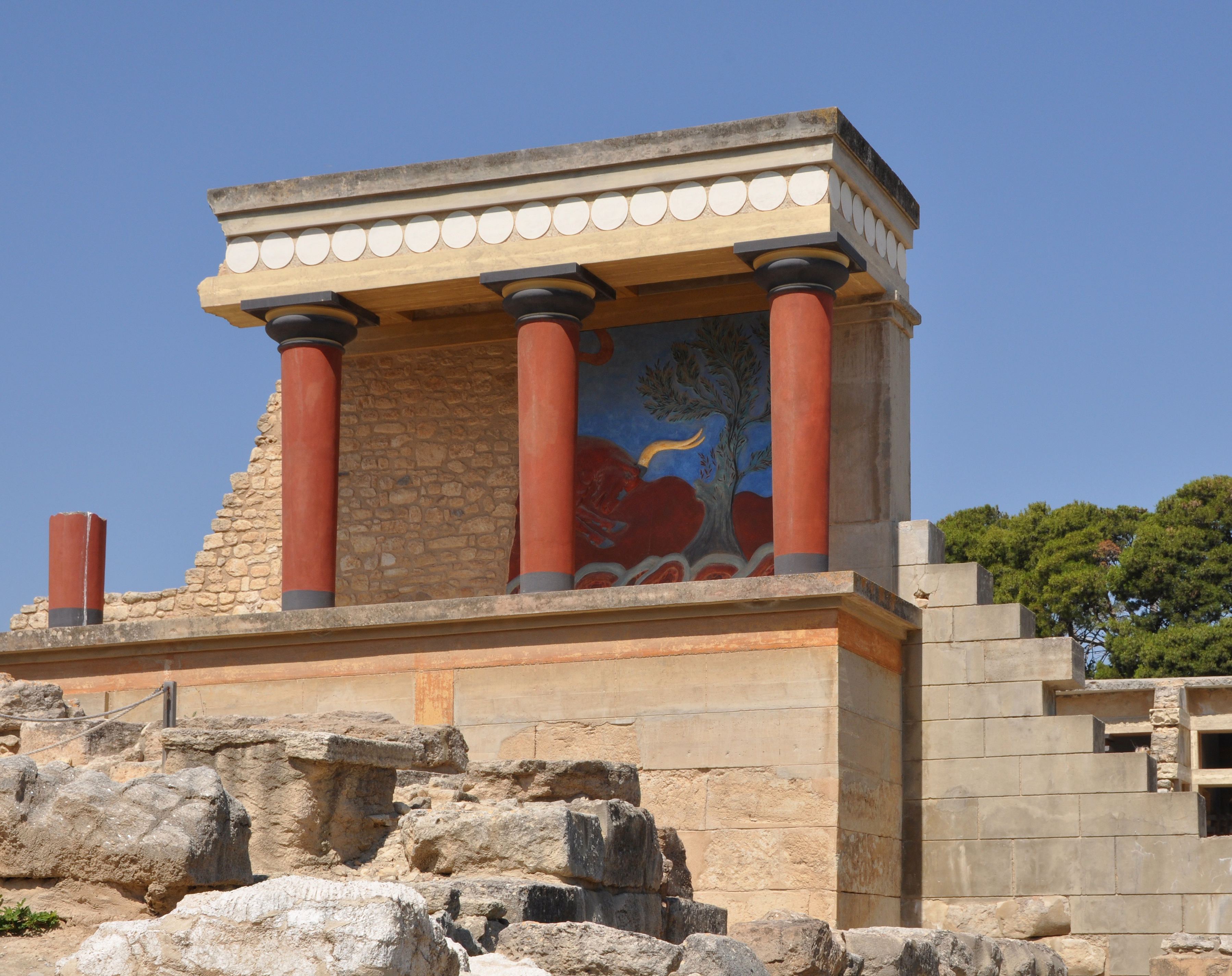
Today we are going to learn about love songs in Crete. The picture on the left is a picture of a building in Crete.
Before you read, make a list of words that you can usually hear in a love song.
One of my favourite love songs is First Love by Utada Hikaru. What's your favourite love song. Please post your answer as a comment.
Bangladeshi cuisine is delicious. I love Bangladeshi food. Bangladeshi food is similar to Indian food. Many Bangladeshi dishes include curry. I love curry. You can read more about Bangladeshi cuisine. Click this link to read about Bangladeshi cuisine in English.Click here to read about Bangladeshi cuisine in Japanese.
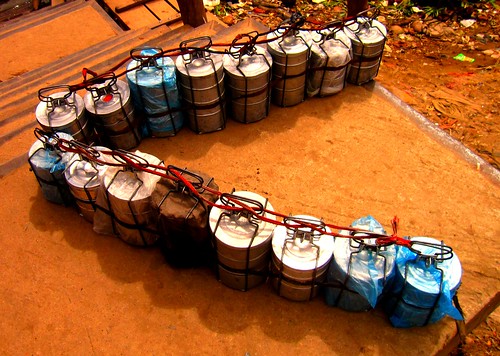
Below is a picture of tiffin boxes. Tiffin means lunch. Tiffin boxes are delivered every day to Bangladeshi business men and school children. Bangladshis like hot meals.
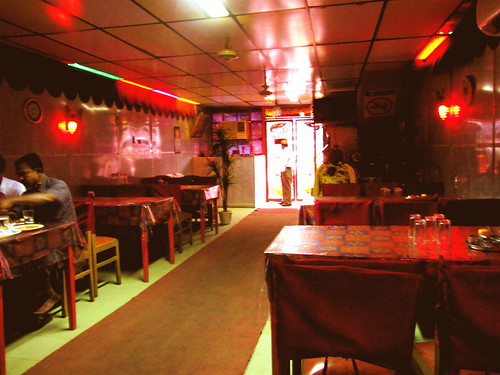
You can see a picture of a typical restaurant in Dhaka below. My new friend Mithu brought us to this restaurant. We went to this restaurant for lunch during our tour of Dhaka. We ate curried chicken, curried mutton, stir-fried vegetables, and plain rice. Mitsu paid the bill on behalf of BELTA. We were very grateful to BELTA for this delicious lunch.
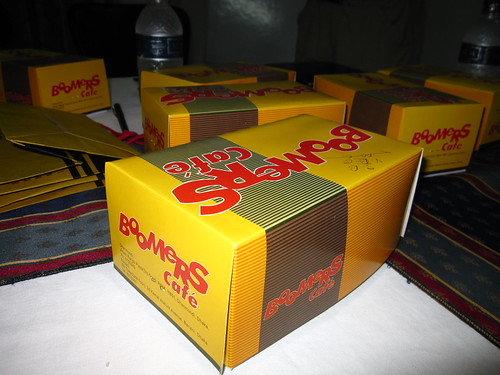
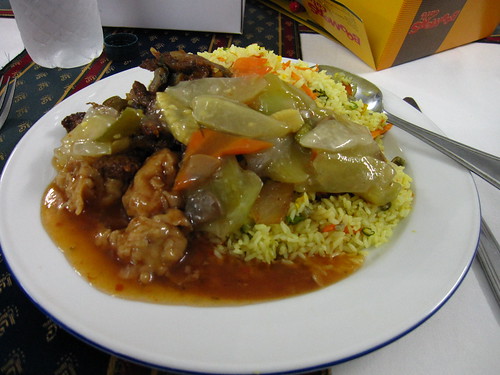
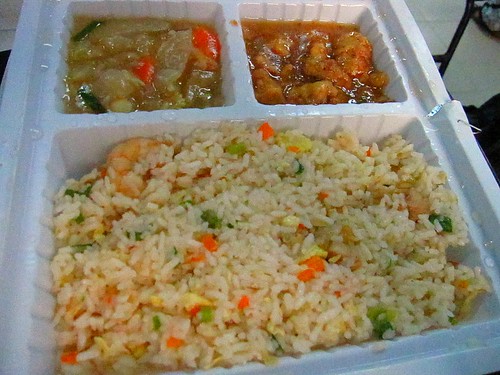
Our first dinner in Dhaka was also provided to us by BELTA. We had take-out from a restaurant in Dhaka called Boomers' Cafe. Boomers' Cafe is very popular with university students in Dhaka. You can see pictures of our meal below.
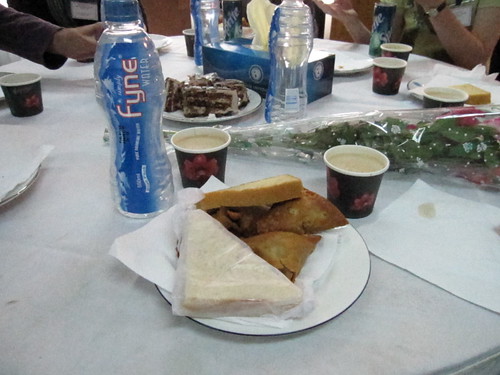
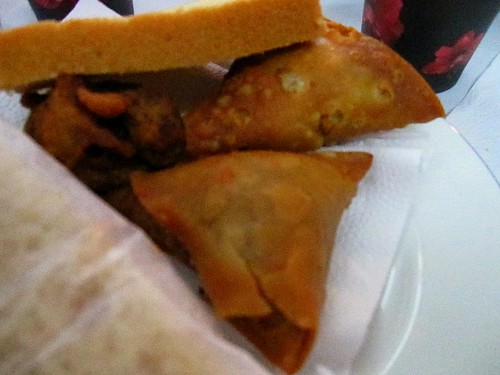
We ate delicious food at the BELTA/AIUB/THT Seminars too. For snacks we had samozas. Samozas are one of my favourite snacks. You can see a picture of some samozas below.
Here's a picture of the lunch we had during the seminars. It's like a Bangladeshi bento.
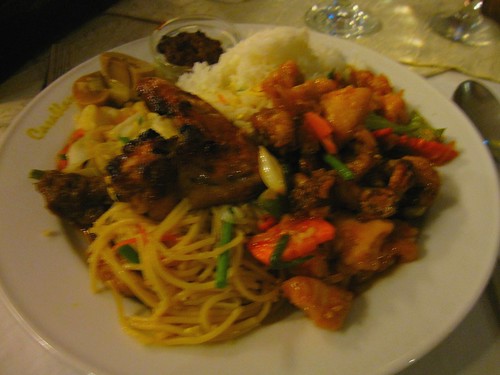
BELTA also treated us to a lovely meal at the Casablanca Restaurant in Dhaka. The meal was buffet style. You can see a picture of the buffet and some of the food we ate in the pictures below.
We went out to the country side. We went to American International University Bangladesh's resort. The resort is beautiful. We had a delicious lunch there. All the food we ate came from the resort. Many fruits and vegetables are grown at the resort, and some animals are raised for food too, including chickens and sheep. You can see some pictures of our lunch at the resort below.
We ate a delicious fruit called Jackfruit. Jackfruit is the national fruit of Bangladesh. You can see a picture of a Jackfruit tree below.
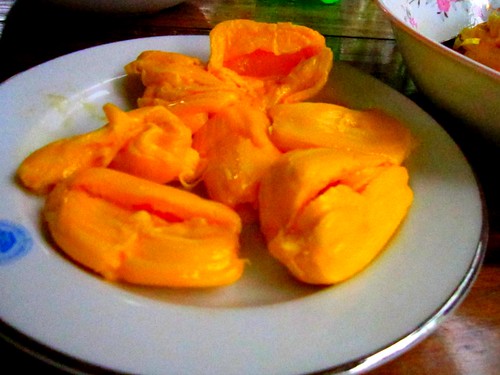
Here are some pictures of a Jackfruit that was opened up. It has a mild taste. It is delicious. Jackfruit is used for many kinds of food in Bangladesh. The seeds are roasted. The skin is given to sheep. The sheep love the Jackfruit skin.
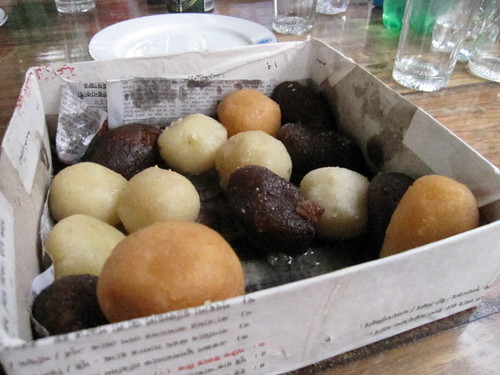
We also had some delicious Bangladeshi sweets and some yoghurt.
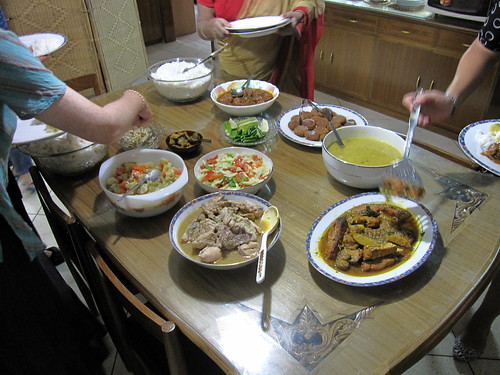
The last night I was in Bangladesh I went for dinner at the home of Dr. Faheem Hasan Shahed. We had a wonderful home cooked meal. It was delicious.
What do you think? Have you ever tried Bangladshi cuisine? Please leave a comment.
Dhaka is one of the most interesting cities that I have ever visited. Dhaka has so many sights, sounds, and smells. Dhaka is always on the move. Sometimes it seems rather chaotic (てんやわんやの). Dhaka is very crowded. There are many traffic jams in Dhaka. It often takes a very long time to go just a short distance.
One of Dhaka's nicknames is the City of Rickshaws. You can see a picture of some cycle rickshaws below. According to Wikipedia, about 400,000 rickshaws run in Dhaka every day.
The green taxi in the photo below is known as a "CNG" in Dhaka. "CNG" stands for compressed natural gas. CNGs are more environmentally friendly than vehicles using gasoline. I took a ride in a CNG. They are very small. I'm too big for CNGs. It wsn't comfortable, but it was a good experience.
There are many kinds of vehicles on the streets of Dhaka. As well as rickshaws and CNGs, there are cars, trucks, wooden carts, and so on. Sometimes these vehicles are people powered, like cycle rickshaws, and wooden carts.
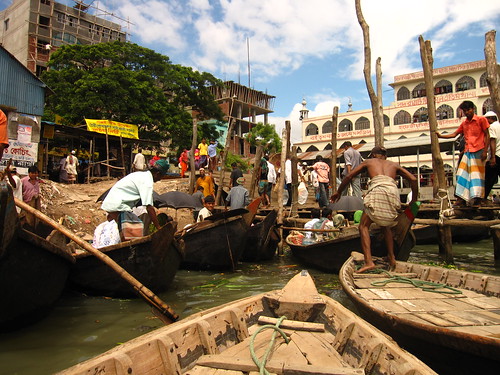
Another important mode of transportation in Dhaka is the boat. There are many boats on the Buriganga River.
Next time, I'll write about the food in Bangladesh.
I went to Bangladesh. I went to Bangladesh with a group called Teachers Helping Teachers. This was my third trip with Teachers Helping Teachers. I have been to Teachers Helping Teachers seminars in Laos and the Philippines. You can see Bangladesh on the map below.
Bangladesh is surrounded by India. It shares a small border with Myanmar too. I stayed in the capital city of Bangladesh. The capital city of bangladesh is called Dhaka. You can see Dhaka on the map below.
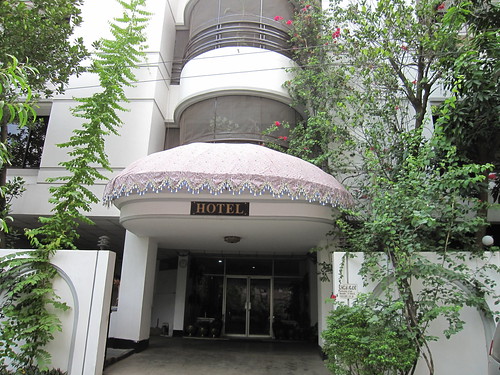
I arrived in Dhaka very late. I arrived in Dhaka after one in the morning. I got through customs and immigration easily. I was met by Dr. Patrick Dougherty, the President of Teachers Helping Teachers, and a member of the Aristocrat Inn's staff. You can see a picture of the Aristocrat Inn below.
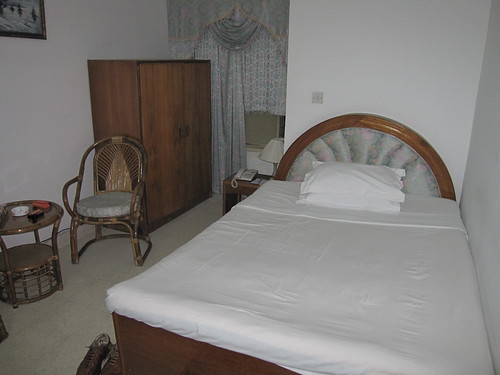
I stayed in a standard room at the Aristocrat Inn. It was twenty-five U.S. dollars per night. You can see a picture of my room below.
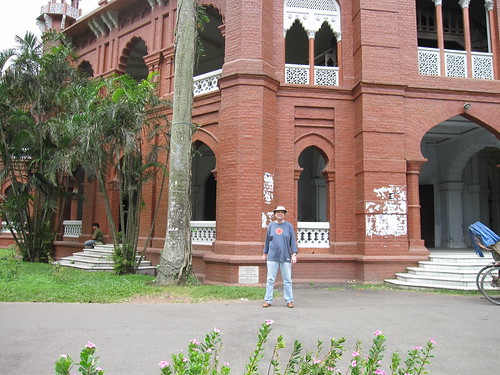
My first day in Dhaka I went on a short tour. First I visted Curzon Hall. You can see a picture of Curozn Hall below.
My new friend Mithu is in the picture below. He was my guide on the tour of Dhaka City. He is very knowledgeable. He is a very good guide.
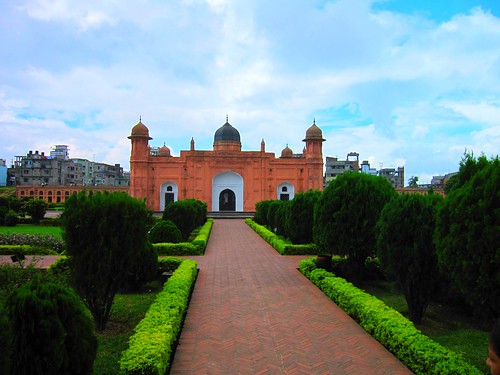
After I visted Curzon Hall, I visited Labagh Fort. You can see a picture of Labagh Fort below.
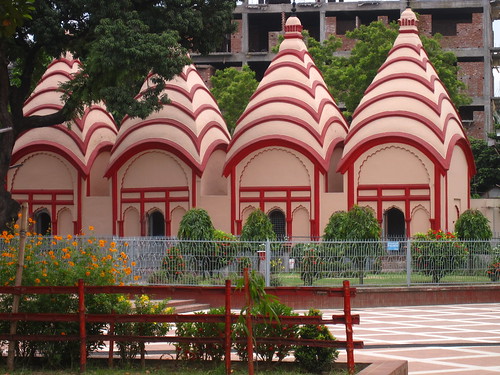
Then I visited a Hindu Temple.
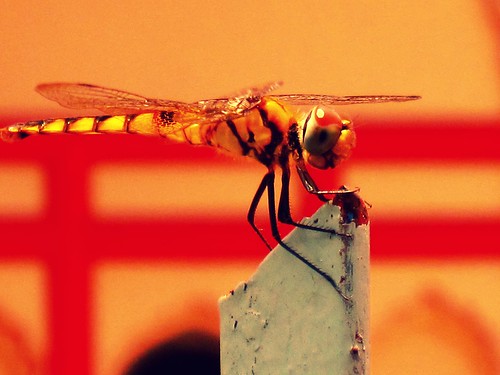
I saw a beautiful dragonfly at the temple.
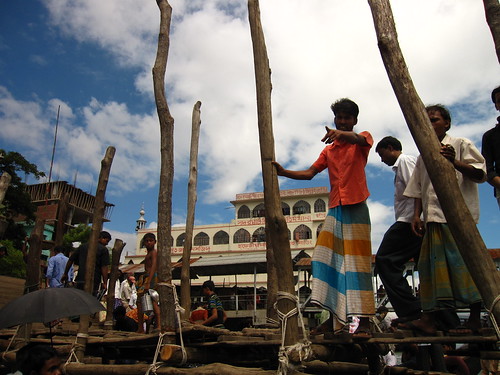
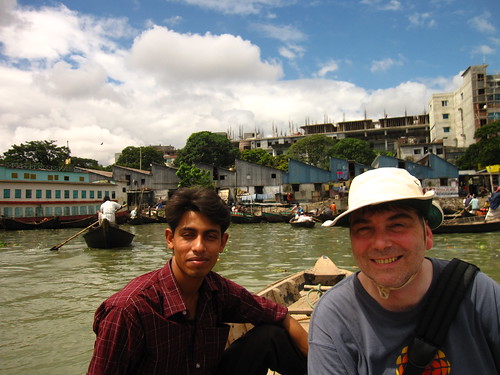
The next place we went was the Buriganga River. We took a short boat ride. It was very interesting.
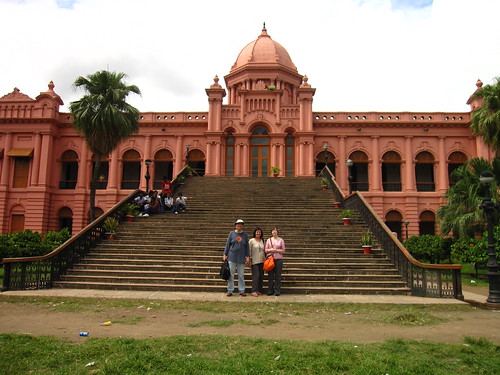
Next, we visited a palace called Ahsan Manzil. We met many friendly Bangladeshis there. All of them wanted to take a picture with us. We felt like stars! In the picture below, I'm with Ann and Cherie. Ann and Cherie are also members of Teachers Helping Teachers. Ann is from New Orleans in the United States. Cherie is from New Zealand.
After our visit to the palace we went shopping. I bought some Bangladeshi crafts for my wife. I bought a bag, a table cloth, some pillow cases, and some lunch mats for her. When we were finished shopping, we went back to the hotel. I was very tired, but I had a great first day in Dhaka.
The next day the BELTA/AIUB/THT Seminars started. The Seminars lasted three days. I led three workshops. The participants were fantastic. They were enthusiastic. They were very active participants. They had great ideas. They were very kind. I think they all must be great teachers. You can see a video clip of the workshop I lead on project-based language learning below. Unfortunately, the quality of the video isn't very good. Enjoy!