Tuesday, November 25, 2008

Shibaura Institute of Technology Paragraph Writing 2 students write about their favourite architectural structures

The students in the Paragraph Writing 2 class have been doing some very good work. Below are some examples. Enjoy!

Seto bridge is a famous bridge in Kagawa and Okayama. It connects Kagawa and Okayama. It is a very large and long bridge, 9,368 meters long. It consists of three structures: two different styles of suspension bridge and a truss bridge. It has a four-lane expressway and a two-lane railroad. The Shikoku district has not Shinkansen, but it has plan for building a Shinkansen road. So Seto bridge was designed that it can add more two railroads. Its color is light gray. This color suits this place. You can see a beautiful view of the Seto Inland Sea when you drive or get into a train.
Ayana S.
Yokohama Landmark tower is a famous building. It is the tallest building made of concrete in Japan.  It is 295.8 meters high. This building has 70 floors. It is made of concrete, glass and steel. The lower floors contain shops, restaurants, clinics, and offices. A hotel occupies forty-nineth to seventieth floors. This building has very many facilities. Yokohama Landmark tower is my favorite building.
Satomi Y.
This is a famous building in Kyoto. It is a tall building, 131meters high. It consists of two structures: a tall tower and a rectangular structure. The tower is on the rectangular structure. The rectangular structure is hotel and shopping area. You can get a great view of the city from a viewing platform at the top of the tower. The building is made of concrete, glass and iron. The building was made in 1964. This building is called Kyoto Tower.
Kohei K
This is a famous tower in Tokyo. It is a very large and tall building, 333 meters high. It is the tallest tower in Tokyo. It was built in 1958. The color of the building is red and white. It has a rectangular base and an antenna. The antenna is cylindrical and thin. The tower has a big observatory 150m from the ground and a small observatory 250m from the ground. You can get a great view of the city from the big observatory and the small observatory. The tower is made of concrete and glass. It is used mainly for a transmitter tower. It is a symbol of Tokyo. It is Tokyo Tower.
Akitsugu K.
Horyu-ji is a famous building in Japan. It is an old temple in Nara and it was built by Prince Shotoku in 607 A.D. There is a five-storied pagoda in it, which is 24 meters high. Horyu-ji is the oldest wooden building in existence. At the gate of Horyu-ji, a pair of Kongorikishi statues stands. In 1993, Horyu-ji was registered on the UNESCO World Heritage List. So, all Japanese know this temple.
Yukiya A.
This is a famous building in Kyoto, which many people visit. It is small. It is three stories high. Although it was burned in 1950, it was rebuilt in 1955. You cannot enter it because it is old, thin and fragile. The building is made of wood and it is gilded. It was designed by Yoshimitsu Ashikaga. It is beautiful. It is a Kinkakuji.
Yuki K.
The building is a university. It is located in Toyosu. Its material is reinforced concrete and its color is gray. Its shape is like The Arche de Triomphe. The size is about 25 meters high. The building has many windows, and has over 15 floors. You can get a great view of the city from the top floor. This building is S.I.T. Toyosu campus.
Daichi M.
It is a famous building in Australia. It is a concert hall where orchestras play. It was designed by John Utsson, and made in 1973. It consists of the concert hall, the opera theater, the drama theater, the playhouse, and the studio theater. It is 180-meters in height. So, it is very high. It is a sharp face. It is made of granite and plywood. 1,056,500 tiles that were made in Sweden are
on the roof. These tiles are very beautiful, and this building is a famous sightseeing spot. I like this place seen from the river. Especially, in the evening it is beautiful.
Shun T.

Friday, November 21, 2008

Toyo Gakuen University Interest-based English - Travel: Taking the bus

Today we are going to study Unit 14: Could you tell me when we're there please?
In today's lesson we will learn useful English that we can use on a bus.
First, let's practice some vocabulary. Click this link: Travel English Vocabulary: Using Public Transportation.
Here's a video about taking a bus in Tel Aviv, Isreal. Watch the video and do the quiz. There are 5 questions in the quiz.


Now, use the Currency conversion exchange widget on the right side of this page. How much is 10 Isreali sheqels in yen?

Click the link for more information on travelling in Isreal.

Thursday, November 20, 2008

Wednesday, November 19, 2008

Homestays in Burundi, Portugal, The United States, and Tahiti

Today we are going to watch some videos about homestays in Burundi, Portugal, The United States and Tahiti.

First let's practice some vocabulary. Click this link: http://www.wordchamp.com/lingua2/List.do?packItemID=123832930159397048

Now watch the videos. Answer the questions below for each video:

  1. Where do homestay guests stay?
  2. What do homestay guests eat?
  3. What do homestay guests do?
A Homestay in Burundi, Africa


A Homestay in Portugal


A Homestay in San Francisco


A Homestay in Tahiti


Which homestay holiday would you like to do?
Leave a comment.

Toyo Gakuen University Interest-based English Semester 2 Music Genres Presentation


Music Genres Slide Show Project Checklist

Are you finished your part of our slideshow? Use the checklist below:
You are finished if you can check every box.
I have…
  • uploaded a picture (1 point)
  • given the picture a title.(1 point)
  • included the URL of the picture (1 point)
  • recorded my talk (2 points)
  • recorded three questions about my talk (2 points)
  • answered the questions asked by all members of the class (8 points)
  • participated in a conversation of at least 6 turns with two people (5 points)
Total score is 20 points

If you are finished, click this link: http://mrstoutsblog.blogspot.com/2008/07/toyo-gakuen-university-interest-based.html
Watch the powerpoint presentations made by the students in last semester's class.
Enjoy!

Thursday, November 13, 2008

Haiku by Toyo Gakuen University Extension Centre Students

Writing English Haiku is fun and useful. Writing Haiku helps you learn vocabulary and pronunciation.
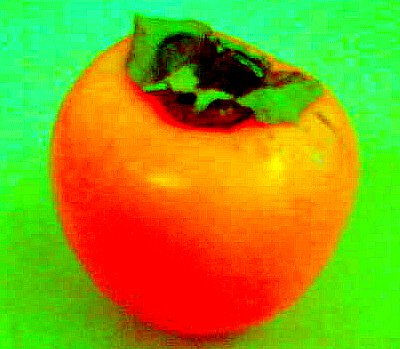
Here are some haiku. Students in my extension centre classes at Toyo Gakuen University wrote these haiku. All these haiku are traditional in form: They all have three lines. They have a 5/7/5 syllable pattern and they have kigo (季語). Kigo are words that reflect the season. In these haiku the kigo are persimmon (柿) and crab (カニ). Persimmons and crab are eaten in autumn in Japan.
Enjoy!
Houryuji
I eat persimmon
Remember Nara Temple
I come back happy
by Masayuki

Persimmon eating
I hear the ring of a bell sound
Houryuji Temple
by Yoshio

Persimmon
Persimmon


I want to eat crab
Every year in winter but
very expensive
by Masako

What a delicious
cuisine in the world you are
We call you a crab
by Kayoko


Originally uploaded by panduh

Wednesday, November 12, 2008

Toyo Gakuen University IE-12: Music. If Everyone Cared by Nickelback

Today we are going to watch a video by Nickelback. Watch the video and do the quiz.

I've posted about this song before.
Click here to see the earlier post: http://mrstoutsblog.blogspot.com/2007/06/y-ou-can-make-difference-video-by.html

Tuesday, November 11, 2008

November 11th: Remembrance Day, a day of Peace


lest we forget, originally uploaded by striatic.
Every year in November, people in Canada, Britain, America, Australia, New Zealand and many other countries wear poppies. You can see a poppy in the picture above. We wear the poppy to help us remember all the young men and women killed in war. We also wear the poppy to help us think of peace. World War 1 ended on the 11th of November 1919 at 11 o'clock. At 11 o'clock today please stop. Be quiet for one minute. Remember all the people who we have lost. Remember all the sadness of war. Think of the joy of peace. Let's do our best to make peace everywhere.
Here is a beautiful poem. A Canadian soldier in World War 1 wrote the poem. I memorised the poem when I was a school boy. I recited the poem every Remembrance Day. I think it's a beautiful poem. I hope you do too.

In Flanders Fields


In Flanders fields the poppies blow
Between the crosses, row on row,
That mark our place; and in the sky
The larks, still bravely singing, fly
Scarce heard amid the guns below.

We are the Dead.  Short days ago
We lived, felt dawn, saw sunset glow,
Loved and were loved, and now we lie,
In Flanders fields.

Take up our quarrel with the foe:
To you from failing hands we throw
The torch; be yours to hold it high.
If ye break faith with us who die
We shall not sleep, though poppies grow
In Flanders fields.

Sunday, November 09, 2008

Shibaura Institute of Technology English Conversation Intermediate 2 Mid-term Exam Study Guide

The midterm exam is next Saturday. You can prepare by practicing the tasks in the study guide that I sent to you by e-mail.
This video will help you do the second task.
Good luck!

Friday, November 07, 2008

Toyo Gakuen University Interest-based English - Travel: Lesson 7


Hmmm that looks good, originally uploaded by mick62.
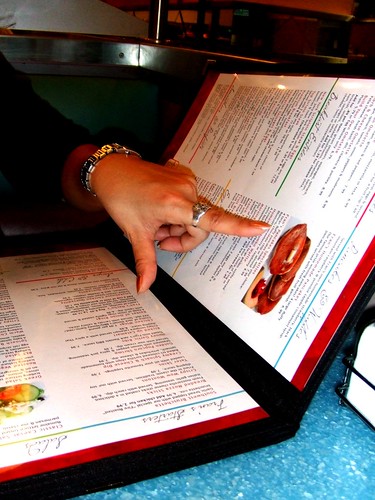
Unit 9: Are you ready to order?
Today we will learn useful English we can use in a restaurant.
Here's a funny video about ordering food in a restaurant.


The Smallest Restaurant in the World from mmmarzio on Vimeo.

Now let's practice.
  1. Click here: Passport Online.
  2. Move your cursor to 9 Are you ready to order
  3. Move your cursor to 9a What kind of food is this?
  4. Do the task
  5. Move your cursor to 9b Find the differences
  6. Do the task
  7. Click here: Passport Online tests
  8. Do the practice test
Enjoy!

Thursday, November 06, 2008

Toyo Gakuen University Homestay English 2008 Midterm Exam Study Guide

The midterm exam is on Wednesday, the 12th of November 2008. The midterm exam will have 3 parts:
Part 1: Vocabulary.
You must know the following words and phrases from your textbook:
  • perplexing
  • willing
  • expression
  • intimate
  • inquire about
  • transition
  • curiosity
  • affection
  • dialect
  • widen one’s horizons
Study the vocabulary. Click this link: TGU IE2 Homestay Midterm Exam 2008 List.

Part2: Multiple choice questions about Units 1 - 6 in your textbook.

Part3: 2 short paragraph answer type questions. You will be asked to write one or two paragraphs for each question. Your answer should be between 50 words and 100 words.
Here are the questions:

*Describe a homestay trip that you would like to do in the future. Include the following points:
  • Where you would like to do a homestay.
  • Why you want to do a homestay.
  • How you would prepare for the homestay.
  • The type of homestay family you would like. For example: an older couple with no children, or a young couple with young children.
  • What you would like to do during the homestay.
*Describe two problems that you think you might have during a homestay. Why do you think you will have these problems? What will you do in order to overcome these problems?

Study hard and good luck!

Wednesday, November 05, 2008

Toyo Gakuen University IE-12: Music. Yesterday by the Beatles

Here is a video of Paul McCartney singing Yesterday. Watch the video and do the quiz.


Now watch Yesterday with Japanese translation. Click this link: http://jp.yappr.com/welcome/Video.action?videoGuid=EB6EEBCA-C89A-4E64-81F0-CBF9BE3B2D21
Enjoy!!

PAC 7 at JALT 2008 - teachers and students learning together


AsianYouthForumMontage, originally uploaded by mick62.

Last weekend an amazing event happened at the National Olympics Memorial Youth Center in Yoyogi, Tokyo. The event was PAC 7 at JALT 2008. Students and teachers from Japan, Russia, and all over Asia took part in the event. One of the most impressive parts of the event was the Asian Youth Forum. Students from Asian countries took part in workshops and made presentations. They shared their culture and they shared their ideas.
Toyo Gakuen University teachers took part in the event too including Andy, Sarah, Claire, Cara, and me. Some Toyo Gakuen students volunteers as interns too. I hope more Toyo Gakuen University students will get involved next time.

Asian Youth Forum participants performing their native songs and dances.

Asian Youth Forum participants at the opening ceremony of PAC 7 at JALT 2008.

Yoko, a Toyo Gakuen student, serving as an intern at the conference.

Friday, October 31, 2008

Toyo Gakuen University Interest-based English - Travel: Lesson 6


https://www.pexels.com/search/doctor/

Unit 7: How do you feel.
In today's lesson we will learn some English we can use at the doctor's office.
Here's a video. Click this link: A Visit to the Doctor
Now let's practice. Click this link: Passport Online
Next, let's do a practice test. Click this link: Passport Online Test - Japanese

The midterm test is next Friday, 7 November 2008. You need to study units 2, 3, 4, 5 and 7.

Remember, if you study and prepare, the test will be easy.

Wednesday, October 29, 2008

Toyo Gakuen University IE-12 Music: Project 1 - Music Genres. Lesson 4

Image by lastyearsgirl

Today we are going to continue our first project.
First lets listen to a song by a great Jazz musician, Louis Armstrong. Click this link: http://jp.yappr.com/welcome/Video.action?videoGuid=F4E844F5-347D-46B5-8242-E974FBCB911D
Now let's practice some vocabulary. Click this link: Music Vocabulary list 2
Now let's go to our project. Click this link: Voicethread
For information on Classical music click here: http://www.diigo.com/annotated/69139a95ca420bf398392782f19488cf
For information on R & B click here:
You can find pictures on flickr. Click here:

Enjoy!

Toyo Gakuen University Homestay English: Unit 6 - Meeting and talking with people

Today we will learn about meeting people and talking to people.
First, let's review some vocabulary. Please click this link: TGU IE2 Travel List 2.
Now let's join the International Sister Classes Forum. http://edublogs.org/wp-signup.php
Click here to see the Sister Classes Forum: http://esleflstudents.edublogs.org/sister-class-forum/
Next let's watch the video and answer the questions in the textbook.

Friday, October 24, 2008

Toyo Gakuen University Interest-based English - Travel: Lesson 5


View Larger Map

Unit 5: Go straight along Seventh Avenue
Today we are going to practice directions. We will practice asking for directions, and listening to directions.
First, let's practice some vocabulary.
Click this link: Travel Unit 5: Directions
Let's play a game. Click this link: http://www.studystack.com/menu-141943

Now let's practice using Passport Online
Finally let's do a practice test.

Wednesday, October 22, 2008

Toyo Gakuen University IE-12 Music: Project 1 - Music Genres. Lesson 3

Today we will begin our voicethread project. Before we begin our project, let's watch an interview with Ken Hirai. After you watch the interview, take the quiz.


Now let's start our project.
If you haven't decided which genre you want to research, click this link to find lists of music styles: http://en.wikipedia.org/wiki/List_of_music_styles
If you have decided which genre that you want to research, find the wikipedia page that you need. Here are some links for popular musical genres: Rock, J-Pop, Traditional Japanese music, Gospel, Classical, Blues, World Music, Hip Hop, Trance, Jazz, R&B.

Look at the picture below. The picture shows you where to click to see a wikipedia article in Japanese.
Here's a link to help you find pictures: http://creativecommons.org/image/
You can also find pictures on flickr. Click here: http://www.flickr.com/
Also, please read this article about copyright: http://ja.wikipedia.org/wiki/著作権
Finally, please read this article about Creative Commons licences: http://creativecommons.org/licenses/by/2.1/jp/

Ok, let's get started!

Toyo Gakuen University Homestay English Unit 5: Communicating with your homestay family

In today's lesson we will learn how to communicate with our homestay family. Here are the lesson points:
  • Explaining your gift
  • Explaining your hometown
  • Personal Questions
You will practice explaining your hometown by explaining your hometown to some students in the international Sister Classes Forum.


Let's get started. Click here to open an Edubloggers' account: http://edublogs.org/wp-signup.php
Click here to see the Sister Classes Forum: http://esleflstudents.edublogs.org/sister-class-forum/

Sunday, October 19, 2008

A Model Language Learner: Ayumi Okada

It's very useful to have a role model. A language learning role model is very useful. Last year, I posted a video interview with Miho on the Daily English Show. Miho is a model language learner. Last April, I wrote about my friend Sanae. Sanae is a model language learner. Today, I'm going to write about another model language learner, Ayumi Okada. Ayumi was a student at Kanto International High School. When Ayumi started at Kanto she couldn't speak English much at all. She was in the Regular course, not the English course. So, she didn't have many English classes, and she didn't have many native English speaking teachers. However, she joined the World School Society. As a member of the World School Society she attended the World School International Forums in Japan and in the United States. She made friends with young people from all over the world.


Ayumi is very very musical. Her dream was to study music in the U.K. So, she asked me to help her prepare for the IELTS exam. I did. She got a great score and she was able enter a college in the U.K. Now she is studying Popular Music and Record Production at Southampton Solent University. She presents a radio programme on SIN Radio. The radio programme is called D.J. Yummy's Japanese Takeaway. You can listen to D.J. Yummy's Japanese Takeaway on the internet. Her radio programme is on Thursdays from three o'clock to five o'clock Greenwich Mean Time, that's 11 pm. to 1 am. Japan Standard Time. Look at the picture below. Click this link: http://www.sinradio.co.uk/site/?function=schedule. Click "Listen".


D.J. Yummy's Japanese Takeaway is very good. I listen to D.J. Yummy's Japanese Takeaway. I hope you will too.

Wednesday, October 15, 2008

Toyo Gakuen University IE-12 Music: Project 1 Music Genres. Lesson 2

Today we are going to continue working on our first project.
First, let's start by watching a Bob Marley video. Bob Marley was a reggae artist. Click this link to see the video: Bob Marley - No Woman No Cry.


Image by "Uh,Clem..."

Look at the picture below. Bob Marley was born in this house.

Image by David E. Waldren


Here's some information about Reggae:

Reggae was developed in Jamaica in the late sixties. Larry Marshall recorded the first reggae record in 1968. The record was called "Nanny Goat".

Reggae has these musical characteristics:

  • 4/4 or Swing time
  • Simple chords repeated
  • a hypnotic effect (催眠効果)

Some famous reggae artists are: Bob Marley, Peter Tosh, Jimmy Cliff, and UB40

Some famous reggae songs are: "I Shot the Sheriff", The Harder They Come", and "Red Red Wine".

The main musical instruments used in reggae are guitars, bass, drums and sometimes horns.


Next, let's practice some vocabulary. Click this link: Music Vocabulary List 4.
Now, let's review last week's lesson.
Now lets begin our project. Click here: Voicethread.

Toyo Gakuen University Homestay English Unit 4: Fitting into American Homelife

In today's lesson we will learn about helping around the house, helping yourself, and using the phone. Let's learn some vocabulary first. Click this link TGU IE2 Homestay List 3.
What chores do you do at home? Please leave a comment.

Toyo Gakuen University Freshman English 4 - Semester 2 Test 1 Study Guide


Image by estherase

The time has come. You will take your first test of semester 2 in your next class. Here's your task:

Roles: Caller, Receiver
Situation: There's a Hallowe'en Party in the English Lounge
Tasks:
A. Caller
  1. Call your new English friend Chrissie.
  2. When a different person answers your call, ask if you can leave a message for your friend.
  3. Leave a message:
a. Say your name
b. Spell your name
c. Say your telephone number
d. Say the day, time, and location of the party

B. Receiver
  1. Answer the call
  2. Take a message
  3. Check the information: caller's name, telephone number, details of the message
Click these links to prepare for the test:
Unit 7 - Special Occasions
Taking and leaving a phone message
Pronunciation of "th"

Remember! If you prepare and practice you will get an "A".

Thursday, October 09, 2008

Toyo Gakuen University Interest-based English - Travel: Lesson 4


Image by Dash House

Unit 4: Do you have any vacancies.
Today we are going to learn about reserving a room in a hotel. First, let's review some vocabulary and learn some new words too. Click this link:Travel English E-J .
Now let's play some games and practice what we've learned from the textbook. Click here: Passport Online. Next, let's research some hotels. Click here: HotelTravel.com. Download the worksheet below. Do the task. Save the document in your folder.


Finally, let's do a practice test. Click here: Passport Tests.

Wednesday, October 08, 2008

Toyo Gakuen University IE-12 Music: Project 1 - Music Genres. Lesson 1

Today we are going to talk about music genres.

First, let's learn some vocabulary. Click the link: Music vocabulary list 2
Now let's watch two slideshows. I made the first slideshow. Toyo Gakuen University students made the next slide show. Make a coment.
My Slideshow about music genres


Toyo Gakuen Students slideshow about music genres


Here's a playlist of African music videos.


Here's a playlist of Jazz videos.


Click here to see a playlist of calyspo and soca videos: http://uk.youtube.com/view_play_list?p=7B5A9CDAFBFF6AEA

Now it's your turn to make a slide show about music genres.

Tuesday, October 07, 2008

Toyo Gakuen University Homestay English Unit 3: At Dinner

In today's lesson we will learn about different kinds of food. Also, we will learn about good table manners.

Japanese eat a morning meal (朝食), a midday meal (昼食) and an evening meal (夕食). Many people in other countries eat these meals too. So three meals a day is common everywhere, but sometimes the food is different.

In Canada, many people skip breakfast on weekdays. Some people only have a very light breakfast on weekdays. For example, some people just have coffee. Some people just drink a glass of juice. Some people eat fruit. Some people have a muffin and a coffee.


A muffin and a coffee is, perhaps, the most common weekday breakfast in Canada. Many people eat breakfast on the way to work. They buy a muffin and a coffee at fast-food restaurants including: Tim Hortons, Coffee Time, and Second Cup.


On weekends, sometimes Canadians eat big breakfasts. Click this link to see some popular breakfasts in Canada: http://www.flickr.com/photos/mc_sensei/sets/72157607825427625/

Britain is famous for it's breakfast. What kinds of food are in a full British breakfast? Click the link: http://www.flickr.com/photos/joits/164373609/


Click this link to learn about breakfast around the world:
http://en.wikipedia.org/wiki/Breakfast#Typical_breakfasts_by_world_regions

The midday meal in the United States and Canada is called lunch.
Click this link to read the wikipedia article about lunch in English: http://en.wikipedia.org/wiki/Lunch
Click this link to read the wikipedia article about lunch in Japanese: http://ja.wikipedia.org/wiki/%E6%98%BC%E9%A3%9F

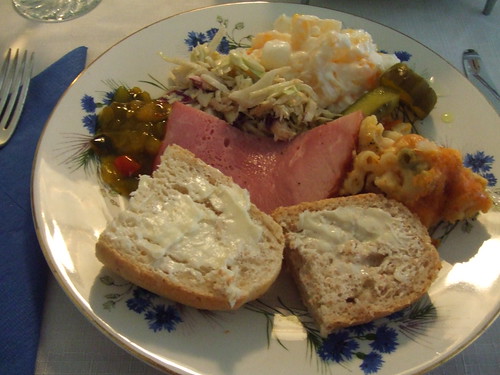
The picture below is a picture of me having lunch at my aunt's house.

Look at the table. Many Canadians serve each dish in a separate bowl or on a separate plate and put the dishes in the middle of the table. Everyone serves themselves. This is very convenient. You can take the dishes that you like.

You can see the dishes I chose in the picture below. Click the picture. What kind of food is on my plate?


Lunch, originally uploaded by mick62.

Now, let's learn about dinner.
Dinner is the main meal. In Canada, people eat dinner in the evening. In some countries, including Trinidad, people eat dinner in the afternoon. In England, dinner is called tea.

Finally, let's learn about table manners in America and some general etiquette in Canada and the United States.

Bon Appétit

Monday, October 06, 2008

Toyo Gakuen University Skills-based English - Conversation: Talking about the past

Today we are going to practice talking about the past. For example, we are going to talk about we did on holiday, what we did yesterday and what we did a long time ago. The video is from PodEnglish.
Enjoy!


This video is from Real English. Watch the interviews and listen to the answers. Enjoy!


Here's another video from Real English. In this video, many people answer the question, "Were you good at school?"


Let's practice some more. How about you? Were you good at high school? What did you do yesterday?

Sunday, October 05, 2008

Toyo Gakuen University Freshman English 2 - Reading Unit 8: Dilemmas

The topic of this lesson is dilemmas. Often people want advice when they face a dilemma. They sometimes ask for advice from advice columns. In the Japan, the Jinsei Annai is a popular advice column. Click the image below for a larger view (画像をクリックして拡大イメージを見る).

Let's learn some vocabulary for this unit. Click here for the Unit 8 vocabulary on Quizlet, and click here for the Unit 8 vocabulary on Study Stack.

Friday, October 03, 2008

Toyo Gakuen University Interest-based English: Travel Lesson 3


Unit 3:Can I change some money here?

In today's lesson we are going to learn about exchanging money. First let's review some vocabulary and learn some new vocabulary. Click this link: Travel English E-J. Now click this link to do some practice: Passport Online. Next, click this link: Passport Online Tests. Let's do a practice test.

Finally, here's so important information to remember:
You can change money in many places including hotels, post offices, banks, travel agencies, and at a foreign exchange office. A foreign exchange office is sometimes called a bureau de change in Britain.

Also, it's best to exchange your money for travellers' cheques. NEVER CARRY A LOT OF CASH WHEN YOU ARE TRAVELLING!!!

Keep your money safe and enjoy shopping!

Wednesday, October 01, 2008

Toyo Gakuen University Interest-based English 12 - Lesson 3: If I had a million dollars by the Barenaked Ladies


Find more videos like this on EFL CLASSROOM 2.0

Today we are going to listen to one of my favourite songs. The song is called, "If I had a million dollars". If I had a million dollars is by a Canadian pop band called The Barenaked Ladies. The Barenaked Ladies are from my hometown, Toronto.
Enjoy!

Toyo Gakuen University Freshman English 4 - Unit 7: Special Occasions

Today we are going to talk about special occasions. Look at the picture. What special occasions can you see? What other special occasions can you think of?
Holidays are special occasions too. What holidays are on these dates?:
  • January first
  • February third
  • February fourteenth
  • March third
  • April first
  • April twenty-nineth
  • May fifth
  • December twenty-third
  • December twenty-fifth
Let's listen and practice saying dates.
Click this link: Randall's ESL Cyber Listening Lab - Calendars.

Let's review the pronunciation of "th".

Tuesday, September 30, 2008

Toyo Gakuen students and teachers participate in English language conferences

Autumn is a busy season for language learners and teachers in Japan. Many conferences are held in Autumn. Next Sunday The 3rd JALT Joint Tokyo Conference will be held at Toyo Gakuen's Hongo campus. Last year, the 2nd JALT Joint Tokyo Conference was held at Toyo Gakuen University and some Togaku students attended. They enjoyed it very much. Please read this comment by a Togaku student about last year's conference.

Toyo Gakuen students and teachers are participating in PAC7 at JALT2008 too.

In November, Togaku students and teachers will be participating in the ETJ Tokyo Expo. The ETJ Tokyo Expo will be held at Toyo Gakuen Hongo campus. I will be making a presentation I hope you'll come.


Toyo Gakuen students and teachers are working hard to make learning and teaching English better in Japan!!

Monday, September 29, 2008

Toyo Gakuen University Freshman English 2 - Reading Unit 7 Celebrity Interview

Today we are continuing Unit 7. Here's some of the new vocabulary. Click the links for example sentences (例文) collocations and idioms.


Today we will review these words and learn some collocations and we learn more about adverbs (副詞).

Enjoy!

Friday, September 26, 2008

Toyo Gakuen University Interest-based English: Travel Lesson 2

Unit 2: Can I have your passport, please?
Today we are going to learn how to speak to an immigration officer.
First, Let's learn some useful vocabulary. Click this link: Travel English.
Let's play some games with the new vocabulary. Click this link: TYG Travel English.
Let's practice key vocabulary from Passport using vocabulary flash cards made by a Togaku student. Click this link: Daiki's Travel English Vocabulary List.
Now let's practice speaking to an immigration officer. Click this link: Passport On-line Activities.
Let's also do some listening practice. Click this link: Immigration and Customs
Did you enjoy this lesson? Please write a comment.

Wednesday, September 24, 2008

Toyo Gakuen University Interest-based English 12 - Lesson 2: Simple Plan

Today we are going to listen to a song by Simple Plan. Please read the profile below.

Simple Plan

Today we are going to watch the video for Perfect. Click this link:
http://en.yappr.com/welcome/Video.action?videoGuid=5ABD11AE-B610-4997-AE3E-181A315DEF6B

Here's a list of key vocabulary to help you understand the song:
  • think back
  • grow up
  • according to plan
  • wasting time
  • disapprove
  • good enough
  • nothing lasts forever
Go to space alc to get a Japanese translation of these phrases.

Some interesting facts about Perfect:
  • It is featured on the game Karaoke Revolution Volume 2.
  • Perfect is Simple Plan's biggest hit: #1 in Brazil, #6 in Australia, and #23 in America
Enjoy!

Saturday, September 20, 2008

Back to School - Shibaura Institute of Technology

Today we started a new Listening and Speaking class at Shibaura Institute of Technology. The students made some rules. The rules for the students are in the picture below.


The students made some rules for me too. The rules for me are in the picture below.


I hope everyone can obey the rules.

Tuesday, September 16, 2008

Back to School - Toyo Gakuen University


The summer holidays are over. Semester two has started. Welcome back to school. In this post I have some information for the new students in the Travel and Homestay classes.

First, please click the link and watch my self introduction slide slow. Watch the slide show and answer the questions.

Next, please look at my travel map.

Now, click these links to learn some useful vocabulary: Travel English, and TYG Travel English.
Finally, students in the Travel English class should click this link: Passport On-line Activities.

Please post a comment. What do you want to learn this semester?