Showing posts sorted by relevance for query pronunciation. Sort by date Show all posts

Monday, April 30, 2007

Greetings

Here's another video about greetings. This video comes UGoEigo. Some of the greetings are more formal. Some of the greetings are more casual. If you look at the shape of the speaker's mouth it will help you will pronunciation.

Tuesday, January 29, 2013

The University of Tsukuba Academic English Presentation II Trimester 3 Wk 7

dave sconda teaching pronunciation - /w/ Hello everyone,

Today we are going to learn about using over voices. We going to learn about articulation, chunking and stress. After today, you should be able to give a much smoother presentation.
Your next presentation will a repeat of your comparison presentation. This time you will be assessed on how well you can use your voice.
OK, have fun practicing, and see you next week!

Wednesday, October 15, 2008

Toyo Gakuen University Freshman English 4 - Semester 2 Test 1 Study Guide


Image by estherase

The time has come. You will take your first test of semester 2 in your next class. Here's your task:

Roles: Caller, Receiver
Situation: There's a Hallowe'en Party in the English Lounge
Tasks:
A. Caller
  1. Call your new English friend Chrissie.
  2. When a different person answers your call, ask if you can leave a message for your friend.
  3. Leave a message:
a. Say your name
b. Spell your name
c. Say your telephone number
d. Say the day, time, and location of the party

B. Receiver
  1. Answer the call
  2. Take a message
  3. Check the information: caller's name, telephone number, details of the message
Click these links to prepare for the test:
Unit 7 - Special Occasions
Taking and leaving a phone message
Pronunciation of "th"

Remember! If you prepare and practice you will get an "A".

Wednesday, October 01, 2008

Toyo Gakuen University Freshman English 4 - Unit 7: Special Occasions

Today we are going to talk about special occasions. Look at the picture. What special occasions can you see? What other special occasions can you think of?
Holidays are special occasions too. What holidays are on these dates?:
  • January first
  • February third
  • February fourteenth
  • March third
  • April first
  • April twenty-nineth
  • May fifth
  • December twenty-third
  • December twenty-fifth
Let's listen and practice saying dates.
Click this link: Randall's ESL Cyber Listening Lab - Calendars.

Let's review the pronunciation of "th".

Tuesday, October 02, 2007

More Pronunciation Practice: /Th/, /s/ and /z/


Here are two videos from Action Language Academy. Watch the videos and practice.


Wednesday, May 07, 2014

Presentation 2 Spring 2014 Week 3: Writing a Script Continued


Hello everyone,
Today we are going to continue working on our first presentation.
First, if you were absent last class, please click the link to download the task sheet for your first presentation. Before we continue working on our scripts, let's do some pronunciation practice on English Central.

Now we are going to finish writing the first draught of our script. Your first draught is due on Monday 12th May at 1:30 pm. Please deposit your first script in my mailbox on the 4th floor of the Foreign Language Centre, just outside the teachers room. You can see a picture of my mailbox on the left. I will check your scripts, and show you where you have made mistakes. You can use our Writing Error Codes handout to help you understand the corrections I will make.

See you next week!

Friday, October 12, 2007

Even More Pronuciation Practice: Hard and Soft "th", "l" and "r"

In American Headway 2 Unit 10 we have learned a new word, "through". "Through" has two difficult sounds.

Here's a funny cartoon showing how to pronounce "th". This cartoon was originally posted by an English teacher called Rafael de Carvalho Pullen Parente on his blog, Teacher Rafael.


Now, here are two videos to help you pronounce "through". The "th" sound in "through" is the soft "th" (/θ/) sound. The hard "th" (/ð/) sound is the "th" sound in "this".
These videos were made by an English teacher and soccer coach from Glasgow, Scotland called Brian Gallagher. He has a unique school in Japan called Fair Play Soccer School. Students at Fair Play Soccer School learn English and Soccer.
Since Mr. Gallagher is Scottish, his accent is a little difference from mine. However, it's close enough.

Watch the videos. Look at the speaker's mouth. Use a mirror and practice the pronunciation of "th", "l" and "r".

Hard and Soft "th"
l" and "r"


Watch again! Practice! Enjoy!

Thursday, November 13, 2008

Haiku by Toyo Gakuen University Extension Centre Students

Writing English Haiku is fun and useful. Writing Haiku helps you learn vocabulary and pronunciation.
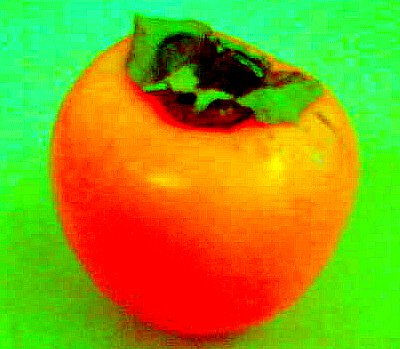
Here are some haiku. Students in my extension centre classes at Toyo Gakuen University wrote these haiku. All these haiku are traditional in form: They all have three lines. They have a 5/7/5 syllable pattern and they have kigo (季語). Kigo are words that reflect the season. In these haiku the kigo are persimmon (柿) and crab (カニ). Persimmons and crab are eaten in autumn in Japan.
Enjoy!
Houryuji
I eat persimmon
Remember Nara Temple
I come back happy
by Masayuki

Persimmon eating
I hear the ring of a bell sound
Houryuji Temple
by Yoshio

Persimmon
Persimmon


I want to eat crab
Every year in winter but
very expensive
by Masako

What a delicious
cuisine in the world you are
We call you a crab
by Kayoko


Originally uploaded by panduh

Friday, April 24, 2009

Travel English Unit 3: Can I change some money here?


Today's lesson is about money! Let's look at the lesson plan.

Lesson goals
  • Learn and remember the names of foreign currencies.
  • Listen to big numbers. Listen and choose the correct price.
  • Say big numbers with good pronunciation.
  • Remember useful words, phrases and vocabulary that you can use at a foreign exchange office.
  • Learn how to keep your money safe while travelling.
  • Complete a practice test.

Part 1: Foreign Currencies

  • Make a list of currencies you know.
  • Click the picture above. Look at the notes. What currencies are in the picture?
  • Click this link: Travel Lesson 3.
  • Look at the right side of Mr. Stout's Blog. Use the currency conversation exchange widget. Fill in the table below:

Foreign CurrencyYen (¥)
Four hundred U.S. dollars¥42,718
One thousand Indian Rupees
Forty thousand Hong Kong dollars
Sixty Canadian dollars
Seven hundred Australian dollars
Fifty British Pounds
Eight hundred Euros

Part 2: Understanding large numbers and prices

  • Listen to the conversations and do the task on p.10 of your textbook.
  • Practice saying long numbers.

Part 3: Vocabulary


Part 4: Keeping your money safe.

  • Read the background notes on p. 60 of your textbook. Answer the questions below:
  1. Where can you change money and travellers' cheques?
  2. Give two reasons why using travellers' cheques is a good idea.
  3. What the 5 rules at the end of the background notes?
Part 5: Practice Test
  • Click this link: Passport Online Tests. Choose Units 2 and 3. Do the test. Print your score and give it to Mr. Stout.

That's all. Have a nice Golden Week. Do you have any travel plans? Please post a comment and tell me.