Today let's start with a short quiz.
Now let's review some vocabulary. Click the link: TYG Homestay English Vocabulary List.
Now let's start Unit 1 in the textbook.
After the lesson, please write a comment.
Wednesday, September 30, 2009


Tuesday, September 29, 2009
Shibaura Institute of Technology 英語総合1B (Global Issues 2) and Writing 1B

Today we are going to start our first units of study in the 英語総合1B (Global Issues 2) and Writing 1B classes. Below are some useful links:
Please take a look at the work done by students in previous classes. You can do work this good too!
Friday, September 25, 2009

Thursday, September 24, 2009
Introduction to Business English B Lesson 2
Today we are going to read about two successful people: Mercedes Erra and Bill Gates. Watch the video below. What language is Erra speaking? Where do you think she lives? How many languages do you think she can speak?
Below is a picture of Bill Gates. Work with a partner. Make a list of 6 things that you know about Bill Gates.

Now, let's learn some new words. Click this link:
Introduction to Business English Vocabulary List 2 . Click "Start"and select iKnow. Do the lesson.
Finally, let's use the words we have learned. Write a comment. Describe Mercedes Erra and Bill Gates. Use at least 4 new words.
.
Below is a picture of Bill Gates. Work with a partner. Make a list of 6 things that you know about Bill Gates.

Introduction to Business English Vocabulary List 2 . Click "Start"and select iKnow. Do the lesson.
Finally, let's use the words we have learned. Write a comment. Describe Mercedes Erra and Bill Gates. Use at least 4 new words.
.
Friday, September 18, 2009
Toyo Gakuen University Travel English 2nd Semester Lesson 1
Welcome to Travel English. Today we will learn about the course.
Let's watch some videos. These videos show images from my trips to the Philippines, Tahiti, Bangladesh and Canada.
Now, let's look at the interesting links below.
Passport Online
旅に出よう!(出国&街を歩く)
Travel Vocabulary I
Where do you want to travel. Please leave a comment.
Let's watch some videos. These videos show images from my trips to the Philippines, Tahiti, Bangladesh and Canada.
Now, let's look at the interesting links below.
Passport Online
旅に出よう!(出国&街を歩く)
Travel Vocabulary I
Where do you want to travel. Please leave a comment.
Thursday, September 17, 2009
FE2-Reading Semester 2 Lesson 1
Welcome back! I hope you had a great summer holiday, and I hope you read a lot of great books. I think we are really going to enjoy reading together again this semester.
What would you do if you had a million dollars? A million dollars is about one hundred million yen (一億円). Let's listen to a song and watch a video. Try to remember 5 things that the singer would buy if he had a million dollars.
Find more videos like this on EFL CLASSROOM 2.0
Today we are going to read about two rich people, Milton Petrie and Hetty Green. You can see a picture of Hetty Green below.
 This semester you are going to study at your own pace (マイペース). Please open the lecture folder. Look for a file called "FE2U6IndepStudy.doc". Save the document to your folder, then do the tasks.
What would you do if you had a million dollars? A million dollars is about one hundred million yen (一億円). Let's listen to a song and watch a video. Try to remember 5 things that the singer would buy if he had a million dollars.
Find more videos like this on EFL CLASSROOM 2.0
Today we are going to read about two rich people, Milton Petrie and Hetty Green. You can see a picture of Hetty Green below.

Introduction to Business English B Lesson 1
Welcome to Introduction to Business English B.
Today we are going to learn about the course. We will read the course outline, and we will watch a video too. We will learn how to greet people in business situations, and we will look at the textbook.
This lesson will be review for students who took Introduction to Business English A.
OK, let's start.
Please click this link: Exchanging business cards. Watch the video and do the quiz.
Now let's learn some vocabulary. Please click this link: TYG Introduction to Business Vocabulary.
Finally, please open the lecture folder and save the course outline to your own folder.
That's all. Please leave a comment. See you next week.
Today we are going to learn about the course. We will read the course outline, and we will watch a video too. We will learn how to greet people in business situations, and we will look at the textbook.
This lesson will be review for students who took Introduction to Business English A.
OK, let's start.
Please click this link: Exchanging business cards. Watch the video and do the quiz.
Now let's learn some vocabulary. Please click this link: TYG Introduction to Business Vocabulary.
Finally, please open the lecture folder and save the course outline to your own folder.
That's all. Please leave a comment. See you next week.
Wednesday, September 16, 2009
Homestay Class Semester 2 Lesson 1
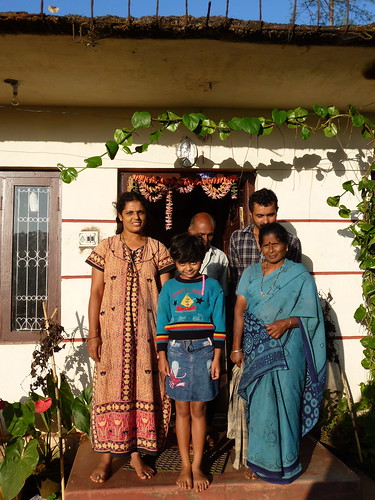
Welcome to the Homestay class. This is a picture of a homestay family in India. Would you like to do a homestay in India? Where would you like to do a homestay?
Let's start with a survey (アンケート). Please click the link below.
Now let's learn some vocabulary. Click the link below.
TYG Homestay English Vocabulary List.
Click here to download your task sheet for this lesson: Homestay English Lesson 1 Tasks
Write a comment. Introduce yourself and tell me where you would like to do a homestay.
Below is the course plan.
Home Stay English Orientation Handout
Please buy the text book before our next lesson. The textbook is Homestay Adventures by Kevin Cleary and Dale Fuller. The textbook is published by MacMillan Language House.
 Finally, click the link to see information about this class, including information about the tests: Homestay English Study Guides and lesson materials.
See you next week!
Let's start with a survey (アンケート). Please click the link below.
Now let's learn some vocabulary. Click the link below.
TYG Homestay English Vocabulary List.
Click here to download your task sheet for this lesson: Homestay English Lesson 1 Tasks
Write a comment. Introduce yourself and tell me where you would like to do a homestay.
Below is the course plan.
Home Stay English Orientation Handout
Please buy the text book before our next lesson. The textbook is Homestay Adventures by Kevin Cleary and Dale Fuller. The textbook is published by MacMillan Language House.

See you next week!
Tuesday, September 15, 2009
Shibaura Institute of Technology Class Rules for the 2nd Semester of 2009
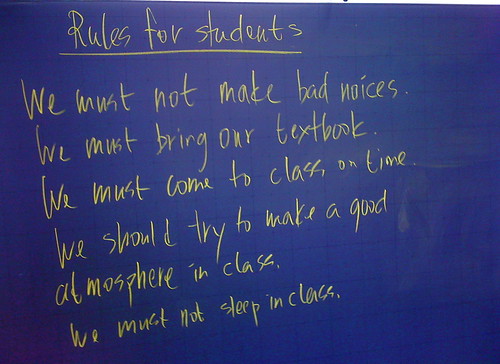
Today was the first day of classes for students in my 英語総合1B (Global Issues 2) and my Writing 1B courses. As usual, we made some rules. The students in 英語総合1B made the rules in the picture below.
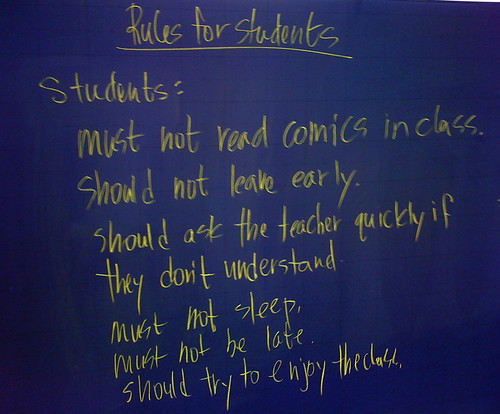
The students in Writing 1B made the rules in the picture below.
The students made some rules for me too. You can see them in the pictures below.

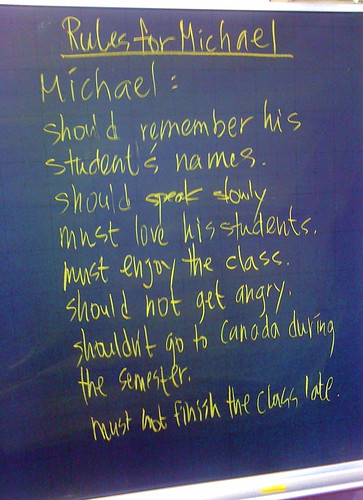
My favourite rules for me are:
A note for teachers:
My "Class Rules" posts have been the most popular with you. I'd like to know what you think of these class rules. Please leave a comment. Also, thanks to Michelle Henry and Larry Ferlazzo for all the referrals.
The students in Writing 1B made the rules in the picture below.
The students made some rules for me too. You can see them in the pictures below.

My favourite rules for me are:
- Michael mustn't use violence on students
- Michael must love his students
A note for teachers:
My "Class Rules" posts have been the most popular with you. I'd like to know what you think of these class rules. Please leave a comment. Also, thanks to Michelle Henry and Larry Ferlazzo for all the referrals.
Friday, August 21, 2009
Toyo Gakuen University Open Campus Lesson Summer 2009: English for travel purposes
Welcome to Toyo Gakuen University!
In today's lesson you will learn some useful English for travelling.
First, let's do a survey. Survey in Japanese is アンケート. Please click the link: http://surveys.polldaddy.com/s/81E3C44DFC8771D0/
I love travelling. Please look at my travel map.

In today's lesson you will learn some useful English for travelling.
First, let's do a survey. Survey in Japanese is アンケート. Please click the link: http://surveys.polldaddy.com/s/81E3C44DFC8771D0/
I love travelling. Please look at my travel map.
- Bora Bora, French Polynesia
- Quebec City, Quebec, Canada
- Udaipur, India
- Galway, Ireland
- Barcelona, Spain
- Dublin, Ireland
- London, UK
- Melbourne, Australia
- Hilo, HI, USA
- Tokyo, Japan
- View my profile
- Create your own travel map or travel blog
- Travel Info at TripAdvisor
Today we are going to learn how to speak to an immigration officer.
First, Let's learn some useful vocabulary. Click this link: Travel English.
Let's play some games with the new vocabulary. Click this link: TYG Travel English.
Now let's practice speaking to an immigration officer. Click this link: Passport On-line Activities.
Did you enjoy this lesson? Please write a comment.
Did you enjoy this lesson? Please write a comment.
Wednesday, August 05, 2009
Food in Bangladesh
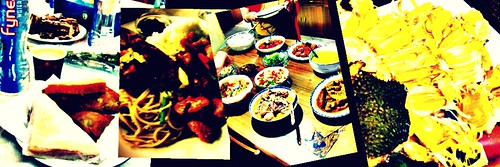
Bangladeshi cuisine is delicious. I love Bangladeshi food. Bangladeshi food is similar to Indian food. Many Bangladeshi dishes include curry. I love curry. You can read more about Bangladeshi cuisine. Click this link to read about Bangladeshi cuisine in English.Click here to read about Bangladeshi cuisine in Japanese.
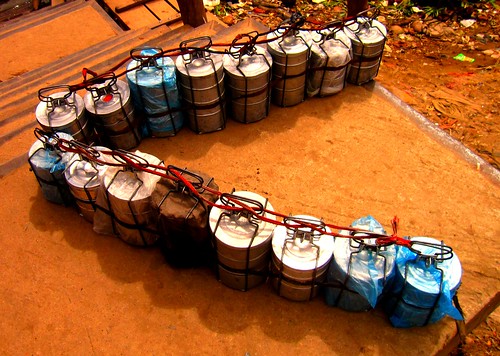
Below is a picture of tiffin boxes. Tiffin means lunch. Tiffin boxes are delivered every day to Bangladeshi business men and school children. Bangladshis like hot meals.
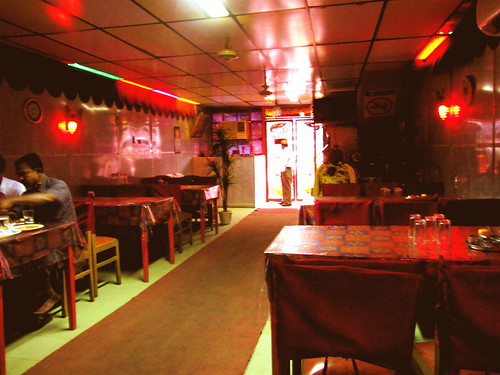
You can see a picture of a typical restaurant in Dhaka below. My new friend Mithu brought us to this restaurant. We went to this restaurant for lunch during our tour of Dhaka. We ate curried chicken, curried mutton, stir-fried vegetables, and plain rice. Mitsu paid the bill on behalf of BELTA. We were very grateful to BELTA for this delicious lunch.
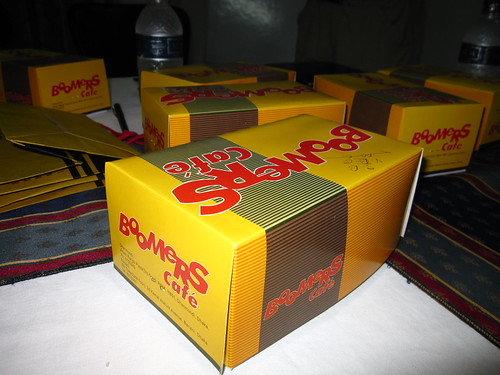
Our first dinner in Dhaka was also provided to us by BELTA. We had take-out from a restaurant in Dhaka called Boomers' Cafe. Boomers' Cafe is very popular with university students in Dhaka. You can see pictures of our meal below.
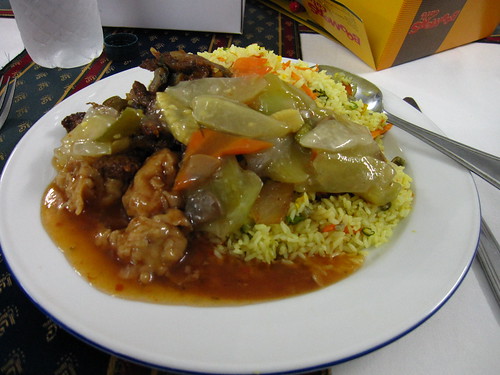
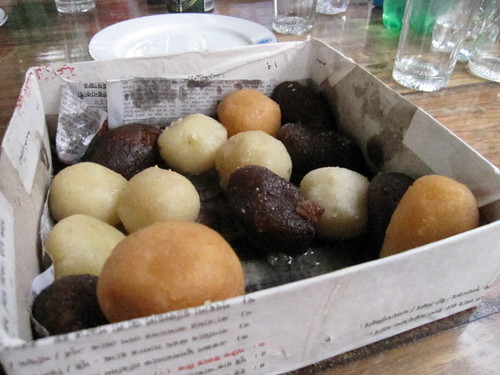
We ate delicious food at the BELTA/AIUB/THT Seminars too. For snacks we had samozas. Samozas are one of my favourite snacks. You can see a picture of some samozas below.
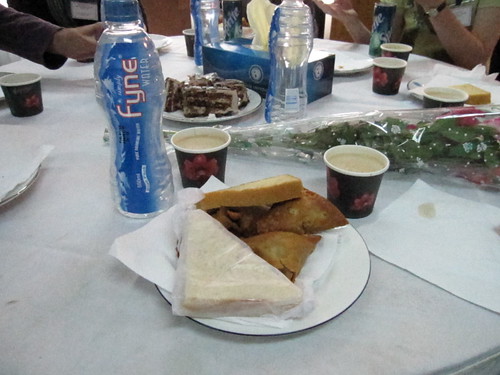
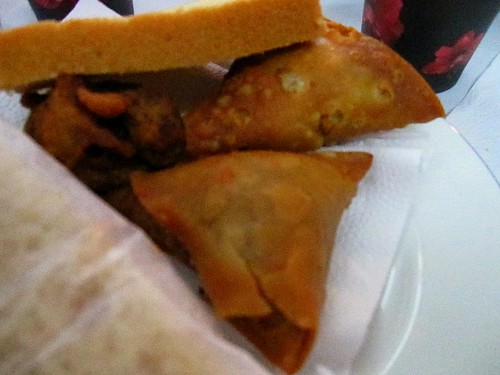
Here's a picture of the lunch we had during the seminars. It's like a Bangladeshi bento.
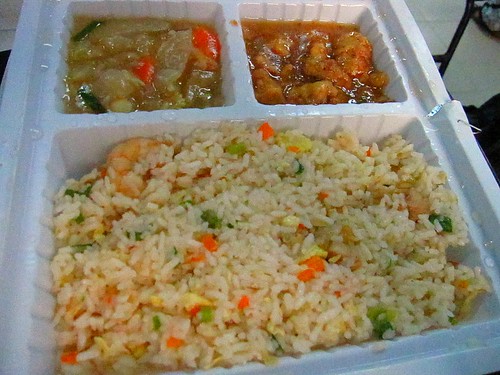
BELTA also treated us to a lovely meal at the Casablanca Restaurant in Dhaka. The meal was buffet style. You can see a picture of the buffet and some of the food we ate in the pictures below.

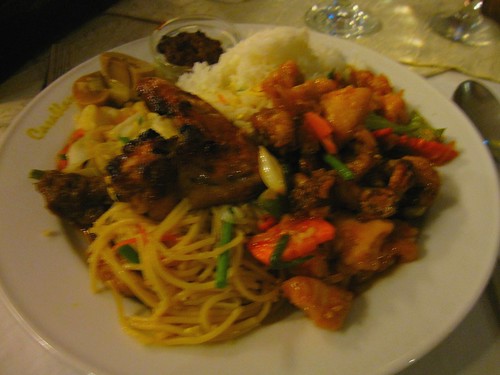
We went out to the country side. We went to American International University Bangladesh's resort. The resort is beautiful. We had a delicious lunch there. All the food we ate came from the resort. Many fruits and vegetables are grown at the resort, and some animals are raised for food too, including chickens and sheep. You can see some pictures of our lunch at the resort below.


We ate a delicious fruit called Jackfruit. Jackfruit is the national fruit of Bangladesh. You can see a picture of a Jackfruit tree below.

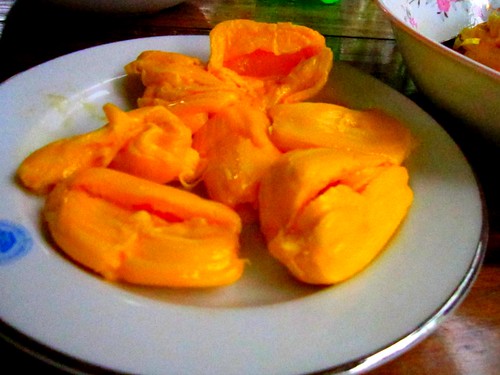
Here are some pictures of a Jackfruit that was opened up. It has a mild taste. It is delicious. Jackfruit is used for many kinds of food in Bangladesh. The seeds are roasted. The skin is given to sheep. The sheep love the Jackfruit skin.

We also had some delicious Bangladeshi sweets and some yoghurt.
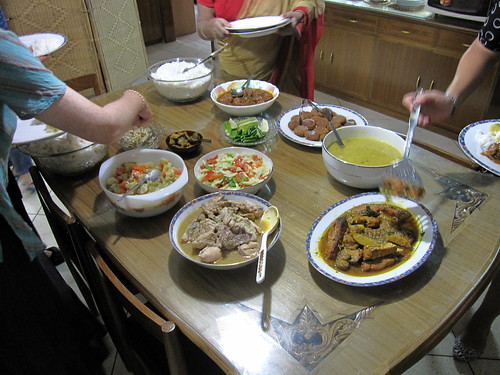
The last night I was in Bangladesh I went for dinner at the home of Dr. Faheem Hasan Shahed. We had a wonderful home cooked meal. It was delicious.
What do you think? Have you ever tried Bangladshi cuisine? Please leave a comment.
Saturday, August 01, 2009
Dhaka City Scenes

Dhaka is one of the most interesting cities that I have ever visited. Dhaka has so many sights, sounds, and smells. Dhaka is always on the move. Sometimes it seems rather chaotic (てんやわんやの). Dhaka is very crowded. There are many traffic jams in Dhaka. It often takes a very long time to go just a short distance.
One of Dhaka's nicknames is the City of Rickshaws. You can see a picture of some cycle rickshaws below. According to Wikipedia, about 400,000 rickshaws run in Dhaka every day.

The green taxi in the photo below is known as a "CNG" in Dhaka. "CNG" stands for compressed natural gas. CNGs are more environmentally friendly than vehicles using gasoline. I took a ride in a CNG. They are very small. I'm too big for CNGs. It wsn't comfortable, but it was a good experience.


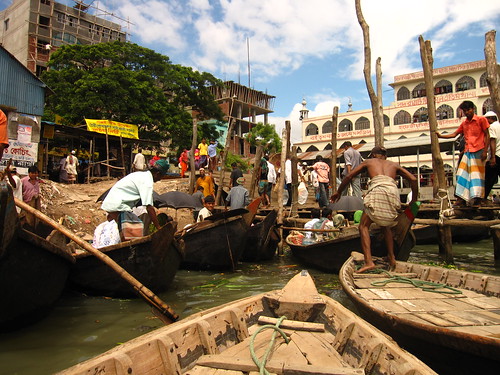
Another important mode of transportation in Dhaka is the boat. There are many boats on the Buriganga River.

Next time, I'll write about the food in Bangladesh.
Thursday, July 30, 2009
Teachers Helping Teachers in Bangladesh

I went to Bangladesh. I went to Bangladesh with a group called Teachers Helping Teachers. This was my third trip with Teachers Helping Teachers. I have been to Teachers Helping Teachers seminars in Laos and the Philippines. You can see Bangladesh on the map below.


I arrived in Dhaka very late. I arrived in Dhaka after one in the morning. I got through customs and immigration easily. I was met by Dr. Patrick Dougherty, the President of Teachers Helping Teachers, and a member of the Aristocrat Inn's staff. You can see a picture of the Aristocrat Inn below.
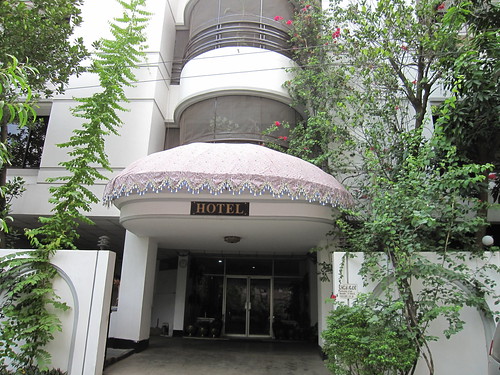
I stayed in a standard room at the Aristocrat Inn. It was twenty-five U.S. dollars per night. You can see a picture of my room below.
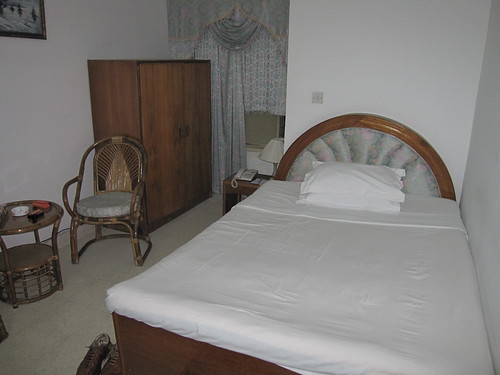
My first day in Dhaka I went on a short tour. First I visted Curzon Hall. You can see a picture of Curozn Hall below.
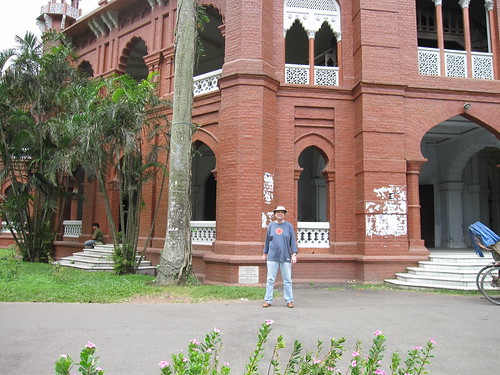
My new friend Mithu is in the picture below. He was my guide on the tour of Dhaka City. He is very knowledgeable. He is a very good guide.

After I visted Curzon Hall, I visited Labagh Fort. You can see a picture of Labagh Fort below.
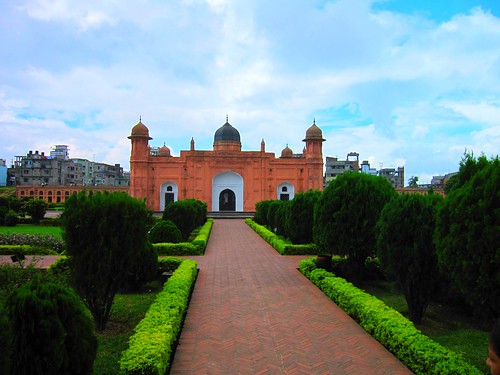
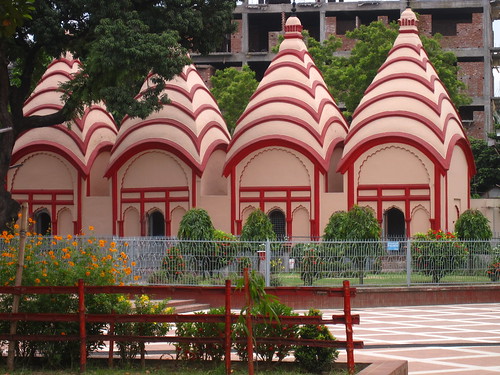
Then I visited a Hindu Temple.
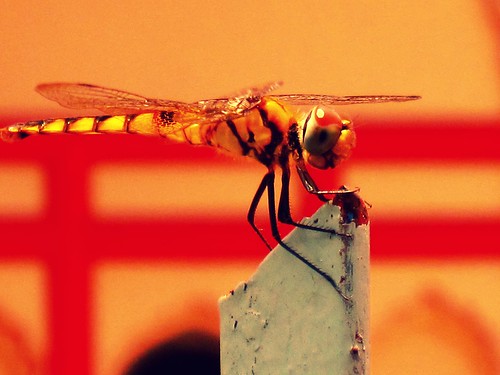
I saw a beautiful dragonfly at the temple.
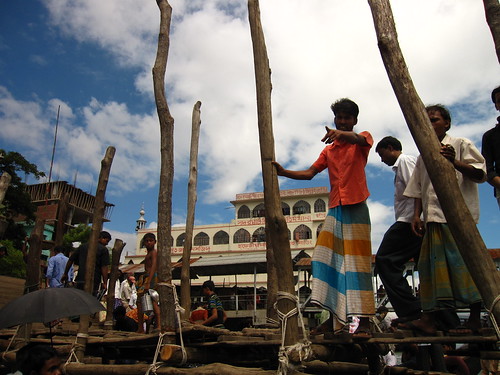
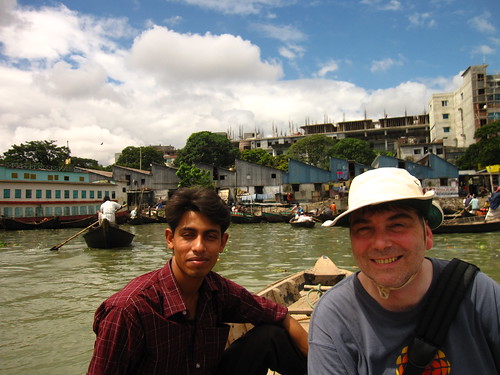
The next place we went was the Buriganga River. We took a short boat ride. It was very interesting.
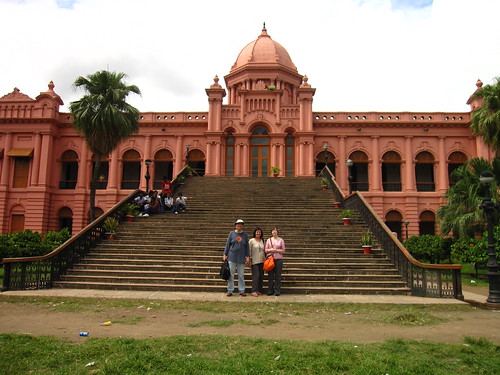
Next, we visited a palace called Ahsan Manzil. We met many friendly Bangladeshis there. All of them wanted to take a picture with us. We felt like stars! In the picture below, I'm with Ann and Cherie. Ann and Cherie are also members of Teachers Helping Teachers. Ann is from New Orleans in the United States. Cherie is from New Zealand.
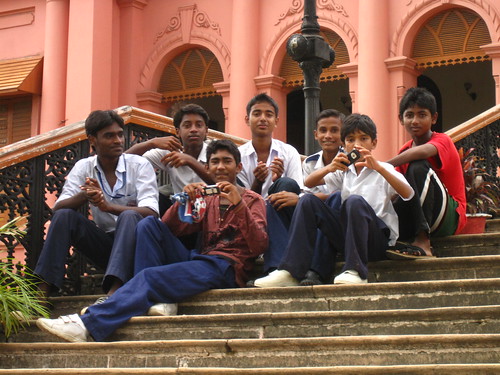
After our visit to the palace we went shopping. I bought some Bangladeshi crafts for my wife. I bought a bag, a table cloth, some pillow cases, and some lunch mats for her. When we were finished shopping, we went back to the hotel. I was very tired, but I had a great first day in Dhaka.
The next day the BELTA/AIUB/THT Seminars started. The Seminars lasted three days. I led three workshops. The participants were fantastic. They were enthusiastic. They were very active participants. They had great ideas. They were very kind. I think they all must be great teachers. You can see a video clip of the workshop I lead on project-based language learning below. Unfortunately, the quality of the video isn't very good. Enjoy!
An introduction to project-based language learning from Michael Stout on Vimeo.
Next time I'll write some more about my wonderful trip to Bangladesh. I'll post some more pictures too.
Thursday, July 16, 2009
英語総合1A (Global Issues) Spring 2009 Final Exam Study Guide

This Image is an edited and modified version of image by Lipo's sojourn (http://www.flickr.com/photos/ikkoskinen/309990286/)
The semester is almost over! The final exam for the Saturday class is 18 July 2009 (1st period). The final exam for the Tuesday class is 28 July 2009 (1st period).
Please study Units 6 - 11. Please study carefully pp. 22, 25, 26, 29, 30, 33, 34, 37, 38, 41, 42, and 45.
The final exam with have short answer type questions, and long answer type questions. You will have to show that you remember the content of the textbook, and that you understand the content of the textbook.
Here are examples of the kind of question you might see on the exam. These questions WILL NOT be on the exam. They are examples only:
What are the 2 lessons that Gandhi’s philosophy teaches us? (2 points)
List 5 similarities between Nelson Mandala and Gandhi. (5 points)
I recommend that you do the Wrap Up activities for units 6 - 11 on pp. 72.
Good Luck!
Subscribe to:
Posts (Atom)
Let's review. Please click this link: Lesson 2
Follow the directions (指示に従う). Do the tasks.
After you finish, please return to this post and write a comment.