Saturday, March 31, 2007

Holiday in Paradise Part 3


In this blog entry I'll tell you about my third day in Hawai'i.

We woke up late again and had coffee on the veranda. He had Hawai'ian coffee. The Big Island is famous for coffee. The most famous coffee comes from Kona but ono coffee comes from Hilo too. After our morning coffee we had left-overs (残り物) for breakfast. After breakfast we did some sightseeing. One of the places we saw was Rainbow Falls . There were many Japanese tourists there.


After our sightseeing we went to a restaurant for dinner. We had pizza. After dinner we went to the Palace Theatre in Hilo to see an Austarlian Aboriginal dance troupe.


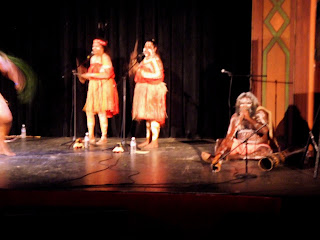
The dance troupe also performed the dances of the Torres Strait Islanders.


After the show, we went back to Mr Turchi's house and relaxed on the veranda and listened to the coqui.


To be continued...


Holiday in Paradise Part 2

Click photo for larger version

In this blog entry I'll tell you about my second day in Hawai'i.

We woke up very late, about 11 am. I usually have to wake up at four or five in the morning, so I was very happy to sleep in late. We sat on the veranda and drank coffee and listened to the birds singing. I especially enjoyed listening to the sound of the mourning doves cooing. Listening to the mourning doves cooing reminded me of home. There are many mourning doves in Toronto.

For breakfast we went to a popular restaurant called Ken's.


Click photo for larger version

I had a Canadian bacon and cheese omelette with homefries and buckwheat pancakes. They were ono kine grindz. Ono kine grindz means delicious excellent food in Hawai'ian pidgin. After breakfast we went shopping. We went to the Salvation Army Shop. I bought two Aloha shirts for only $20 dollars. I also donated some t-shirts to the Salvation Army. I'm wearing one of the Aloha shirts I bought at the Salvation Army in the photograph below.


Click photo for larger version

After shopping we went for dinner at a Mexican restaurant. I had enchiladas, rice and refried beans. It was ono!

Click photo for larger version

After dinner we went back to Mr Turchi's house. Mr Turchi and I relaxed on the veranda again. We chatted and listened to the coqui sing.


To be continued...

Friday, March 30, 2007

Holiday in Paradise


In this blog entry I'll show you some pictures from my holiday in Hawai'i and I'll tell you a little about the things I did. Be sure to click the links to get more information. If you have any questions or comments please e-mail me or post a comment.

I left Japan on March 14th at about 10 pm and arrived in Honolulu on March 14th at about 9:30 am. I went back in time! I was able to do this because I crossed the International Date Line. The International Date Line is the red dotted line on the map below. There is a red star next to Hawai'i on the map.


Click the map to see larger version


After I passed through customs and immigration (税関とパスポートコントロール) I got on another plane and flew to the city of Hilo on the The Island of Hawai'i, which is usually called "The Big Island" because it is the biggest of the Hawaiian islands. The Big Island is in the lower right corner of the map below.


Click the map to see larger version

Hilo is on the right side of the map below. There is an icon next to Hilo on the map. It looks like an airplane. The icon shows that there is an airport in Hilo.


Click the map to see larger version


I was met at the airport by my friend and former colleague Rick Turchi. Mr Turchi and I taught together at Kanto International High School. I stayed with Mr Turchi and his family for most of my holiday. You can see a picture of Mr Turchi's house below.


Click the photo to see larger version


The first night of my holiday Mr Turchi and his family treated my wife and I to a great dinner. We had barbequed steak! It was delicious. As you can see from the photo below, we also had brown rice (玄米), yams and corn.


Click the photo to see larger version


After dinner, Mr Turchi and I relaxed on the veranda. The atmosphere was great.


Click the photo to see larger version

While we were relaxing on the veranda, we could hear the singing of coqui frogs.


You can see more pictures and hear the coqui frog's song by clicking here. You can get information about the coqui in Japanese by clicking here.

To be continued...

Wednesday, March 14, 2007

Goin' to Hawai'i


This is a picture of me at Waikiki on my first trip to Hawai'i.

Well everyone, I'm going to Hawai'i today. I haven't planned everything yet. I'll be staying at Mr. Turchi's place at first. For those of you who don't know, Mr. Turchi was a teacher at Kanto International High School. He lives in Hilo now on the big island. Perhaps we will take a helicopter ride over a volcano. I'm sure that I will be going to the beach. At the beach I'll sun bathe, and read. If I can I'll make some posts while I'm in Hawai'i.

Tuesday, March 13, 2007

A Video supporting War Child: an organisation trying to help children affected by war.

When I was a boy, my dad, Larry Stout, a news reporter, told me some shocking things about his trips overseas. I remember him telling me about his trip to Nicaragua to report on the civil war there. He told me that he had met a boy soldier. The boy was carrying an AK47 assault rifle. My Dad told me that it was a very sad and frightening experience. Perhaps I am interested in global issues because of the stories my dad told me.

I have also learned a lot about the world through my participation in The Social Issues Project at Kanto International High School. Through the Social Issues Project, Kanto International High School Students learned that war is one of the biggest causes of the poverty, homelessness and abuse suffered by children all over the world.

War Child has headquarters in The UK, Canada and the Netherlands. Many very famous musicians support War Child including: Our Lady Peace and Sum 41 from Canada, Paul McCartney, Oasis, Radiohead, and David Bowie from The UK and U2 from Ireland. This video is for a song called Broken by Helen J Hicks from the band Honeyriders for War Child Music. I hope you will enjoy the video and also think about what you can do to help children affected by war.

Sunday, March 11, 2007

Great video by a Great Toronto Band

This is a video for a song called "Out of My House, Roach" by The Shuffle Demons. The Shuffle Demons were my favourite Canadian band when I was a university student.

The Shuffle Demons started out playing on the streets of Toronto. Unlike the bands playing outside Shinjuku station in Tokyo, the Shuffle Demons had to be careful of the police because playing music on the street in Toronto is illegal. Two members of the Shuffle Demons, Richard Underhill and Mike Murley appeared on Jelly Roll Jazz, my radio programme on CJAM-Fm. If you want to learn more about the Shuffle Demons you can read about them on http://en.wikipedia.org/wiki/The_Shuffle_Demons
If you want to see more Shuffle Demons videos or Richard Underhill videos go to http://www.youtube.com/profile?user=bluelounge

A Video Introduction to Utada Hikaru - in English

Many students in Japan know that Hikki can speak English but few have actually heard her speak English. She is a native speaker of American English. I think you'll enjoy watching and listening to this video.

Reflecting on the 2006 Social Issues Project


Click image to see full size version


I've chosen to post a few of the reflections that students in the 1st year Study Abroad Class wrote about the Social Issues Project. I think you will find reading their thoughts interesting.

Akira’s Reflection
There are four things I liked about the Social Issues Project. First, 1-Kaede was great because we were able to do the presentation without a script. I was able to enjoy to presentation because I didn’t forget what words to say. Another thing I liked was that I could study English and how many countries are doing now. Finally, I made many friends in 2-Kaede when we did peer tutoring.

I think 1-Kaede should do the Social Issues project next year. Researching foreign countries is very good. If we compare foreign countries with Japan we can get a better understanding of the world.

Connecting the book with the world todayThere are several similarities between Oliver Twist and homeless children in Australia. Oliver and homeless children in Australia suffer from physical abuse and they have no home, no money and no family. I think I’m happy because I have a home to live in, enough money and a lovely family. I want to help homeless children in the future.

Atsushi’s Reflection

There is one thing I liked about the Social Issues Project. I liked searching for information about homelessness. It was kind of hard to research about the United States but it was fun to research about that. This project was so awesome and our team did a very good job and I’m proud of my team mates.

I think 1-Kaede students should do the social Issues project next year for several reasons. One is that, this project was about a serious problem in world. I think students should learn about homelessness and be able to help homeless people. So I think this project gave us a lot of learning and made us able to make a better world for the future. We need to donate so that homeless people can stay in shelters. Also, the presentation was very fun and it was a good way to learn English speaking strategies. So I think next year students should do this project.

Connecting the book with the world today

There are lots of children who look like Oliver. Some children don’t have parents so they have to stay or sleep somewhere else on the streets.


Ryo’s Reflection
There are 2 things I liked about the Social Issues Project. First, thanks to this project I could understand about homelessness. I thought the cause of homelessness is that homeless people don’t work until I researched about this problem. Another reason is that we learned that we can present well. Every other class used scripts or notes but we didn’t. We did our best in the presentation. For these reasons, I liked the project.

I think 1 Kaede should do the Social Issues project next year for one reason. The project teaches us about the problem of homelessness. We have to understand homeless people because many people have prejudice against them. They each have a reason why they became homeless. For this reason, 1 Kaede should do this project next year.

Connecting the book with the world todayThere are several similarities between Oliver Twist and homeless children in the world. First, they don’t have a family. Second they have to work hard to live. They will die soon if they don’t work. Finally they have strong and pure hearts. For these reasons, I think they are similar.

Saki’s Reflection
There are two things liked about the Social Issues Project. First, I really liked to see each team’s beautiful poster. Second, I liked that there were presentations by all English-Course classes. I was surprised because everyone was very excited. I had a very precious experience.

Connecting the book with the world today

Finally, there are several similarities between Oliver Twist and homeless children in the world. For example, Oliver is an orphan. Many homeless children are orphans. Also, Oliver has no home, money, clothes, and so on. They are very similar, almost the same. And I think they have kindness. Homeless children work hard for their families. I think they would risk their life for their family. I really want to help such children. So, I learned many things from this project.

Shamina’s Reflection

There are 3 things I liked about the Social issues project. First of all, I liked the fact that I was able to learn about all types of social issues, whether it was about homelessness or child labor. Second, I had another opportunity to work with my classmates. Third, I had a chance to watch my friend’s presentations from other classes, which I couldn’t before. It was so much fun.

I think 1 Kaede should do the Social Issues project next year for several reasons. For one thing they can have an opportunity to learn about social issues like homelessness. Second, they can learn English and how to give presentations.

Connecting the book with the world today

There are several similarities between Oliver Twist and homeless children in Germany. For one thing, they don’t have homes. For another thing, they don’t have a family to look after them. Even if they did have one, no “family” would let a child live on the streets. Another thing, they’re poor and don’t have food to eat. These are the things I think are similar between Oliver Twist and the homeless children in Germany.


Saturday, March 03, 2007

Kanto International High School Social Issues Project 2007

Here are examples of projects done by students in the 1st year Study Abroad Programme. Once again, they read Oliver Twist. They focused on the theme of homelessness and then, in teams, they researched homelessness in countries on every continent. The examples displayed here are the scripts that the students wrote for the presentations that they made on 23 February. I have edited the scripts for readability. However, all the content came from the students and I did my best to maintain the tone of their writing.

Homelessness in Liberia
Lubliana Bodova
Study Abroad Class 2006-2007


Hello every one. Today as you know is our last project in the year. It’s about homelessness in the world. I researched homelessness in Liberia. Homelessness is one of the biggest human tragedies in the world. I am going to talk about homelessness and the causes of homelessness in Liberia. Secondly, I will give you some information about some agencies that are working to help the homelessness. Last but not least, I will give you some information about how to help homeless people in Liberia. I am very sure Japanese people are very charitable and generous.


The number of homelessness in Liberia is 1,000,000 people out of a total population of 3,283,000. In a year, the population grows at a rate of about 2.80%. The birth rate is 47/1000 and the mortality rate is 143/1000. Lots of people are losing homes because of the civil wars, wars fought over land and wars fought over resources.


Liberia has experienced two civil wars. Both wars lasted over a decade and Liberia still suffers from political instability.
The civil wars have displaced hundreds of thousands of people and destroyed the economy, in other words - jobs. Liberians who have lost their homes are currently refugees in Sierra Leone.


In Liberia, kids as young as 5 years old learn how to handle a gun and kill. There are almost 200,000 child soldiers in Africa. Almost 90% percent of the people in Liberia are unemployed and the 9% percent that work make less than 30 U.S. dollars a month. The way we can help the homelessness in Liberia is to join a volunteer group and go to Liberia and help the people. So please remember that people in Liberia are facing pain right now and they need our help and cooperation.


Homelessness in the United States
Atsushi Tsukada
Study Abroad Class of 2009


I’m going to talk about the homeless in the United States. First I’m going to tell you about some statistics regarding the homeless people in the U.S.A. The Urban Institute study states that about 350 million people live in the United States and 1.35 million of them are homeless. Children represent 39%. Also, 299,321 veterans are homeless. Approximately 33% of homeless men are veterans. In the U.S, 52% of the homeless live in shelters.

In the U.S, there are lots of people holding a card that says “Need help”. In Texas some homeless people wipe car windows, and the driver gives them a little tip. When I was in high school in the U.S, I saw some homeless people and I gave them a small amount of money. They are very kind to me when I gave them some money.

I think, we should donate money to homeless people, especially in United States because in the U.S homeless people are increasing. I think we need to try to make a better and much cleaner world. I want a world that is safer and a fine place to live.


Homelessness in Egypt
Mika Fukushi
Study Abroad Class of 2009

Hello! Our team researched homelessness in Africa. I researched homelessness in Egypt. Today homelessness is becoming a big problem throughout the world. I want you to listen to our presentation about homelessness in Africa carefully to think about the seriousness of this big problem. I’ll tell you about homelessness in Egypt. First, I’ll tell you about the circumstances. Then, I’ll tell you about some agencies that are helping the homeless people. Last, I’ll tell you about what we can do to help the homeless.

Now, I’ll talk about the severe circumstances of the homeless in Egypt. The chart below shows the population of Egypt and the percentage of homeless kids. It’s increasing.


Click image to enlarge

They usually live in a shelter that is made of a metallic wall, or they live outside. The cause of homelessness is related to low income, poor health, mental illness and job loss.

Next, I’ll tell you about an agency that provides houses for them. The name of that agency is ELCA. They think that homelessness is being without shelter, without resources, without support, without recognition and without power to influence society. To avoid that, they provide food, shelter and care to study the social causes of homelessness.

In conclusion, I talked all about the circumstances of the homeless people, the causes and an agency that is helping them to live peacefully. I think there are many ways that we can help them to live in a warm house like we do. Even if we don’t belong to the agencies we can find many ways to help them.


Homelessness in South Africa
Yui Kishibe
Study Abroad Class of 2009

In South Africa, there is much homelessness. The true number of homeless people for only Johannesburg city is about three million two hundred thousand. However, we can't take a correct record of the homeless population because they are always moving. Therefore, it is difficult to understand the exact number of homeless people. One of the causes of homelessness is unemployment. The unemployment rate is 44%. It is a high level. There are lots of people not only homeless but also AIDS infected in South Africa. Many agencies have taken action to help them to live, and UNICEF is one of example. Through the help of these agencies homeless people can continue living in this county.


Homelessness in India
Emi
Ishii
Study Abroad Class of 2009


I’ll tell you about homelessness in India. The first topic is basic information about India. The second topic is about homelessness in India. The third topic is about Aashray Adhiker Abhiyan, an agency that is trying to help the homeless in India. The final topic is about what we can do to help the homeless in India.

Now I’ll tell you about the basic information. The population is 1,095,351,995 people and it is increasing even now. The capital is New Delhi.

Next I’ll tell you about the homeless. Over 5.5% of India is homeless. They have some problems: violence, bad weather, gang offences and other problems. Some homeless people are migrant day laborers. So, they have jobs but the pay is very low. Above all else, the causes of homeless are poverty, no work and domestic problems. Lets move on to Aashray Adhiker Abhiyan (AAA).

AAA is working in India to help the homeless. They give advice to medical teams regarding health and human rights. They give special medical care, including medicine, counseling and so on. I think we can understand what homeless people’s wishes are and we can help them.


Homelessness in Korea
Jouta Watanabe
Study Abroad Class of 2009


Hello, everyone. I researched homelessness in South Korea. Homelessness is a very serious problem that affects everyone. I will tell about homelessness in South Korea. I will tell you about the causes of homelessness. After that, I will tell you about some agencies that are working to help the homeless. Finally, I will tell you what we can do to help the homeless in Korea.

Korea does not have more homeless than other countries. South Korea has only 5000 homeless people but there are some problems from the increasing population of homeless. In Korea, crimes are committed by some homeless people. Why do they do such a thing? Because they do not have work, so they are poor. Why do they become homeless? There are many reasons. First, homelessness is caused by unemployment. Second, homelessness is caused by the gap between the small income class and the large income class. These reasons, they become a homeless.

Next, I will talk about some agencies. There are many agencies in South Korea. The most active agency is Korea Homeless Christian Help Agency. That is a Christian group. But they help all homeless. They do many things. It helps homeless people to find a new job and it gives them food, and they make a magazine for the homeless.

Finally, I will tell you what we can do for the homeless. I think that to respect homeless people as individuals is the easiest way. The homeless are people the same as us. Even still, I think that some people think the homeless are different from us. If all people understand the homeless, we can help the homeless. So homelessness will disappear in the world I think.

In conclusion, the fact that the world has homeless people is a very strange thing. We can help them. If all people give a little money to help stop homelessness, homelessness will disappear. I hope that you will remember that you can help the homeless, and the homeless are the same as us. Thank you.
 

Homelessness in Australia
Ryou Shiratori

Study Abroad Class of 2009


There are 105,304 homeless people in Australia. There are several causes of homelessness in Australia. One cause is being thrown into unemployment. Many homeless people have lost their jobs. Other causes are mental illness, sexual assault, alcohol and drug use, and financial difficulty. Domestic violence is the single biggest cause. These are causes of homelessness in Australia.

The Australian Federation of Homelessness Organisations (AFHO) is an agency working in Australia to help the homeless. First it gives assistance to homeless people by teaching them living skills and financial management. Second, it counsels and advocates. Third it provides medical services. It also provides meals, outreach and early intervention programs.


There are several things that we can do in order to help the homeless. First of all, we should understand more about homelessness. “The cause is that they don’t work.” I thought so until I researched about them. Now I realize this is wrong. There are many causes of homelessness. I'm sure to understand more about homelessness will be the biggest help to them.


Homelessness in England
Kiyono Saito
Study Abroad Class of 2009


Hi people,

Homelessness is a big problem in England. The population of England is about 50,093,800 and the population of homeless people is about 944, 000; that’s 35,050 households. There are a lot of reasons why homeless people become homeless. Some examples are: poverty, medical problems, unemployment and other things like that. There are many groups helping the homeless in England. For example, The Big Issue. It’s very common throughout the world. It is from England. The Big Issue Foundation publishes The Big Issue magazine and sells it to the homeless. Homeless people then sell the magazine to members of the general public and they keep the extra money that they earn. The Big Issue Foundation, therefore, helps homeless people to control their lives and helps them move off the streets and into a home and a job. However, homelessness is a big problem still. So we should help homeless people a little bit. First you should find out more information about what homeless people really need. You might be able to give them your unneeded clothes, furniture or more other things that you don’t need.


Social Issues Project 2007 Kanto International High School 23 February 2007


The 5th annual Social Issues Project Presentations were a smashing success. All classes in the 1st Year English Course participated. All the classes studied a graded reader version of an English classic. Othello and Oliver Twist were two of the books studied. Students researched themes in the books including poverty, child labour, discrimination and homelessness. Special guests from Habitat for Humanity also attended. Over the next few days I will post the work done by the 1st Year Study Abroad Class and their reflections on the project. For now please enjoy the excellent posters that the students made.


Click image to enlarge

Click image to enlarge

Click image to enlarge

Click image to enlarge

Monday, February 19, 2007

Students in the Kanto International High School 1st Year Study Abroad Programme read Gandhi by Jane Rollason. Last year, after reading the book, students were asked to imagine that they were writers for a newspaper. Their assignment was to write about the death of Gandhi. Below are examples of their work. Many thanks to the students who allowed me to display their work.

Click picture to enlarge.
Click picture to enlarge

Click picture to enlarge

Thursday, February 15, 2007


42nd Anniversary of the Canadian Flag

The red and white maple leaf Canadian flag was raised for the first time on 15 February 1965. Incredibly, some Canadians didn't want Canada to have a flag of it's own. To get the whole story visit the The Canadian Encyclopedia

Tuesday, February 13, 2007

Black History Month

February is Black History Month in Canada and America. Black History Month is October in Britain. In honour of Black History Month, I have created a collage.

The person playing a trumpet in the top left corner of the collage is Louis Armstrong.

Just below Louis Armstrong, under his trumpet's bell, is Malcolm X.

Next to Louis Armstrong, on the top right side of the collage, is Frederick Douglass.

Next to Frederick Douglas is a man wearing dreadlocks, called Bob Marley. Bob Marley is playing a guitar and singing. I think many of you know Bob Marley because he is a very famous Reggae musician.

Next to Bob Marley is Marcus Garvey. Marcus Garvey is a National Hero of Jamaica. A reggae musician called Burning Spear recorded an album and a great song in honour of Marcus Garvey.

To the left of Bob Marley and under Frederick Douglass' chin is Josiah Henson. Henson was an abolitionist and has been designated as a Canadian of National Historical Significance. Henson was also the first Black person to be honoured with a stamp by Canada Post.

To the left of Josiah Henson is an engraving of slaves being transported in Africa.

Below the engraving is Michaelle Jean, the first Black Governor General of Canada.

To the right of Michaelle Jean is an Egyptian painting showing a Nubian, a Syrian, and an Egyptian.

To the right of the Egyptian painting is a Yoruba bronze bust.

Below the Yoruba bronze bust are the Reverend Doctor Martin Luther King Junior, Archbishop Desmond Tutu and Nelson Mandela. All three of these men won the Nobel Peace Prize.

To the left of Archbishop Desmond Tutu is an African mask.

Below the Egyptian painting and between the African mask and Michaelle Jean is another man playing a trumpet. His name is Miles Davis.

In the bottom left corner of the collage are members of the Ashanti. Perhaps the American pop singer Ashanti is named after the Ashanti people, an ethnic group in Ghana.

Next to the Ashanti people and below Miles Davis are Black Porters working on the Canadian National Railway.

Next to the Black porters is Eric Williams, the first Prime Minister of Trinidad and Tobago.

Finally, in the bottom right corner of the collage is a Black Loyalist. These men fought and died on behalf of Britain during the American Revolution. Many of them settled in Nova Scotia, Canada. The United Empire Loyalists, including the Black Loyalists, played a large role in the creation of Canada and Canadian culture. Black Canadians also fought for Britain and Canada in the War of 1812. The War of 1812 is perhaps the most important event in Canadian history because the United States tried to take over Canada during that war. After the war Black Canadians started a community called Africville in Nova Scotia.

Saturday, February 10, 2007

Peer Tutoring at Kanto International H.S.


On 7 February 2007 Mr Stout and Mr Harman introduced students in the 1st and 2nd year Study Abroad Programme to peer tutoring. Students in the 2nd year Study Abroad Programme helped students in the 1st year Study Abroad Programme write their scripts for their presentations on homelessness.

Peer tutoring is similar to the senpai (先輩) - kouhai (後輩) system in Japan.

Peer tutoring is a teaching and learning method used in schools all over the world, including North American universities. Peer tutoring is often done at a "Writing Centre". Students planning to go to universities in Canada or the United States should find out if the university they are planning to go to has a peer tutoring programme. Peer tutors are a great help with research papers.

The Canadian universities below have peer tutoring programmes:
St. Thomas University
http://w3.stu.ca/stu/current_students/news.aspx?id=1376&returnId=4
The University of Toronto
http://groups.sa.utoronto.ca/rcg/detail.lasso?orgreference=2709
Laurentian University http://www.laurentian.ca/Laurentian/Home/Departments/Student+Services/Peer+Tutoring.htm
The University of Western Ontario
http://www.sdc.uwo.ca/writing/index.html?peer_tutoring
The University of British Columbia
http://thecube.ca/tutoring
Kwantlen University College
http://www.kwantlen.ca/esl/learningcentre.htm
The University of Windsor
http://www.uwindsor.ca/awc

There is also a great place called the Teaching and Learning Center at Temple University Japan
http://www.tuj.ac.jp/newsite/main/campus/learning_center.html


Tuesday, February 06, 2007

UNICEF Lecture by Ms. Noriko Watanabe - School Education Section, UNICEF Japan Kanto International High School 5 February 2007


Ms. Watanabe showed a video and gave a powerpoint presentation about child poverty and child labour. She also brought the famous water jug. Students came up and picked up the heavy water jug and got an idea of how hard some children in the world have to work. During the presentation students in the 1st Year Study Abroad Programme thought of some questions for Ms. Watanabe. Below are their questions and her answers:

Jouta and Katsuhiro wanted to know, "What is the full name of UNICEF?"
A: The United Nations Children's Fund
Charles wanted to know, "How many organisations are a part of UNICEF?"
A: UNICEF has 37 national committees and 156 branches.
Charles wanted to know, "How many countries receive help from UNICEF?"
A: One hundred and sixty-five countries receive support from UNICEF
Misuzu wanted to know, "How does UNICEF teach people how to grow vegetables?"
A: UNICEF works with a team of volunteers and the local government. From among these people UNICEF finds experts in agriculture and they teach the people how to farm.
Yui, Nao, and Yusuke wanted to know, "How can I join UNICEF?"
A: First you need to learn at least 2 foreign languages. You need to be able to use 3 languages fluently: Your native language, English, and one other language. Also, you need to get a Masters degree. Usually people study economics, political science, or international law. However, you can also study science or medicine. UNICEF needs people with those skills too. Then you need to do an internship. After you have completed your internship you can join UNICEF. Click the link to see the qualifications you need in order to join UNICEF: http://www.unicef.org/about/employ/index_qualifications.html
Click here to learn how to apply: http://www.unicef.org/about/employ/index_apply.html
Click here to learn how to volunteer: http://www.unicef.org/about/employ/index_volunteers.html

Sunday, February 04, 2007

The Fifth Annual UNICEF Lecture Kanto International High School 5 February 2007


Kanto International High School will once again be visited by a representative of UNICEF. All students in the First Year English Course, including the Study Abroad Class and the Super E classes will hear the lecture. Topics covered will include: child poverty, and child labour.