Tuesday, March 24, 2009

My trip to French Polynesia Part 1: From Tokyo to Moorea

I went to French Polynesia (フランス領ポリネシア). I went to Tahiti, Moorea, and Bora Bora.


View Larger Map

I left Tokyo on the fourteenth of March at three twenty-five in the afternoon. I flew to Papeete, on the island of Tahiti. The flight took 11 hours. I arrived in Papeete on the fourteenth of March at seven thirty in the morning. There is nineteen hours difference between Tokyo and Papeete. The clock below shows the date and time in Papeete now.


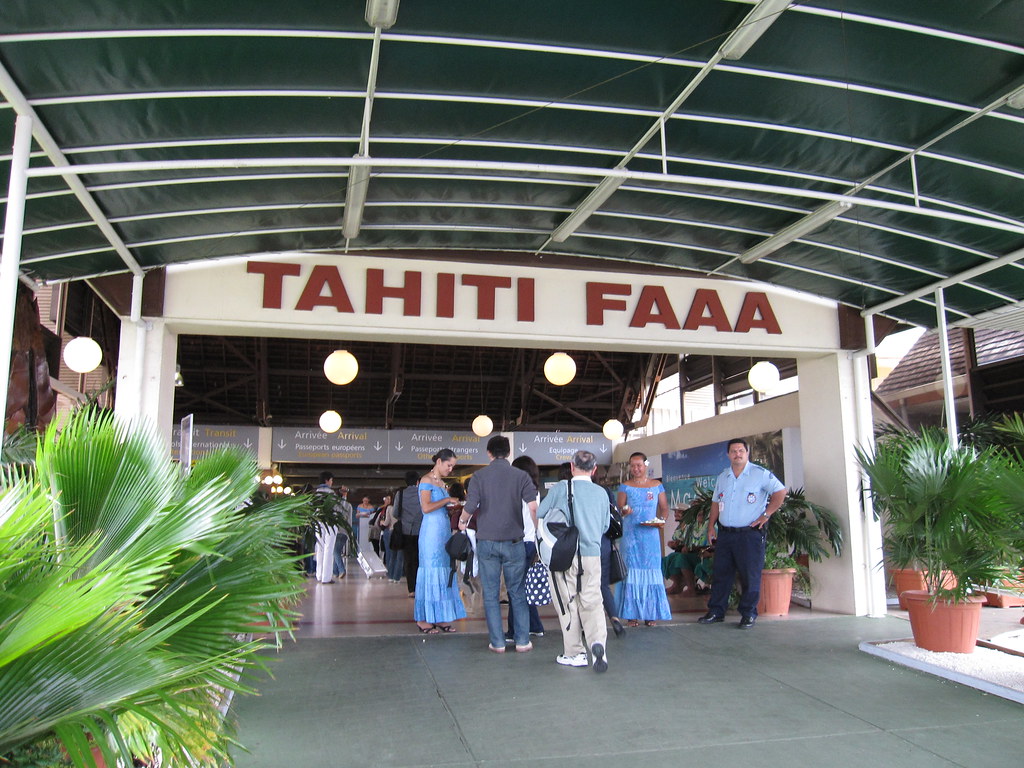
You can see my first view of Tahiti in the picture below.

We got a special welcome in Tahiti. Beautiful Tahitian women gave us a flower. We put the flower behind our ear. You can see me wearing the flower in the picture below. Click the picture. Read the notes.
IMG_1132.JPG

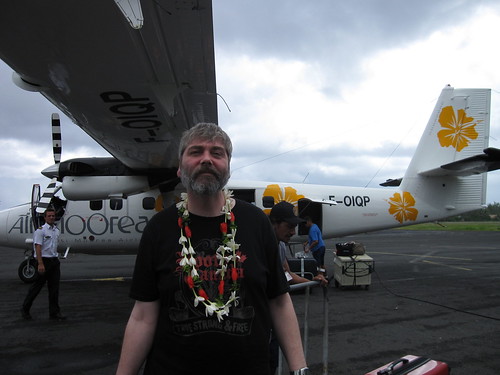
I didn't stay in Tahiti. I got on another plane. The plane was small. It had propellers. The plane was called a Twin engine Otter. The Twin-engine Otter is a Canadian-made plane. The Twin engine Otter is called デ・ハビランド・カナダ DHC-6 in Japanese. You can see the plane in the picture below.

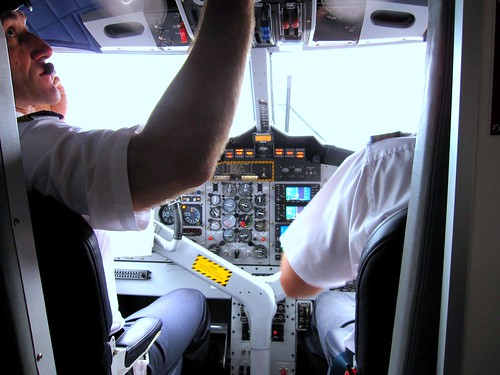
Here is a picture of the cockpit. The pilot is getting ready for take-off.

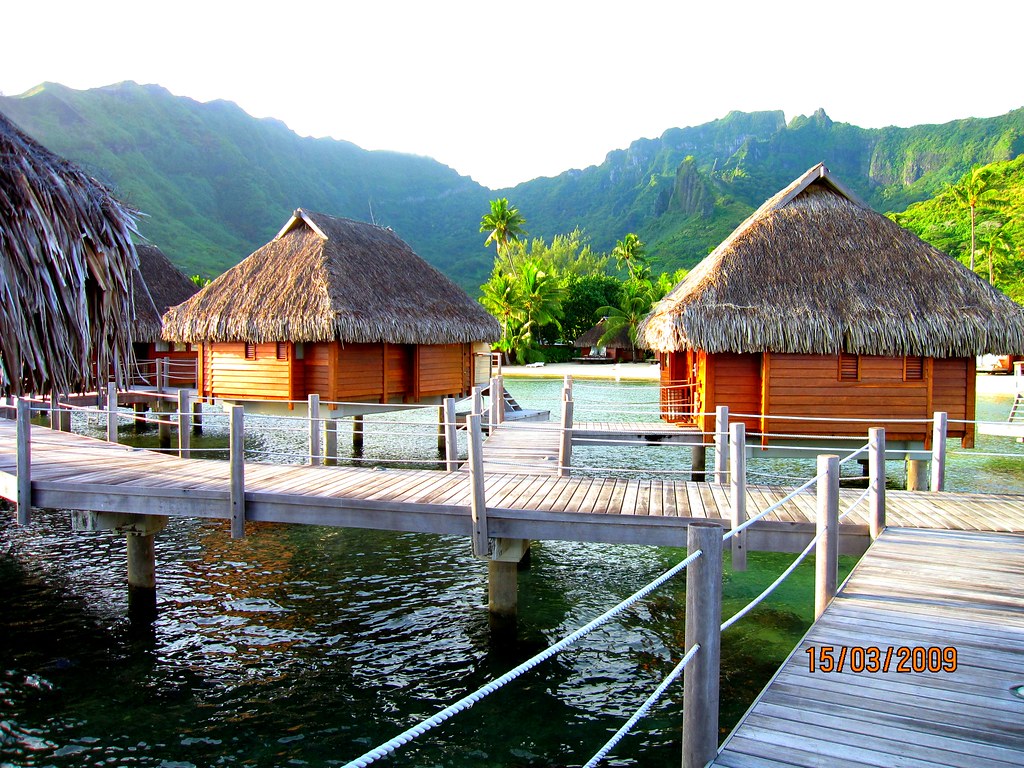
I flew from Tahiti to Moorea. I left Tahiti at ten o'clock. I arrived in Moorea at ten past ten. From the airport I went to the Moorea Pearl Resort and Spa. I stayed in an overwater bungalow. You can see a picture of some overwater bungalows below.


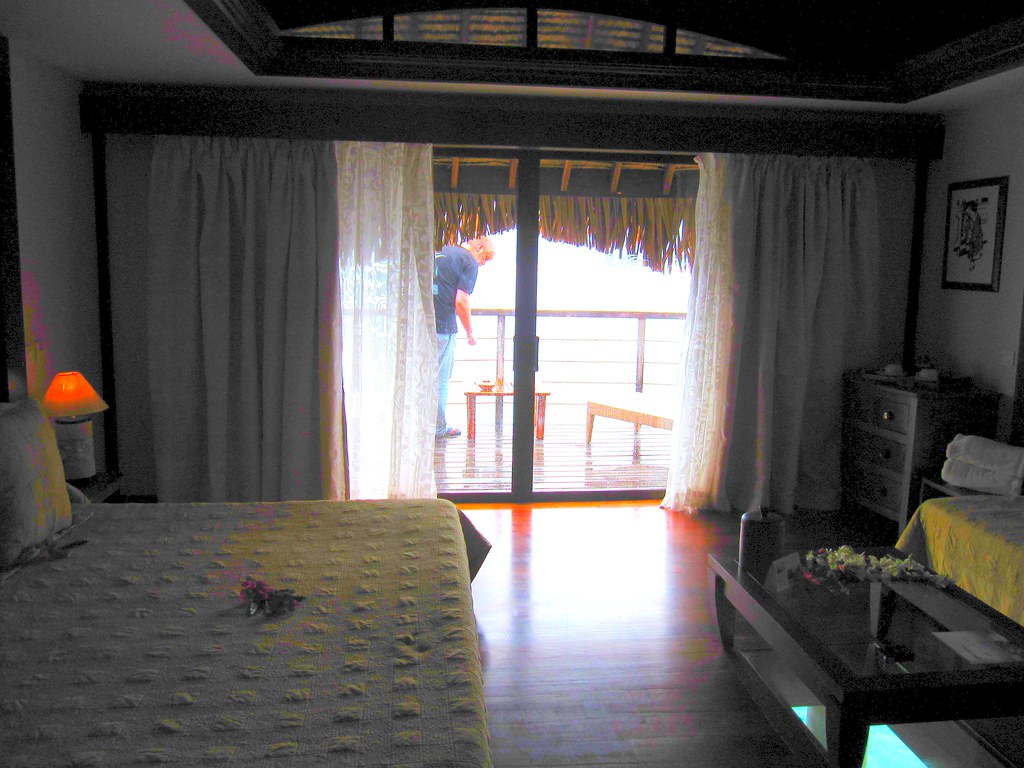
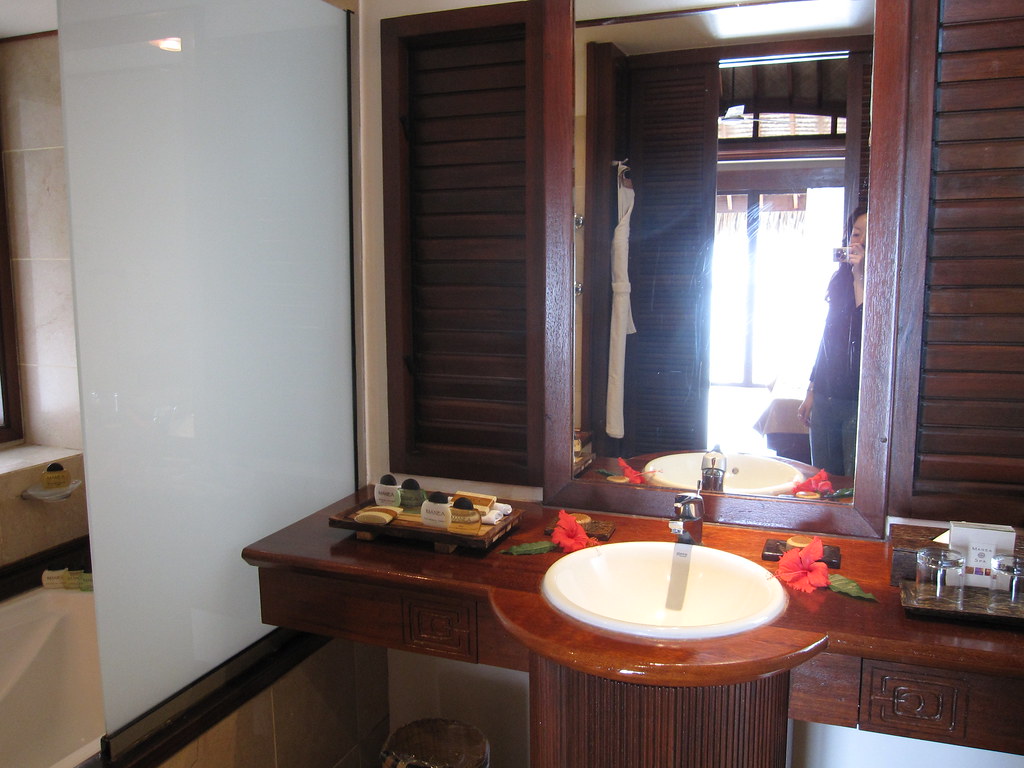
You can see some pictures of my room below.


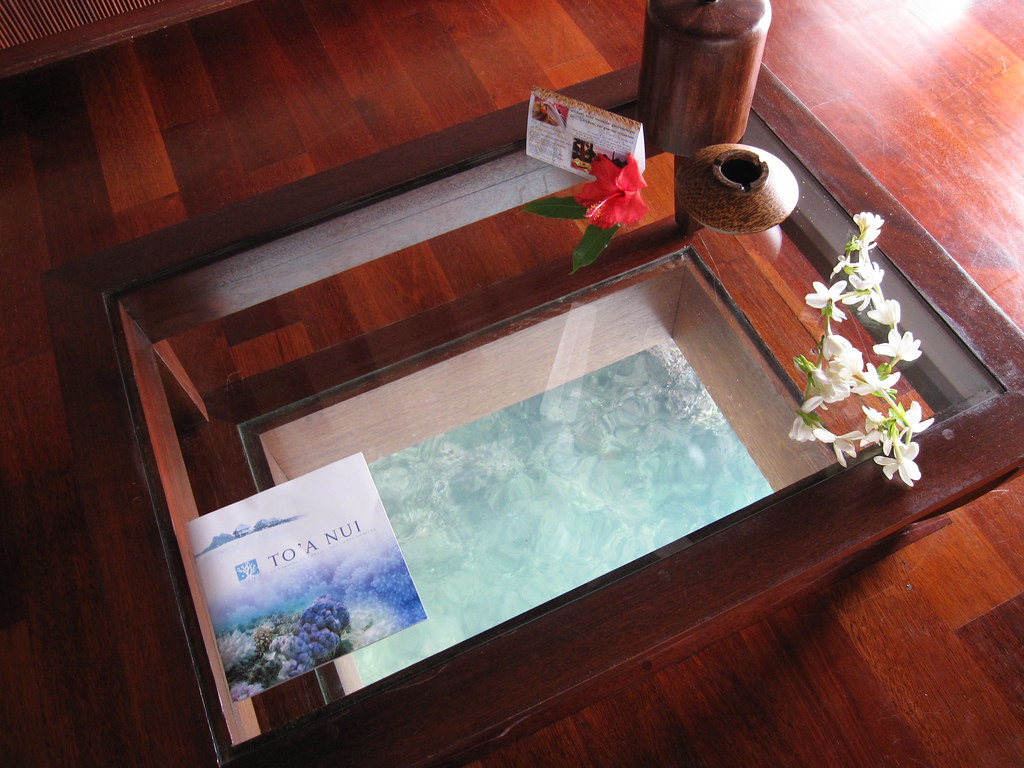
My room had a very special feature. Look at the picture below. The coffee table has a glass top. The floor below the coffee table is glass too. You can see the sea below. I watched the colourful fish through the glass.
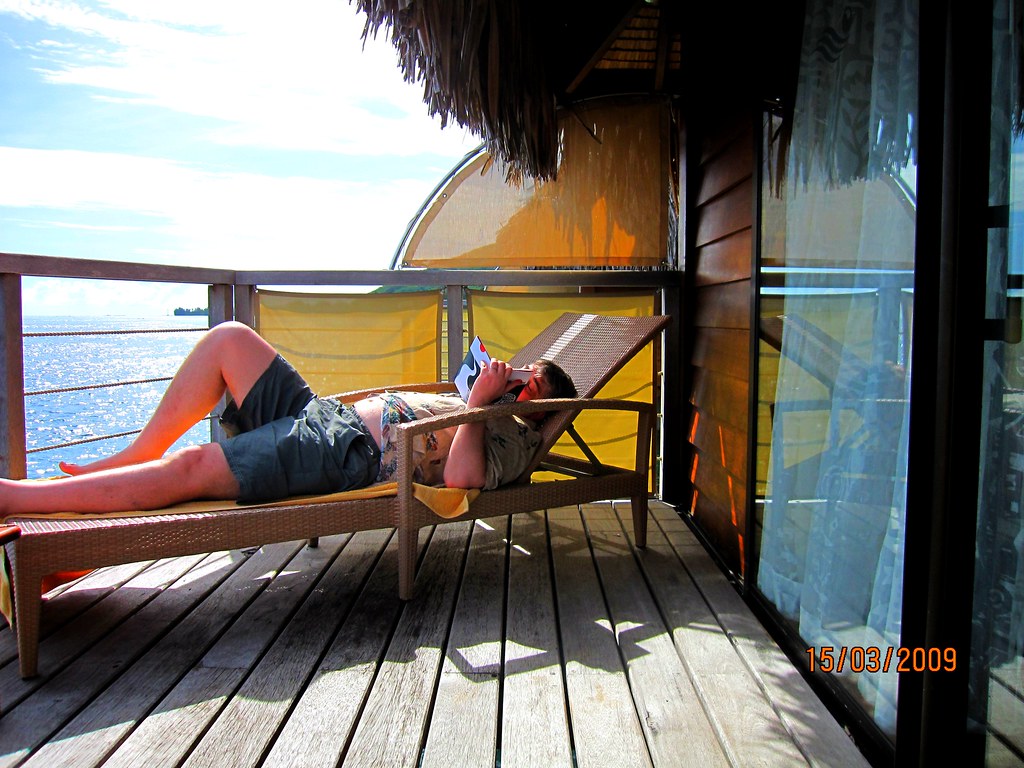
After I unpacked my suitcase, I went on the deck to read. I read a book by Haruki Murakami.

Then it started to rain. I went to the supermarket. I bought bread, cheese and sliced meat. You can see a picture of the supermarket below.
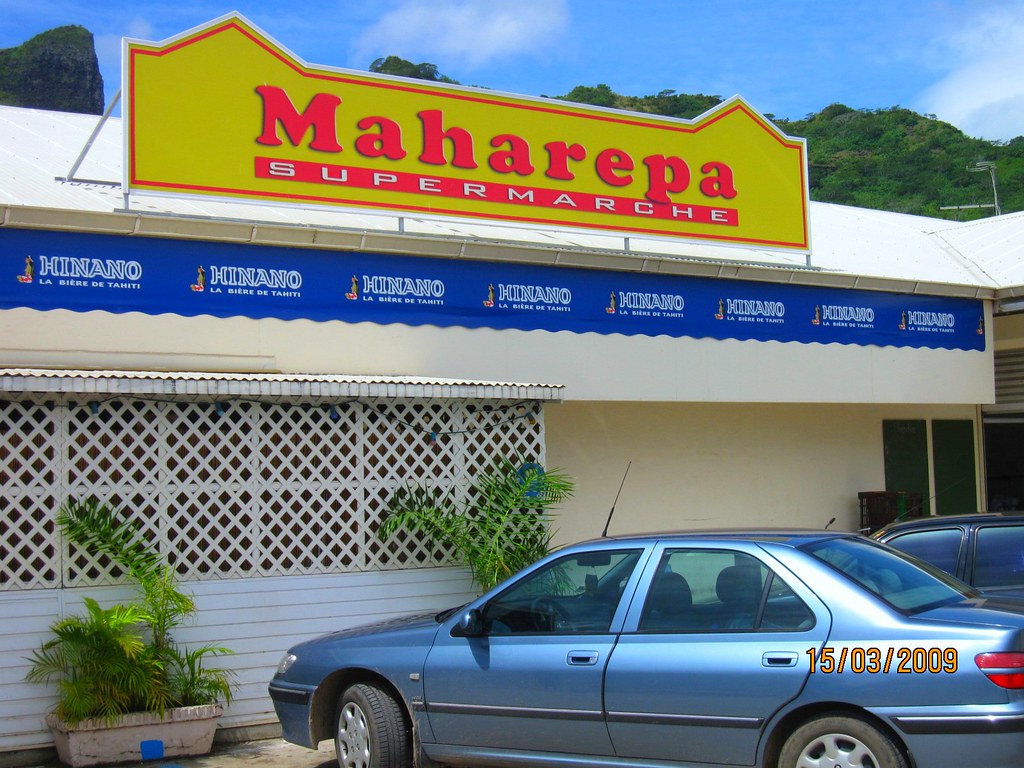


I ate after I returned from the supermarket. Then I went to bed. I had jet lag (時差ぼけ). I was very tired.
Next time, I'll write about my second day in Moorea.
Maruru (that's "thank you" in Tahitian).

Saturday, March 14, 2009

Japanese should ride bicycles more by Chiu


Nowadays, as technology has greatly improved and the prices of buying and traveling by mobile vehicles were much lower than before, traveling by mobile vehicles become more common and convenient in Japan. These improvements of life style do not bring a perfect benefit. In fact, some serious problems have happened. The first problem is pollution of environment and the waste of using natural energy. The second problem is Japanese`s over-dependant on mobile vehicles, which affect Japanese people`s health. In my opinion, one of the possible ways to solve these problems is riding a bicycle. First, bicycles do not release any harmful gases. Second, riding bicycle is a kind of exercise which can bring people good health.

First, bicycles do not need any energy to make it move. Therefore, using bicycle would not waste any important natural resources. In addition, bicycles would not release any carbon dioxide. Carbon dioxide is one of the gases which damage the environment(1). Recently most people in Japan travel to school, to work or shopping by mobile vehicles, which release a lot of carbon dioxide. As a result, it causes an increase in the air pollution and global warming gas. Furthermore, the energy resource of mobile vehicles is gasoline which is made from natural resource. Thus, using mobile vehicles means increases the waste of natural energy. It is true that using mobile vehicles is convenient, but sometime it is not necessary to use mobile vehicles. Therefore, no doubt, cycling is a good choice which release neither harmful gases nor wasting any important energy.

              Second, using bicycles can bring people good health. Most Japanese depend on the mobile vehicles too much. Whatever the place they want to go is far or near, they travel by mobile vehicles. It save them more time and get to the place faster. However, there is a serious problem which it means they walk or move less than before. This is one of the reasons why more Japanese are getting fatter(2). In order to obtain good health, and to save time for moving between places. It is better for them to use bicycles than mobile vehicles.

              To sum up, mobile vehicles bring many conveniences to us. However, there is a good side and a bad side to everything. Using mobile vehicles is no exception. Some people may say that it does not cause any negative effects immediately. However, if we do not control these, there would be more worse effect happened in the future. As we know now, the problem of global warming is getting worse. Furthermore, the Earth `s natural recourses would be used up after 50 years. Although Japanese cannot do much to stop these happen, one simple thing that all Japanese can do is riding bicycles rather than travelling by mobile vehicles. 

Friday, March 13, 2009

We should use more alternative energy resources by Satomi Y.


          Fossil fuels like coal and oil are limited resources. A lot of fossil fuel is used all over the world. In my opinion, we should use more alternative energy sources like geothermal energy, hydro power, solar power, and wave power. There are two reasons for this. First, unlike fossil fuels, these energies don’t produce carbon dioxide that is the cause of global warming. In addition, combustion of fossil fuels also produces other air pollutants, such as nitrogen oxides, sulfur dioxide, volatile organic compounds and heavy metals.

          First, carbon dioxide that combustion of fossil fuels produces is greenhouse gas. Global warming is serious issue. It is generally said that global surface temperature will likely rise a further 1.1°C to 6.4 °C during the twenty-first century. Therefore, greenhouse gas should be reduced.

         Second, combustion of fossil fuels produces hazardous chemical substances. For example, nitrogen oxides and sulfur dioxide are the cause of acid rain. In addition, volatile organic compounds and heavy metals are harmful to the human body. On the other hand, geothermal energy, hydro power, solar power, and wave power don’t produce such substances.

         To conclude, fossil fuels cause many problems for the environment. However, now, if fossil fuels are run out, industry of all over the world will not be maintained. We should consider well how to get energy without fossil fuels.

http://www.env.go.jp/earth/ondanka/stop2008/index.html
http://ja.wikipedia.org/wiki/%E5%86%8D%E7%94%9F%E5%8F%AF%E8%83%BD%E3%82%A8%E3%83%8D%E3%83%AB%E3%82%AE%E3%83%BC

Thursday, March 12, 2009

Japan Should Promote a Reduction in Garbage by Ayana S.


          Japan has a very serious problem. It is garbage disposal. There are many ways of doing it. For example, burning, landfills, recycling. Best way is to reuse all garbage, but it is difficult and unreasonable. In my opinion, Japan should promote a reduction in garbage. There are two main reasons for this. First, Japan is too small, so Japan cannot have a large landfill or incinerator. Second, garbage causes various environmental problems. For example, to produce dioxin, to cause soil pollution and groundwater contamination and a bad smell. Therefore, if we do it, these problems will relax.

          First, generally speaking, the cost of burning up garbage is about two times lower than to reuse it, but, even if recycling costs high, we should do it. In a case of plastic bottles, it can be reused to make a uniform and a blanket.* So, plastic bottles are very valuable resources. It is not incombustible garbage. We should promote a collection of garbage by type, too.

         The second reason why Japan should promote a reduction in garbage is that Japan cannot have a new landfill. So recently, Japan digs out garbage at filled up and used landfills, and burns it up again to reduce its volume. Next, it fills in again, and build again a new solidly landfill.* We can understand easily that how serious of this problem from this present.

        To conclude, to promote a reduction in garbage is difficult in Japan, but it can reduce in our lives, for instance, my chopsticks, eco bag, my bottle, and so on. Even if Japan cannot promote it right now, we can accomplish it if all Japanese people have such eco tools.

*1  www.petbottle-rec.gr.jp/product/pr_tayou_f.html
*2  homepage2.nifty.com/gomimondai/mondai_sono_01.html

Wednesday, March 11, 2009

Japan should actively support the study of biomass energy by Kou O.

Last semester, students in the Paragraph Writing 2 Class at Shibaura Institute of Technology wrote essays proposing changes that Japan should make for the sake of the environment. Their essays were very good! Starting today I'm publishing some of their essays. I've put footnotes in brackets because I can't format them correctly. Other than this I have not edited these essays at all. The first essay is by Kou. Enjoy!!


          Fossil fuels will run out in the near future, but we mightily depend on fossil fuels. In addition, we don’t have many natural resources. So we depend on imports from abroad for almost all of our energy resources. In the near future, Japan might not be able to get an adequate amount of energy. We must find alternative energy sources. In my opinion, Japan should actively support the study of biomass energy. There are two main reasons for this. First, biomass energy is made of easily accessible materials, such as garbage and wood. Second, biomass energy can help solve environment problems.

          First, biomass energy is made from biomass such as leftover food, animal manure, and wood. Therefore, we can easily get materials without depending on imports. For example, Sweden is the oil-poor country and depends on oil imports as Japan. However, through the two oil crises of the 1970s Sweden changed policy. In the mid-1990s, they focused on biomass energy. In 2004, one-fifth of electric consumption is provided by biomass energy based on woody biomass (1). Besides we can reduce waste disposal costs by using biomass. Biomass energy is very helpful for recycling resources.

          The second reason why Japan should support the study of biomass energy is that it leads to reducing carbon dioxide. Biomass energy emits carbon dioxide when ignited. However, this carbon dioxide is absorbed and transformed into organic matter by plants (2). This means that biomass energy doesn’t influence increases and decreases of carbon dioxide. Biomass energy is also very helpful for a prevention of global warming. In Scandinavian countries such as Sweden, Denmark, the penetration rate of biomass energy is over 10%. On the other hand, it is very small, less than 1% in Japan (3).

          Japan should support the study of biomass energy right now after the example of these countries, because biomass energy might be able to solve global warming and energy problems. We have everything we need to get started, with the possible exception of the will to act.

1) http://cucan-ads.com/lohas-news+article.storyid+19.htm
2) http://app2.infoc.nedo.go.jp/kaisetsu/egy/ey03/index.html#03
3) http://www.eesol.co.jp/release/report/200502report_2.html

Monday, March 09, 2009

Some Modest Proposals by Students at Shibaura Institute of Technology

Last semester the students in the Paragraph Writing 2 class did some very good writing. Today I'm going to share some of their writing. If you would like a copy of the writing task please leave a comment with your e-mail address and I will send it to you. I have edited these paragraphs for grammar, usage and clarity. However, I didn't have to do too much. Also, all the content is the student's and I tried not to intrude on the student's voice. Enjoy!

Shibaura Institute of Technology Should Recruit More Girls

I think Shibaura Institute of Technology should recruit more girls. I have three reasons. First of all,I am a boy and I like girls. Second, my friends haven’t got any girl friends. If there are many girls, probably my friends can get girl friends. Finally, If there are many girls, I think that the school will smell better.


Yudai K.
Shibaura Institute of Technology Should have Washlets
I think that all toilets in Shibaura Institute of Technology should have washlets. I have three reasons. First of all, Shibaura's toilet paper is rough for us. Our bums are delicate. Second, if we use a washlet, we will keep clean. Finally, a washlet is very easy to use. We need only one switch. For these three reasons, I think that all toilets in S.I.T should have washlets.
Hirofumi O.

Shibaura Institute of Technology Should Remove all Smoking Places
I think that Shibaura Institute of Technology should remove all smoking places. There are three main reasons for this. First of all, there is not at all good about smoking. Moreover, cigarette smoke has a bad effect on many non-smokers. Second, the campus would be clean if all smoking places were removed. Now, many cigarette butts are left in various places. The third and final reason is that removing smoking places would reduce the number of students who are smokers. It is very bad for young people's bodies. For these three reasons, I think Shibaura should remove all smoking places.

Ayana S.

Saturday, March 07, 2009

Toyo Gakuen University IE-12: Music. Semester 2 Powerpoint Presentations

Last year the students in the Interest-based English (Music) class made some great presentations about their favourite musical artist. Here are some examples. Enjoy!!

Saturday, February 28, 2009

Teachers Helping Teachers in the Philippines


I went to the Philippines. You can see the places I visited on the map below.


View Larger Map

I went to the Philippines with a group called Teachers Helping Teachers (THT). I am a member of THT. THT is a group of English language teachers in Japan and other countries. The purpose of THT is to help teachers working in developing countries ( [開発]途上国 ). This was the second time I travelled with Teachers Helping Teachers. Last year I travelled to Laos with Teachers Helping Teachers.

I arrived in the Philippines on the twenty-third of February. I spent my first day in Manila. The twenty-third of February was a holiday in Manila. So, I had some free time. First I visited the home of a wonderful man called Gap. Gap is a neurosurgeon (神経外科医). I had lunch at Gap's house. The lunch was delicious. Below is a picture of my lunch.


After lunch, I went on a tour of Manila. We visited Intramuros. Intramuros is a very old part of Manila. You can read more about Intramuros. Click this link for information in English: http://en.wikipedia.org/wiki/Intramuros,_Manila. Click this link for information about Intamuros in Japanese: http://ja.wikipedia.org/wiki/%E3%82%A4%E3%83%B3%E3%83%88%E3%83%A9%E3%83%A0%E3%83%AD%E3%82%B9
Below are some pictures of Intramuros.


I visited San Agustin Church. It is a World Heritage Site. Below are some pictures of my visit to San Agustin Church.

After the tour, I had dinner at Gap's house. The dinner was delicious. You can see the food I ate in the picture below.
The next day I woke up at 4 am. At five in the morning I left my hotel. I went to Batangas. In Batangas I got on a ferry. A ferry is a kind of boat. I took the ferry to Calapan on the island of Mindoro. Then I went to San Lorenzo Ruiz Academy. San Lorenzo Ruiz Academy is a school. After I arrived at San Lorenzo Ruiz Academy, I had lunch. You can see pictures of my lunch below.

After lunch, I did a workshop with some teachers at San Lorenzo Ruiz Academy. The topic of the workshop was Kamishibai (紙芝居). You can see some pictures of the workshop below.


Here is the powerpoint I used in the workshop.

Here is a picture of a classroom at San Lorenzo Ruiz Academy.


After the workshop I had dinner. You can see a picture of the food I ate below.

After dinner I was very tired. I went to bed early. I slept in a classroom with the other teachers. We slept on mattresses on the floor.
The next morning we woke up at four thirty in the morning. We washed. Then we had breakfast. After breakfast we got into a jeepney. You can see a picture of a jeepney below.
We took the jeepney to the village of Banilad.  Banilad is a Mangyan village.  Please look at the pictures of the village below.
 
Banilad is in the mountains. The view from the village is beautiful. 
 
There is a branch school of San Lorenzo Ruiz in Banilad.  I taught six lessons at the school.
I taught children. The children were in grades 1 to 6. I taught the children with my friend Brent. Brent is a teacher too.  
 
 
I was very fun teaching the Mangyan children. They were very clever and they were very interested in English.
After the lessons I met the Chief of Banilad. Here is a picture of me with the chief below. The chief is the man on the right. He is wearing a white shirt.
After I met the chief there was a closing ceremony. There were speeches and there were performances by the children. After the ceremony we went back to Calapan.
The next day we woke up at six in the morning. After breakfast we took part in a parade. The parade was very colourful. Many children wore costumes. The jeepneys were decorated too. 
 
Some of the Mangyan children wore traditional Mangyan clothes.
After the parade. We went back to Manila. We were very tired. The next day I woke up at four in the morning. I went to the airport and returned to Japan. It had a great time in the Philippines.

Wednesday, January 21, 2009

Shibaura Institute of Technology English Conversation Intermediate 2 Make-up Homework

Today's class is cancelled. Yeah! Ah, but you have to do some homework instead. Boo!! Sorry.
The topic of your make-up homework is music. You will hear three interviews. Listen to the interviewers and do the tasks on the worksheet.
Click here to download the worksheet: http://www.divshare.com/download/6364044-52f

Task 1
Click this link: http://www.elllo.org/august/alex/aradio.htm

Task 2
Click this link: http://www.elllo.org/Pages0301/303-Adrienne-Violin.htm

Task3
Click this link: http://www.elllo.org/english/0801/Q817-Eoin-After.html


These interviews come from a great website called ELLLO. ELLLO means English language Listening On-line. The interviewer is my friend Todd Beuckens. You can hear more of Todd's interviews by clicking here.

Wednesday, January 07, 2009

東洋学園大学 FE2- Reading Final Exam Study Guide


Study, originally uploaded by Bo_MaLiC.


Well the winter break is over. I hope you enjoyed it. It's time to get back to work. Your final exam is on Monday 19 January. Here's your final exam study guide:

The exam will cover units 10, 11, and 13. Please study the following pages in your textbook: pp. 77-79, 84-87, 100-103. In order to pass the exam (試験に合格するために) you must show that you understand and remember the content, vocabulary and grammar that you studied in units 10, 11, and 13. You must also show that you can use the reading skills you practiced in class. There will be 6 types of questions:
Questions about the contents of Units 10, 11, and 13
  1. Vocabulary: A. Match the vocabulary from the textbook with the Japanese translation. B. Match the words that make collocations.
  2. Grammar: These are multiple choice type questions. You will have to choose from 4 choices. Will will choose the best word or words to fill in the blank in a sentence. (p. 77 #3, p. 84 #1, p. 101 #2).
  3. Content: These are multiple choice type questions. You will be asked questions about the readings ("Into the Wild", pp. 78,79; "Seeds of Change", pp.86, 87; and "A Funny Way to Make a Living", pp. 102,103). You will have to choose from 4 choices.
  4. Personal response. This is a short paragraph type of answer. These questions will be about "Into the Wild" and Seeds of Change". Please study your answers to the "What do you think?" questions on pages 78 and 86. You will have to write 2 or 3 sentences in order to answer the question. Your answer should be at least 50 words.
Questions about two new readings.
  1. Reading for the main idea. This is a multiple choice type of question. You will have to choose from 4 choices.
  2. Reading for details. This is a multiple choice type of question. You will have to choose from 4 choices.
The exam will be sixty minutes. Use the following resources to help you study for the exam:
Verb patterns
Unit 10 Word search
Unit 11 Verbs + Nouns
Unit 3 Word Search
Sarah's Freshman English Reading Blog: Unit 10, Unit 11 and Unit 13

Good luck!