Sunday, January 28, 2007

Kanto International High School Study Abroad Programme Special Guest Lecturer


Kanto International High School Study Abroad Programme Special Guest Lecturer
Professor Stefano Tsukamoto
Visiting Professor, Peace and Conflict Studies, Tokyo University of Foreign Studies
National Director, Habitat for Humanity Japan

On Wednesday 31 January Professor Stefano (Toshiya) Tsukamoto will give a lecture to the first and second year students in the Kanto International High School Study Abroad Programme about poverty and homelessless in Japan and the world. Information about Professor Tsukamoto, Habitat for Humanity and Habitat for Humanity Japan can be found by clicking the following links:
http://www.habitatjp.org/
http://www.habitatjp.org/index_e.php
http://www.openup.jp/client/edu/tufspcs/en/people/faculty/

Saturday, January 20, 2007

Homelessness in Indonesia
By Tuah Gintang
Takushoku University


Good afternoon gentlemen. Thank for your coming. Have you ever seen homeless people? What did you feel when you saw them? I am here to talk about my research about homelessness in Indonesia. Before we start I’d like to introduce myself, my name is Tuah Ginting and I am a foreign exchange student from Indonesia at Takushoku University. In my presentation I’m going to look at three main areas. First, I’ll talk about the population of Indonesia and what percentage of it consists of homeless people. After that I will tell you about the homeless in Indonesia and the cause of homelessness in Indonesia, and finally, I’ll talk about what we can do to help solve the problem of homelessness in Indonesia. My presentation will take around 10 minutes. If you have any questions, I’ll be happy to answer them at the end of my talk.

So let’s start by looking at the population of Indonesia. Indonesia’s 2000 National Census showed that its total population is 203.4 million, of which 3.2 million (1.6%) are categorised as those who do not have a permanent place to live. Under this category are lumped together ship crewmembers, people living in houseboats or floating houses, nomadic groups of people (usually living in remote areas) as well as people who live and spend their nights in marketplaces, bus and railway stations, under bridges, and near city garbage dumps. Ok, that’s all I want to say about the population of Indonesia and the demographic make-up of homelessness in Indonesia.

Right, let’s move on to the cause of homelessness in Indonesia. Why do people become homeless? As in many other places in the world, the biggest cause of homelessness is urbanization. People from outside come to the city in order to realize their dreams and because they want to be successful people without good preparation like an education and a life strategy. And once they are in the big city, they can’t find a job and they can’t earn money for their life. Since they have failed to make their dream come true, they have no money and they can’t go back to the place where they came from, they sleep in any place they can find, and they beg or scavenge garbage bins for food. People like this are called gelandangan. They never wash and they barely communicate with other people.

I interviewed some homeless people in Jakarta, and I asked them why they became homeless. Almost of them came from outside the city, before they came to Jakarta they were farmers, but they weren’t satisfied with the money they got from farming. They thought that they could get a job in the city easily. When they came to Jakarta, the reality wasn’t as good as what they thought, and they faced many problems. They couldn’t earn money and they became homeless.

Some problems are caused by unemployment, or people who lose their job because of the country’s economic condition. In 1998, following the overthrow of President Suharto, conditions in Indonesia got worse, and the most significant problem was the economic crisis. Many companies and businesses closed or they had to decrease the number of employees.


Another problem that caused homelessness is the city’s development. For example, Asian Human Rights Commission made the following report, “… on January 11th 2006, approximately 125 semi-permanent houses were bulldozed by civil and military officers, forcibly evicting 140 families from their homes in Kampung Melayu ,Jatinegara, and East Jakarta. This incident is the latest in a series of forced evictions related to the 35 kilometre Double-Double Track Railway Project (DDT) along East Jakarta-Cikarang. Previous evictions occurred in Pisangan Timur, Jatinegara, East Jakarta on 4 January 2006. Approximately 458 buildings in Pisangan Timur were destroyed and 489 families are now homeless, living in temporary tents”

Ok, finally I’d like to turn to the most important point: what we can do to help solve the homelessness problem in Indonesia. I don’t think that homelessness can be solved only through charity but we have to give them some way to change their lives and be self-reliant. In the Indonesian homelessness situation, the better way to help is to give them a job opportunity or give them job training, and make a fund to start their own little business. One important thing we have to recognise is that poor homeless people are full citizens who have the same rights and responsibilities as other (urban) residents.

In conclusion, let me briefly go through the main points again. First I talked about the population of Indonesia and I hope you can remember that 1.6percent of the population are homeless people. Then I described homelessness in Indonesia and what the main homelessness problem in Indonesia is, and finally I shared what can we do to help homelessness in
Indonesia. Right, I think that’s everything. Let me finish by thanking you very much for your attention. And now, if you have any question, I’ll be happy to answer them.

References

Asian Human Rights Commission (n.d.) Retrieved January 20, 2007 from www.ahrchk.net

Homelessness in Japan By Cheng Ya Bin (Mike) Takushoku University


Good afternoon everyone. Today I want to talk about the homeless in Japan because, whether you like it or not, homelessness is a problem in society that is affecting our lives. After you have heard my presentation, I hope you will decide to care about this special group of people. In my presentation, first I want to tell you about the homeless situation in Japan. Then, I want to talk about the problems ta are caused by homelessness and last I will talk about some solutions to the problem.
Ok, let me start with some information about the homeless in Japan. The population of Japan is about one hundred and twenty-five million and the number of homeless people is about twenty-four thousand. Half of them are in Tokyo and Osaka. According to the latest research in 2006, the number of homeless in Tokyo is less than the year before. Most of the homeless are between the ages of 50 and 60. The youngest is 26 and the oldest one is 78. Also, thirty-one point eight percent of them have lived this kind of life for over 3 years, 14.9% have lived this kind life from between 6 months to a year. The most common reason for them to become homeless is bankruptcy, or something like this, which forces them to be homeless. The second biggest reason for them to become homeless is a family problem. Eighty point four percent of them are searching for work to do. Nineteen point six percent are not. One third (1/3) of them are woman. Fortunately, in Japan there have been no cases of homeless children reported.

Ok, I have told you about the homeless situation in Japan. Now I’ll talk about the problems caused by homeless. Once I wanted to relax in a nearby park during a break from my part time job. How I wished to relax myself at that time, so I walked into the park. Suddenly, a big voice shouted out, “what are you doing here!” I was so astonished. I stopped and looked around, at last I saw that a homeless person was sitting at the top of a chute and staring at me. What a horrifying face! I had to leave straight away. In this case, the homeless person made the public park seem as if it were his private place. So, on the one hand, homeless people encroach on the public’s rights, On the other hand, when people go into parks that homeless people occupy, it seems like people encroach on rights of the homeless. So this situation causes trouble very easily.
The second problem caused by homeless is the urban aspect, because homeless people will stay anywhere they want, Even in center of a city. So that will give people a bad impression of the city, especially the people who come to the city for the first time; they can’t forget it for a long time.
Homeless people do not only cause problems for the public, they cause problems for themselves too. For example, they sometimes can’t get enough food, they can’t get enough clothes, and they aren’t well treated when they are sick. All in all、they can’t get basic things to live. These are the problems that are caused by homelessness. So how can these problem be solved?
Japan has enacted a law to help the homeless to get back into society. The main spirit of the law is, first, helping homeless people to get a job. Second, helping them to get a place to live. Third, taking care of their mental and physical health. However, this is not easily done. There are several reasons for this. First, because most of the homeless are older people, it is difficult for them to master a new skill in order to make a new life. Second, some of them do not want to accept another’s help, even the mental patients who don’t know what people are doing for them and don’t know to accept the help. So there are still many things that need to be done to help carry out the law.
I’ve talked about what the Japanese government is doing for the homeless. And now, let’s think about what we can do for this special group. As far as I know, there are three ways this can be done. The first is to buy the magazine which is called “The Big Issue”, because all the profits from the magazine is helping homeless people to live. Second, the Korean and American churches in Tokyo, always organize people to help the homeless, so you can contact them and take part in their activities. The third thing you can do is take the clothes that you will never use to the church and let them help you give them to homeless people. Homeless people need to change clothes and they need clothes as protection against cold. Of course there are still many more ways to help the homeless. If only you care about the homeless, you will find a way to do something for them.


Ok, I’ve talked about the Japanese homeless situation and the problems caused by it, and what the Japanese government has done for the homeless. Finally, I suggested three ways in which you can help them. I hope from now on, every one of you will care more about the homeless, because they really need your help, and you will be rewarded by what you have done. So every one of us, let’s do what we can to help the world to be more beautiful. Thank you!

References:

Shinia no godouhai e homuresu no shakai fukki wo ooen shimasen ka? [Can you help homeless seniors re-enter society?] (n.d) Retrieved January 20, 2007 from: http://www7.plala.or.jp/masa2323/

Thursday, January 11, 2007

Social Issues Project - Homelessness in Today's World Posters


These posters are examples of posters that were made by students in the Study Abroad Programme in 2005. As you can see, the posters have very few words written on them. There are several reasons for this. First, the purpose of the poster is to make the the words spoken by the presenter easier to understand. Pictures make the spoken words easier to understand. Pictures are very helpful to people who can't understand English very well. Also, if there are many words on the poster then the people attending the presentation will read the poster rather than listen to the presenter's talk. It's better for the people attendingthe presentaion to get the information from listening. These posters are very good examples of how students should make posters for a presentation.

Saturday, December 23, 2006

Homelessness in South Africa by Yu Jihun Study Abroad Class of 2008


A Profile of South Africa

Population: 42.5 million people (as of mid 1997)
Population Density: 35 people per square kilometer
Birth Rate: 27 per thousand population each year
Death Rate: 12 per thousand population each year
Natural Increase: 1.5 % each year
Doubling Time: 46 years at current rate
Infant Mortality Rate: 53 deaths per thousand live births
Total Fertility Rate: 3.2 children during a woman's lifetime
Younger than 15 years old: 35 % of population
Older than 6o years old: 5 % of population
Source: http://www.alsagerschool.co.uk/subjects/sub_content/geography/Gpop/HTMLENH/country/za.htm


Causes of Homelessness in South Africa.

1. Low opportunity for employment
“The unemployment rate is passing 30% and the 44 million people of that country rely upon a total workforce of 15 million. Job opportunities are virtually nonexistent and the economy of South Africa continues to fall below third-world standards - 4.4”
2. Settler problem
“An estimated seven million people in South Africa live in 'informal settlements' or ‘squatter camps’ - and that number is set to grow as more rural dwellers flock to urban areas, escaping drought and seeking jobs. The problem is compounded by illegal immigrants from Mozambique, Zimbabwe and Malawi - about 5 million - who are fleeing drought, economic difficulties and political oppression in their own countries. These refugees come on top of an already frightening growth rate Africa's population is projected to double in 23 years."

Source:http://www.alsagerschool.co.uk/subjects/sub_content/geography/Gpop/HTMLENH/patp/pp86.htm

3. Gap between small income class and large income class.
In South Africa, the gap between the small income class and the large income is very big. The people who earn much money are very few, but poor people in South Africa are numerous, so, South Africa’s society is very unbalanced, in my opinion.


Agencies working in South Africa to help the homeless?

1. AAPCI/AFRICA
According to the AAPCI website AAPCI/AFRICA is, “an independent subsidiary of the African American Planning Commission, was conceived in 1998 as a nonpartisan, Non-Governmental Organization (NGO). AAPCI/AFRICA's mission is to collaborate with established NGOs on the African continent in an effort to combat the HIV/AIDS pandemic, which continues to decimate whole communities in Sub-Saharan Africa.”

“AAPCI/AFRICA's strategy is to develop a community healthcare center and provide healthcare services to the most marginalized, vulnerable and underserved. In addition to medical services, the health center will serve as a means by which AAPCI/AFRICA can disseminate information to local communities through Outreach efforts and public information campaigns.”

Source: http://www.aapci.org/about/index.htm

2. UNICEF
United Nations Children's Fund. Works to help poor children.

Source: http://www.unicef.org/whatwedo/index.html

What these agencies are doing in order to help the homeless

APPCI/AFRICA

Serenity House
“The goal of this important project is to develop safe, permanent, affordable housing with on-site support services for homeless families. With our financial support, the African American Planning Commission can develop much needed affordable housing.”

Source: http://www.aapci.org/about/founder_bio.htm

UNICEF

1. Child protection
“UNICEF believes that the protection of children is crucial to their survival, health, and well-being. Everyday millions of children are exploited, abused, or are victims of violence. Bought and sold like commodities, children are forced to be soldiers, prostitutes, sweatshop workers, and servants. Abuse, exploitation and violence, occurring usually in private, are often elements in organized crime and corruption. Only time reveals the consequences: children uneducated, unhealthy and impoverished.”
2. Early childhood
“Every child must be ensured the best start in life – their future, and indeed the future of their communities, nations and the whole world depends on it.
Every year, some 132 million infants around the world begin an extraordinary sprint – from defenceless newborns to becoming proactive young children ready for school. And every year, countless numbers of them are stopped in their tracks – deprived, in one way or another, of the love, care, nurturing, health, nutrition and protection that they need to survive, grow and develop. Nearly 11 million children die before their fifth birthday each year and tens of millions more are left with physical and/or mental disabilities or learning impairment – solely because they and their caregivers lack the basic conditions needed for young children to survive and thrive.”
Source: http://www.unicef.org/whatwedo/index.html

What we can do to help the homeless in South Africa.

Research the AAPCI‘s activities and try to contribute a little money.
I think that we should know about the homelessness problem and try to help the homeless around us.


I researched homelessness in South Africa. In my research, I found that there are many homeless in South Africa. There are many causes of homelessness. About seven million people are settlers from Mozambique, Zimbabwe and Malawi because of economic problems, drought, political problems and so on. Also, according to the UN, about 500,000 families have been evicted from their homes and many people, including children, have been killed in the chaos surrounding the evictions process. Therefore, low opportunities, economic problems, and the settler problem are the causes of homelessness in South Africa.

My research is based on official agencies’ research. So, these numerical values are not exact. I think there are more homeless in South Africa than the research shows. I think all of the people in the world should try to help the homeless because they also have human rights.


Sunday, December 17, 2006

Homelessness in the Philippines By Yuka Ikegami Study Abroad Class of 2008


I researched homelessness in the Philippines. First, I’ll tell you about the population of the Philippines. According to the 2000 census, the population of the Philippines was 76,504,077 and the population growth rate was 2.36% per annum. Now, the population of the Philippines is 87,857,473. That’s very surprising, I think. Second, there are only 14,891,127 houses, and 14344 homes have no walls, Also, in the Philippines, between a third to a half of the urban population doesn’t have a good place to live. So they live in informal settlements, conditions that are illegal, and so on.

There are several reasons why people become homeless in the Philippines, One reason is poor people lose their houses, Also unemployment causes homelessness, and I think there is a relationship between “migrant workers” and homelessness because they come there from another place.

There are agencies that help reduce homelessness. One example is “PHPF”- Philippine Homeless People's Federation. These agencies have programs to develop “savings & money”, “income and livelihood”, and “government partnerships” So, they are very kind.,


Tuesday, December 12, 2006

Homelessness in Ethiopia by Lisa Ishii Study Abroad Class of 2008


I researched about Ethiopian homelessness. There are many homeless people and street children. However, nobody knows the truth because many Ethiopians sometimes become homeless but at other times, they are not homelessness. Some street children are homeless but others are not, they just work on the street. So it is difficult to count the real number of homeless people and street children.

In Nazareth, which is a town in south-eastern Ethiopia, there are 5,138 street children living there. The average age of a street child is 12.9 years old. 90% of them are boys and the other 10% are girls. About 50% of this town’s street children left their families before their 10th birthday. Most of them have jobs to keep them living.


Many agencies help Ethiopian homeless people and street children. For example, UNICEF helps street children to keep them healthy. It is an extremely important thing for them to keep helping homelessness and street children.


Statistics on Ethiopia

  • 50,000 to 60,000 street kids in the capital alone (Source: http://www.oneworld.net/)
  • 5,138 street children in Nazareth, a town in south-eastern Ethiopia
  • 4,626 (90%) were males
  • 512 (10%) were females
  • average age is 12.9
  • 312 (52.3%) of the children left their families before their tenth birthday.
  • 109 (18.3%) went to school at that time
  • 326 (54.6%) of the children had a house to sleep in at night
  • 271 (45.4%) were completely homeless.
  • 530 (88.8%) of the children had at least one of their parents alive.
  • Most of the street children have jobs to keep a living. Only 76 (12.7%) were found to be living on begging. (Source: http://www.ncbi.nlm.nih.gov/)

Friday, December 08, 2006

Homelessness in Japan by Emiko Itai Study Abroad Class of 2008


1. What is the population of Japan?

127,333,002

2. How many people are homeless in Japan?

24,090

3. What is the cause of homelessness in Japan?

Many people lose their jobs and new jobs have been decreasing. So many people can’t find
jobs.

4. What agencies are working in Japan to help the homeless?

THE BIG ISSUE 


This is The Big Issue’s logo


http://www.bigissuejapan.com/

5. What are these agencies doing in order to help the homeless?

They make a job for the homeless. ‘BIG ISSUE’ is a magazine for homeless to buy. They get it for 90 yen from BIGISSUE JAPAN. Then, they sell it for 200yen. So they can get 110 yen.

6. What can we do to help the homeless in Japan?

There are two things we can do to help the homeless in JAPAN. First we can buy a BIG ISSUE. When we buy it we can learn some things about the world, and a homeless person can get money. These are both good reasons to buy the BIG ISSUE. Next, we shouldn’t do senseless things. For example we should eat everything every meal. We shouldn’t put food out in the garbage. This is a very rude thing to do when there are homeless people who can’t find a good meal. We can eat when we are hungry but they can’t eat anytime they want.

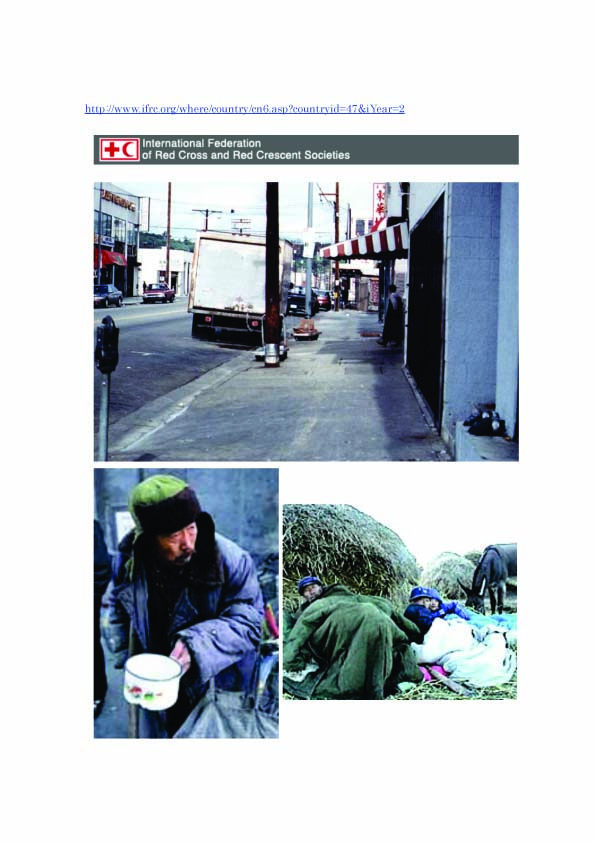
Finally, a picture of homeless people in JAPAN


Thursday, November 30, 2006

Homelessness in Canada by Suzuko Tanoiri Study Abroad Class of 2008


There are about 32.4 million people in Canada. Canada doesn’t have reliable data regarding the number of homeless people. Each year, there are homeless people who freeze to death. There are three causes of homelessness. First is high unemployment. Second is the increasing number of poor people. Third is the decrease in the amount of housing that is cheap.

“The Mission” is working to help homeless people in Canada. Its work is to respond to homeless people in need with food, clothing and shelter. What we can do to help the homeless people is to take part in volunteer work, donate materials, and learn about their problems. The most important thing is that we shouldn’t give money to homeless people because money can’t solve their problems and they may use money to buy drugs or alcohol

Monday, November 27, 2006

Homelessness in Columbia by Megumi Saito Study Abroad Class of 2008


I researched homelessness in Colombia. Colombia is located in the west part of South America. The population of Colombia is 44.6million and there are more than 35million homeless people there. There are many causes of homelessness. The biggest reason is wars, and civil wars. The people of Columbia have had many wars that produced a large death toll. Other reasons are related to the present state of Colombia including domestic violence, illness and unemployment. Regrettably most of these homeless people are children.

To help these people many organizations have been established. For example: Colombian Commission Jurists (CCJ), Colombia Support Network (CSN) and, Christian Solidarity Worldwide (CSW). Nevertheless, still now, there are increasing numbers of people dying. However, even the few funds that we raise will save their lives. We should join the work to support the homeless more positively, even if we cannot help directly.


This is the logo of CSN


Some homeless people in Colombia


Sunday, November 26, 2006

About Homeless People in Russia by Shota Hamamoto Study Abroad Class of 2007


I researched homelessness in Russia. There are a lot homeless in Russia, about 700,000 persons or more. The number one problem is street children. While there are homeless people also in Japan, most homeless people in Japan are adults. However, there are many homeless children in Russia. The reason that they become street children is that they are maltreated by their parents. The number of street children increases every year. When it becomes night, the temperature in Russia becomes minus 20℃. Homeless adults and the street children have died of the cold. Homeless people and street children always live in manholes. They eat things they find in garbage cans and other people's leftovers. Some children living in the street are as young as eight years old. Children that young get sick living in a dirty manhole.

This is a picture of a homeless child coming out of a manhole

Saturday, November 25, 2006

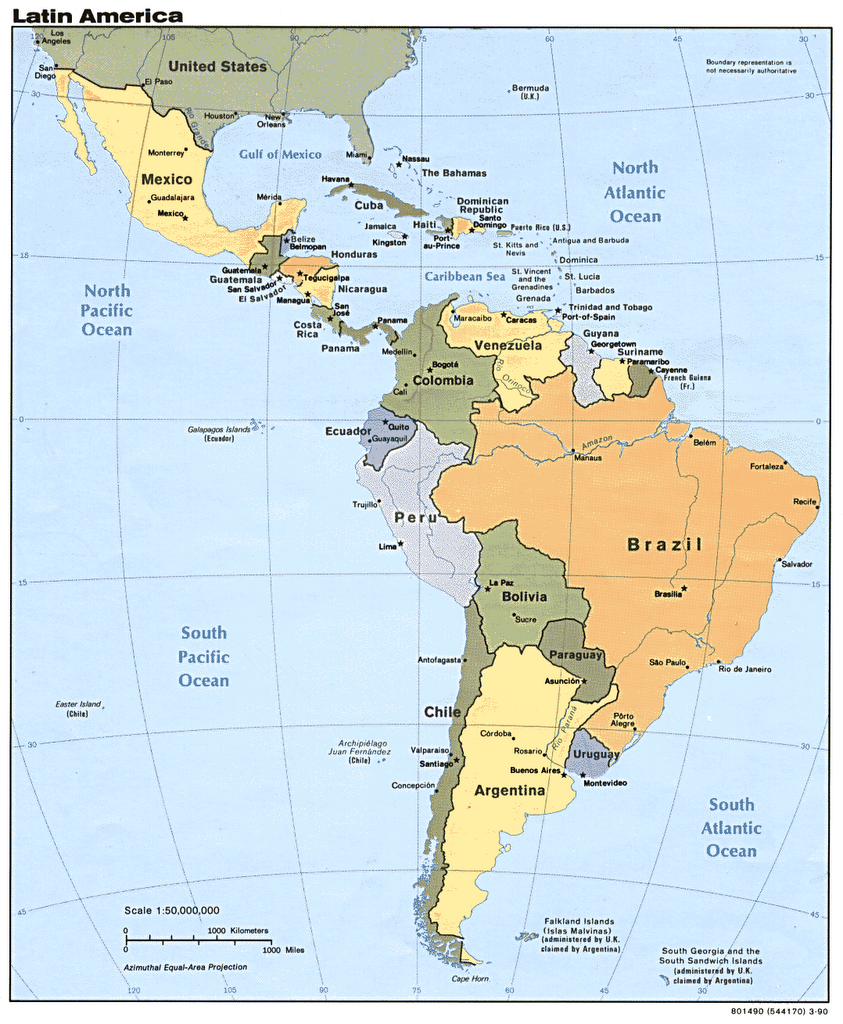
Homelessness in Latin America By Yuka Komatsu Study Abroad Class of 2007


There are an estimated 100 million street children in the world. There are 50 million street children in Latin America. They are six years old or older. They are abandoned by their parents and they live on the streets without either hope or a future. They make their living by various means including selling things on the streets, cleaning car wind shields and shining shoes.

Homeless in the Republic of Indonesia by Haruka Goto Study Abroad Class of 2007


I lived in Indonesia from 6 years old to 10 years old. When I lived in Indonesia a surprising sight made an incredible impression on me. It was the sight of a child the same age as me standing by the road and singing songs as the car passed by in order to sell things and earn money. In Indonesia, there were quite a lot of street children.
Children earn money in the road and offices every day. They cannot go to school also.
They work hard to live a hard life.

Friday, November 24, 2006

About Homelessness in China by Sayaka Eguchi Study Abroad Class of 2007


Homeless people are people who do not have a house to live in. The problem of homelessness is taken up in a lot of countries in the world. It is known well that a lot of people lost their houses by the tidal wave tsunami that happened due to the Sumatra coast earthquake. This is one example of why people lose their houses. In addition, people can become homeless because of poverty. For example, some children live on the streets and they can’t even go to school.
I researched the homeless of China and learned several things.
First of all, some homelessness is caused by natural disasters. In China, the number of people who lose their houses due to natural catastrophes such as earthquakes and floods has increased. Second, many children are poor, and not able to go to school. They live by selling things and getting food on the road. About 150,000 children are spending life on the road according to Correspondents Report and China 's homeless rate is growing (Taylor, J. (2004) China’s homeless rate growing. Correspondents’ Report 4 May 2004. Retrieved on 24 November 2006 from: http://www.abc.net.au/correspondents/content/2004/s1108983.htm.
To solve these problems, the Chinese government is taking measures to cooperate with international organizations including UNICEF and the WHO to decrease homeless. Concretely, construction and medical relief facilities are being given as humanitarian aid and the homeless can live on by spending money that the international organizations have collected.
In conclusion, it is necessary to consider homeless now as a whole, not as the problem of one country.

Saturday, November 18, 2006

The 5th Annual Kanto International High School 1st Year English Course Social Issues Project

The 5th Annual Kanto International High School 1st Year English Course Social Issues Project will begin soon. You can see previous projects on http://home.att.ne.jp/omega/worldschool/childlabor/childlabormain2.htm
This project is one of the best things about Kanto International High School. You will learn a lot and you will have a lot of fun.

As you can see, on the right side of this page I have posted some links about homelessness in various countries around the world. I have collected these links from students who have done this project over the past four years. Soon I will post some posters made by students who did this project in 2005

Here is a great definition of homelessness:

Homeless

Beyond the Homeless Myth

People who don't have shelter are houseless - not homeless! Homelessness has nothing to do with a lack of shelter. Define Homeless: 'An inadequate experience of connectedness with family and or community.' This fact is now recognized by Habitat, the United Nations Human Settlements Programme.
Rebecca's Community (2005). Homeless:Beyond the homeless myth. Retrieved from http://www.homeless.org.au/ on 20 November 2006


Below is an interesting story about how the South Korean government has helped the homeless. I got the story from a blog. The original story comes from the British business newspaper Reuters. It was published in the "Oddly Enough" column on 22 February 2005.

Recycling In Style

"SEOUL (Reuters) - Some South Korean homeless are dressing in style after the government gave away thousands of fake designer garments confiscated by customs agents.
The Korea Customs Service distributed more than 3,500 fake pieces in the southern city of Pusan this month with the permission of the fashion houses whose designs had been pirated."

Monday, November 13, 2006

2005 1st Year Study Abroad Class Invention Projects


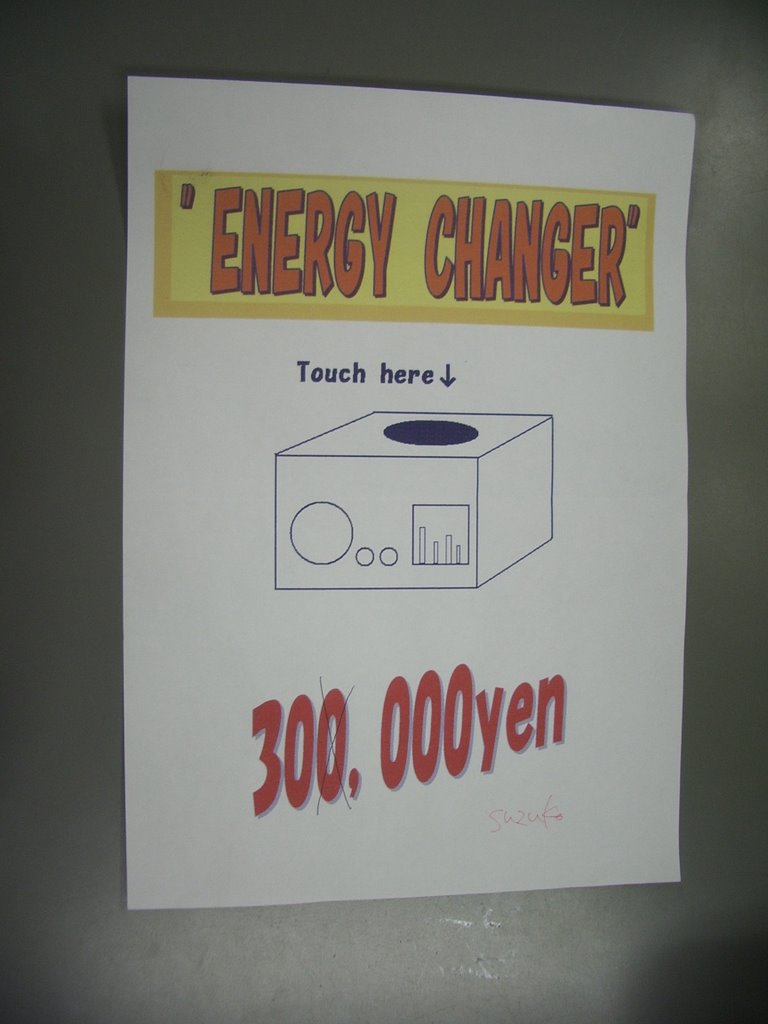
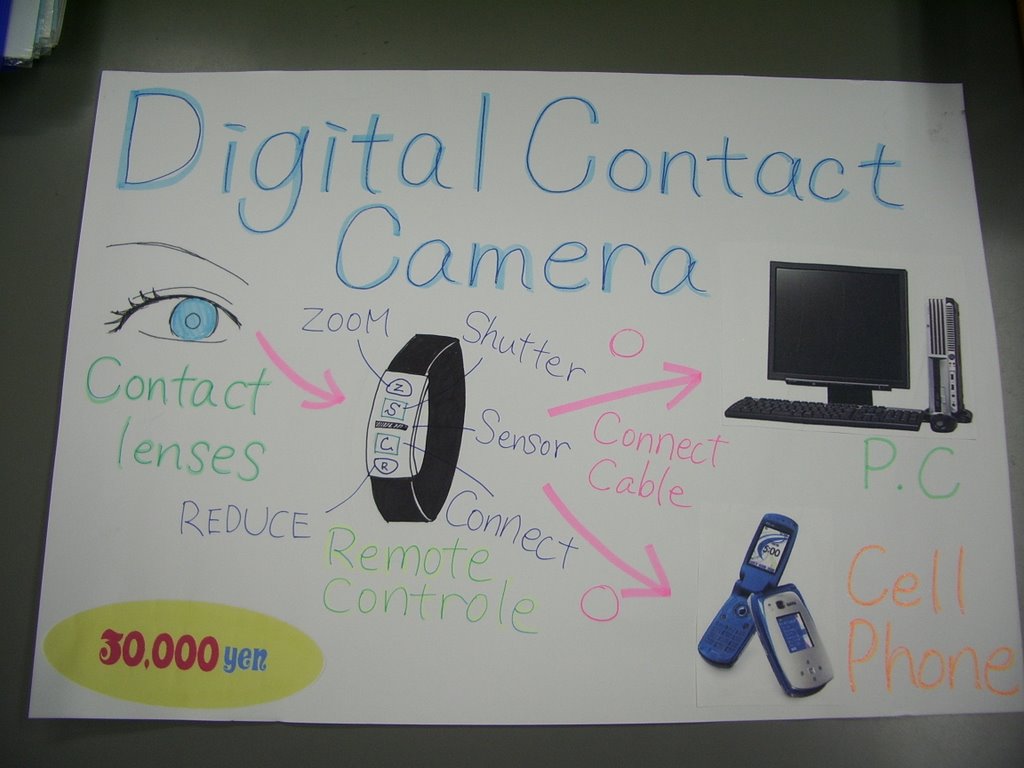
Last Year the students in the 1st year Study Abroad Class at Kanto International High School came up with some very imaginative projects. The presentations they did were very good too. I hope looking at these examples will motivate students in the 1st year Study Abroad Class this year and in the years to come to do good work.

Saturday, July 08, 2006

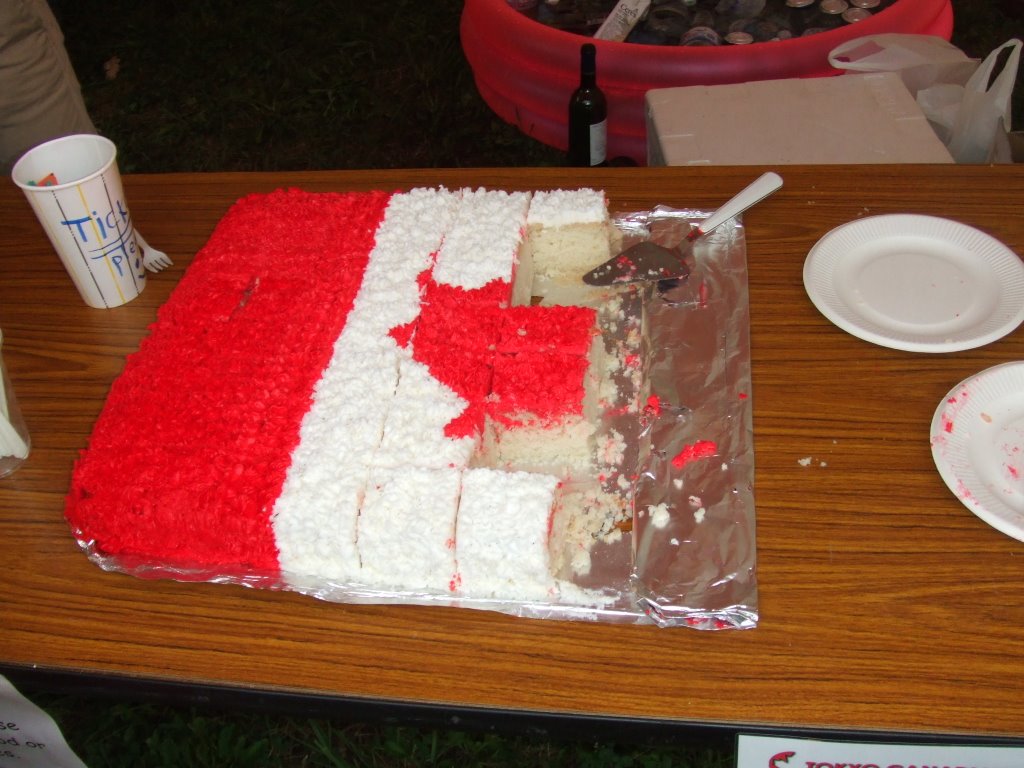
Canada Day 2006


Last Saturday was Canada Day. Canada is 139 years old now. I went to Yayogi Park to celebrate. The party was very international. Many Japanese people were there. I met a woman who was a Toronto Maple Leafs ice hockey team fan. She was very interesting.